



A recent scientific breakthrough has, for the first time, allowed researchers to observe the fusion of hydrogen and oxygen to create water bubbles at the nanoscale. This discovery, carried out by a team from Northwestern University, has captivated the scientific community by revealing how this process occurs within the rare metal palladium, which acts as a catalyst.
A Revolutionary Method to Observe Molecules

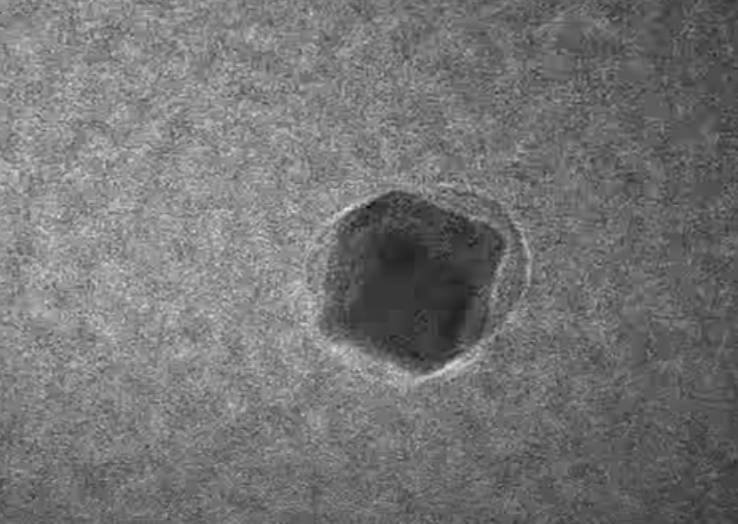
The team developed an innovative technique to visualize the chemical reaction in real-time. They used honeycomb-shaped nanoreactors, created using ultrathin glass membranes, to capture gas molecules. These reactors enabled researchers to observe the interaction between hydrogen and oxygen in a controlled environment through high-vacuum transmission electron microscopes.
This breakthrough solves a mystery that has puzzled scientists for over a century: how palladium can facilitate the rapid formation of water from these gases. Although the phenomenon was known, it had never been fully understood. Direct visualization, combined with atomic-level structural analysis, provided key insights into the mechanism behind the reaction.
The Discovery: Tiny Water Bubbles


The most remarkable discovery was the formation of nanoscale water bubbles—something never before observed directly. As researchers analyzed the process, they noticed how hydrogen was absorbed into the palladium, followed by the appearance of tiny bubbles.
According to Yukun Liu, the study’s lead author, this finding was completely unexpected: “We believe this might be the smallest bubble ever formed and directly observed.” This observation was captured on video, confirming
Beyond visual evidence, the team employed advanced techniques such as electron energy loss spectroscopy to confirm the nature of the generated water. This same technique was used by the Chandrayaan-1 probe to detect water on the Moon, but in this case, it was applied at a much smaller scale.
Implications for Future Applications
Beyond the impressive discovery, the findings have significant practical implications. The study’s lead researcher, Vinayak Dravid, explained that observing water generation at the nanoscale could optimize production under simpler environmental conditions. This advancement could facilitate, for instance, water production during space travel.
This would be crucial for long-duration missions, where resources are limited and expensive to transport. According to Dravid:
“It’s similar to what Matt Damon’s character does in The Martian, but without the need for fire or extreme conditions.”
One key finding was the importance of the order in which oxygen and hydrogen were introduced into the process. This sequence significantly affected the rate at which palladium produced water. This discovery opens a new path for improving production techniques using catalytic metals like palladium.
Controlling these processes at the atomic level introduces a new field of research on how to develop more efficient systems for generating water under controlled conditions, both on Earth and in outer space.
The ability to observe the fusion of oxygen and hydrogen into nanoscale water bubbles is an unprecedented scientific breakthrough. Not only does it provide new insights into palladium’s role in this process, but it also paves the way for practical applications that could revolutionize water production in extreme environments, such as space.

Reference:
- Proceedings of the National Academy of Sciences/Unraveling the adsorption-limited hydrogen oxidation reaction at palladium surface via in situ electron microscopy. Link.
COMPARTE ESTE ARTICULO EN TUS REDES FAVORITAS:

Esta entrada también está disponible en:


Discover more from Cerebro Digital
Subscribe to get the latest posts sent to your email.


