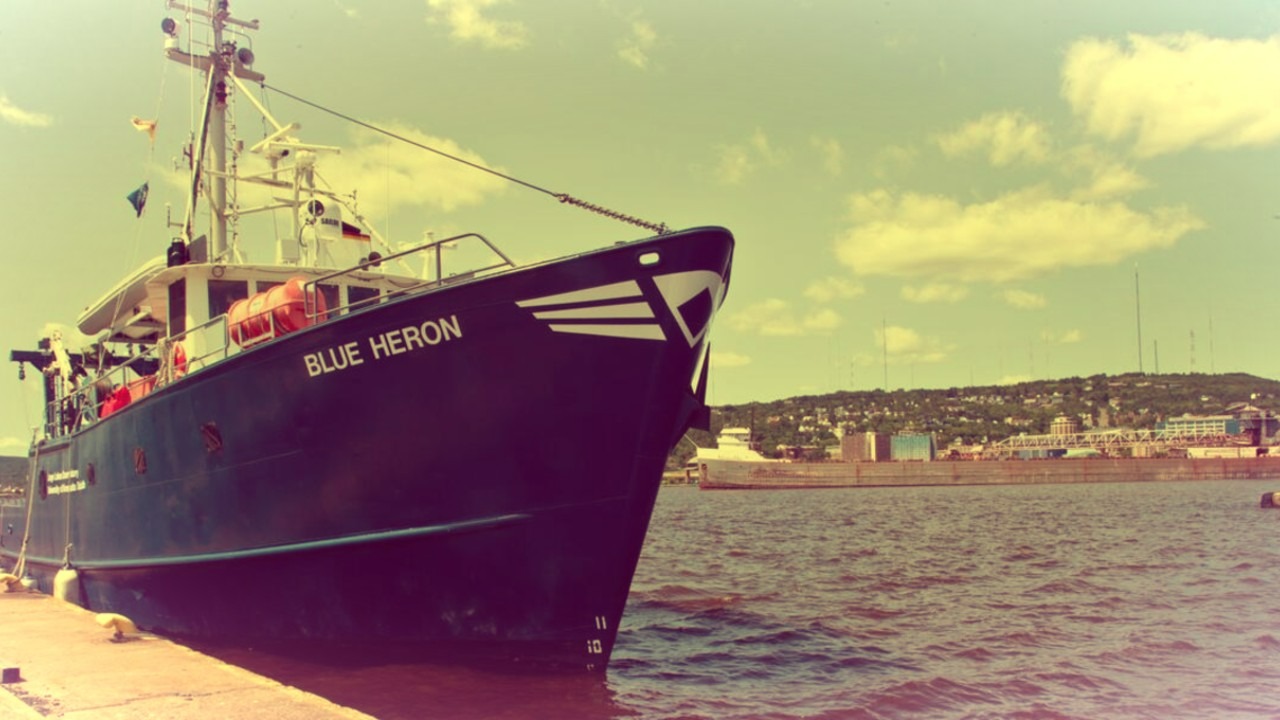
A University of Minnesota Duluth (UMD) team identified a new microorganism species in an unexpected place: black, oily substance found on the R/V Blue Heron research vessel’s rudder shaft. The completely accidental discovery opens new research into life in extreme environments.
Unexpected Find Aboard R/V Blue Heron

Discovery began last fall when R/V Blue Heron crew detected strange knocking from the propulsion system during a Lake Erie expedition. The ship went to Great Lakes Shipyard in Cleveland for inspection.
During review, Doug Ricketts, UMD Large Lakes Observatory (LLO) marine superintendent, spotted thick, tar-like black substance oozing from the rudder shaft. Unlike anything he’d seen, he collected a sample in a plastic cup and gave it to Prof. Cody Shiek, microbial ecologist.
Shiek initially doubted viable biology. But analysis revealed DNA in good condition and sufficient biomass. Genetic sequencing vs. international databases confirmed a completely new organism for science.
Substance temporarily named “ShipGoo001” for origin/appearance.
Microbe Thrives in Oil, Without Oxygen

New microorganism adapted to extreme environment: warm, oily, oxygen-free rudder shaft interior. Exact function unknown, but potential applications intrigue.
Some organisms appear methane producers, suggesting biofuel generation uses. Hints they metabolize oil or interact with metals like iron—under investigation.
Shiek, discoverer of many new species in Lake Superior sediments, ocean hydrothermal vents, hot springs, called accidental nature most exciting. They weren’t seeking new life there.
LLO Director Catherine O’Reilly emphasized: shows much unknown even in built/familiar environments like ships. No need for Mars—new life can be literally underfoot.
Next Steps and Official Name Coming

Key question: origin. Shiek speculates latent in lubricating oil, awaiting right conditions. Similar species found in oil wells, natural tar deposits worldwide.
Next: decode metabolic processes—what they consume, energy generation, role in artificial microenvironment. Understanding biology may reveal unsuspected industrial/energy applications.
Meanwhile, “ShipGoo001” nickname ends soon. July 30 at Large Lakes Observatory’s Freshwater Discovery Day, participants help choose official scientific name for this peculiar/promising microbe.
“Ship Goo” discovery proves science surprises in everyday places. Simple mechanical noise led to new life form, reminding curiosity/observation drive scientific progress.
Reference:
- Scientists discover new life aboard Great Lakes research vessel/University of Minnesota Duluth. Link
COMPARTE ESTE ARTICULO EN TUS REDES FAVORITAS:

Esta entrada también está disponible en:
 Español
Discover more from Cerebro Digital
Subscribe to get the latest posts sent to your email.