
Germany is once again positioning itself at the center of energy innovation with the ambitious plan of a startup aiming to activate a fusion test reactor by 2031. The initiative does not yet promise commercial electricity, but it represents a decisive step toward a clean energy future.
A test nuclear fusion reactor, not a commercial plant
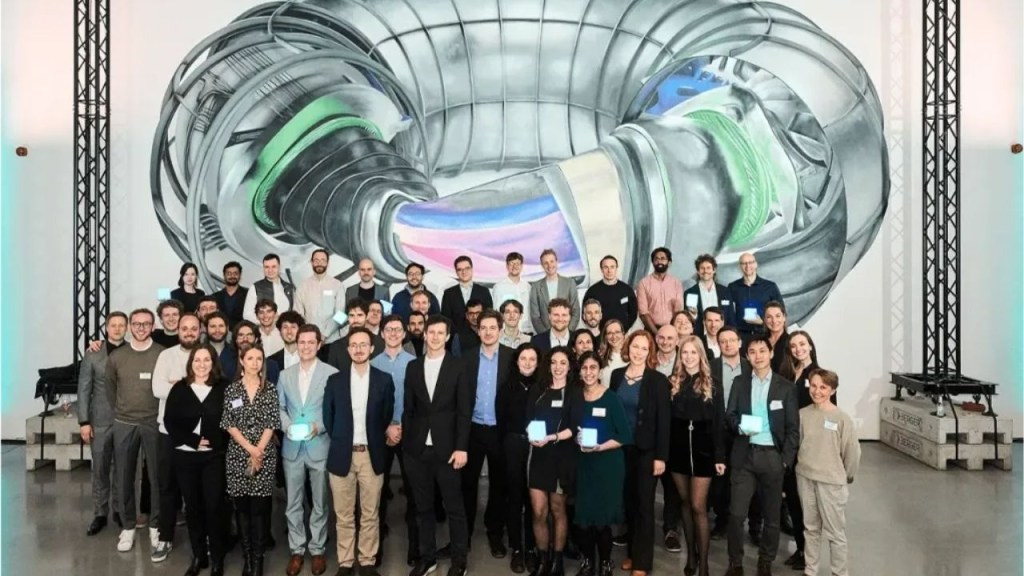
The news published by Reuters explains that the German company Proxima Fusion plans to build a test plant for fusion energy by 2031. The distinction is crucial: this is not a commercial power station connected to the grid, but a demonstration reactor intended to validate its technology.
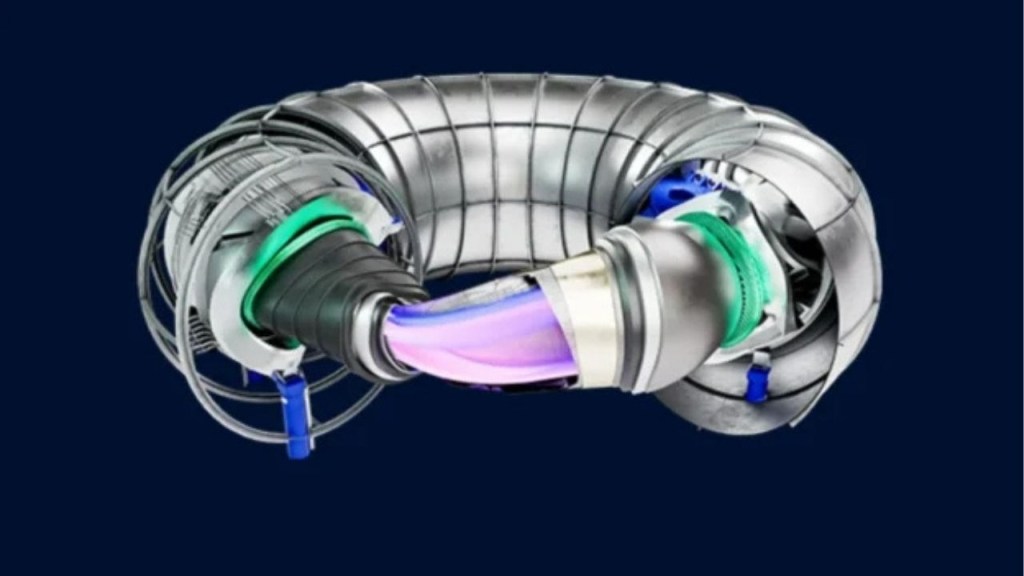
Proxima Fusion, based in Munich, emerged as a spin-off from the Max Planck Institute for Plasma Physics. Its approach is based on the stellarator design, an alternative to the better-known tokamak. This system uses complex three-dimensional magnetic fields to confine extremely hot plasma and maintain a stable reaction.
Fusion energy seeks to replicate the process that powers the Sun: combining hydrogen isotopes at temperatures exceeding 100 million degrees Celsius to release enormous amounts of energy. Unlike nuclear fission, it does not produce long-lived radioactive waste or carbon emissions.
According to Reuters, the company has already raised around $65 million in private funding and estimates that full development of the facility could require investments exceeding one billion dollars. The immediate goal is to demonstrate that the design can operate in a stable and efficient manner.
The year 2031 would therefore mark the launch of an advanced experimental system. If the project meets its technical milestones, it could open the door to a future commercial power plant in the 2040s.
The Role of the Stellarator and Germany’s Scientific Legacy
The project builds on decades of German public research in plasma physics. In particular, it draws on work carried out with the experimental Wendelstein 7-X reactor, one of the most advanced stellarators in the world.
This type of reactor is distinguished by its twisted and highly precise magnetic coils, designed to improve plasma stability without relying as heavily on intense internal currents as tokamaks do. That feature could translate into safer and more continuous long-term operations.
Reuters highlights that the challenge is no longer simply proving that fusion is physically possible — something already demonstrated in laboratory conditions — but achieving a design capable of delivering sustained and scalable net energy gain at an industrial level.
Proxima Fusion aims to transfer the accumulated scientific knowledge from experimental facilities into a pre-commercial model. This transition from laboratory research to a pilot plant represents one of the most significant technological challenges of our time.
Technical Challenges and Energy Realism

Although the announcement is ambitious, the information itself underscores that significant obstacles remain. Maintaining stable plasma for extended periods, managing materials exposed to extreme temperatures, and reducing costs are highly complex tasks.
Moreover, a test plant does not equate to an immediate solution to the global energy crisis. Even if the 2031 reactor performs as expected, a lengthy process of validation, regulation, and industrial scaling would still be required.
The estimated project cost reflects the scale of the challenge. Overcoming the technical barrier of producing more energy than is consumed in the process — the so-called break-even energy point — is only the first step.
The significance of the announcement lies in the proposed speed. Moving from advanced research to a demonstration reactor in less than a decade would represent one of the fastest transitions in the history of modern energy engineering.
The German plan does not announce an immediate revolution, but it does signal a strategic advance. If the test reactor operates successfully in 2031, it would mark a milestone toward commercial fusion. For now, it represents an ambitious scientific bet with long-term transformative potential.
Reference:
Reuters/German nuclear fusion startup envisages test plant by 2031. Link
COMPARTE ESTE ARTICULO EN TUS REDES FAVORITAS:

Esta entrada también está disponible en:
 Español
Discover more from Cerebro Digital
Subscribe to get the latest posts sent to your email.