
In a surprising finding, a group of Dutch scientists has discovered what could be a new organ in the human throat. It involves a pair of previously unknown glands, located in the skull where the nasal cavity meets the throat. This discovery calls into question everything we knew about human anatomy and could have significant clinical implications, especially in the treatment of head and neck cancer.
The Discovery of a New Organ

During a medical scan initially aimed at identifying possible tumors, a group of Dutch scientists discovered glands that had never been documented before. The finding of this new organ occurred during the analysis of medical images from prostate cancer patients.
What was initially thought to be an error or incidental finding was soon confirmed as a significant discovery: the glands located in the nasopharynx, the region where the nasal cavity and throat meet, which the researchers decided to name tubarial glands.
The team used a highly sensitive imaging technology known as PSMA PET/CT, commonly used to detect the spread of prostate cancer. Unlike conventional methods such as ultrasound or magnetic resonance imaging, this technology allowed the glands to be detected in detailed images of the head and neck. According to the scientists, these glands may have a functional role in saliva production, although their exact function still needs to be investigated.
The Debate on Whether Tubarial Glands Are a New Organ
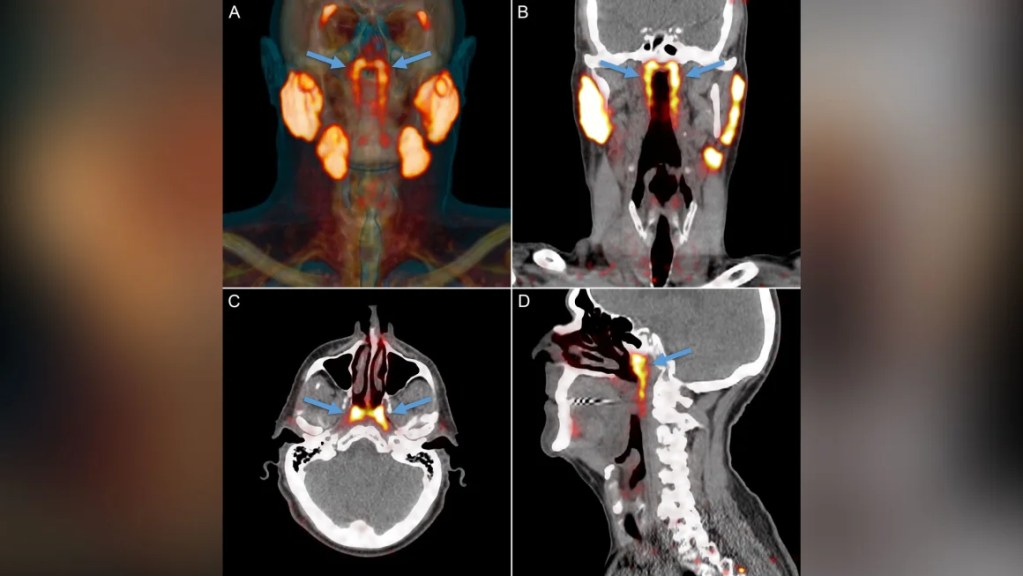
The discovery has generated intense debate about whether the tubarial glands should be considered a new organ. Although some researchers suggest these glands might be part of the minor salivary gland system, the study posits that the tubarial glands represent a “new anatomical and functional entity.” This finding challenges decades of medical knowledge about human anatomy, as glands in this area had not been previously documented in medical literature.
Dr. Valerie Fitzhugh, professor of pathology at Rutgers, stated that it is still too early to label these glands as a new organ, since the study focused on a small number of patients, mainly men, and did not include a more diverse sample. Still, she noted that the discovery opens the door to new research on human anatomy, which could yield more significant findings in the future.
This discovery highlights the ability of modern technology to reveal invisible details of the human body. By using new imaging techniques, researchers were able to observe biological structures in areas previously considered well-known and understood.
Clinical Implications of the Discovery

Clinical Implications of the Discovery
The impact of finding this new organ could be profound, especially in the field of head and neck cancer treatment. Radiation therapy is a common treatment for patients with tumors in the throat, tongue, and nearby areas, but it often causes unwanted side effects, such as dry mouth and difficulties swallowing and speaking. These effects are due to the damage radiation causes to existing salivary glands. If the tubarial glands are confirmed as a functional part of the salivary gland system, it might be possible to design more precise radiation treatments that spare these new glands, improving patients’ quality of life after treatment.
The researchers, led by Wouter Vogel, radiation oncologist at the Netherlands Cancer Institute, mentioned that if they can develop a way to protect these glands during radiation therapy, patients could experience fewer long-term side effects. Ultimately, this discovery could pave the way for more effective treatments that offer a higher quality of life for those fighting head and neck cancer.
The discovery of this possible new organ in the human throat represents a significant advance in medicine, not only for its potential to redefine our understanding of human anatomy but also for the possible clinical applications that could derive from it.
Although more research is still needed, especially to confirm the exact function of these glands, the discovery promises to improve the way we treat cancer and other head and neck-related diseases, opening new doors to the medicine of the future.
Reference:
- Radiotherapy and Oncology/The tubarial salivary glands: A potential new organ at risk for radiotherapy. Link
COMPARTE ESTE ARTICULO EN TUS REDES FAVORITAS:

Esta entrada también está disponible en:
 Español
Discover more from Cerebro Digital
Subscribe to get the latest posts sent to your email.