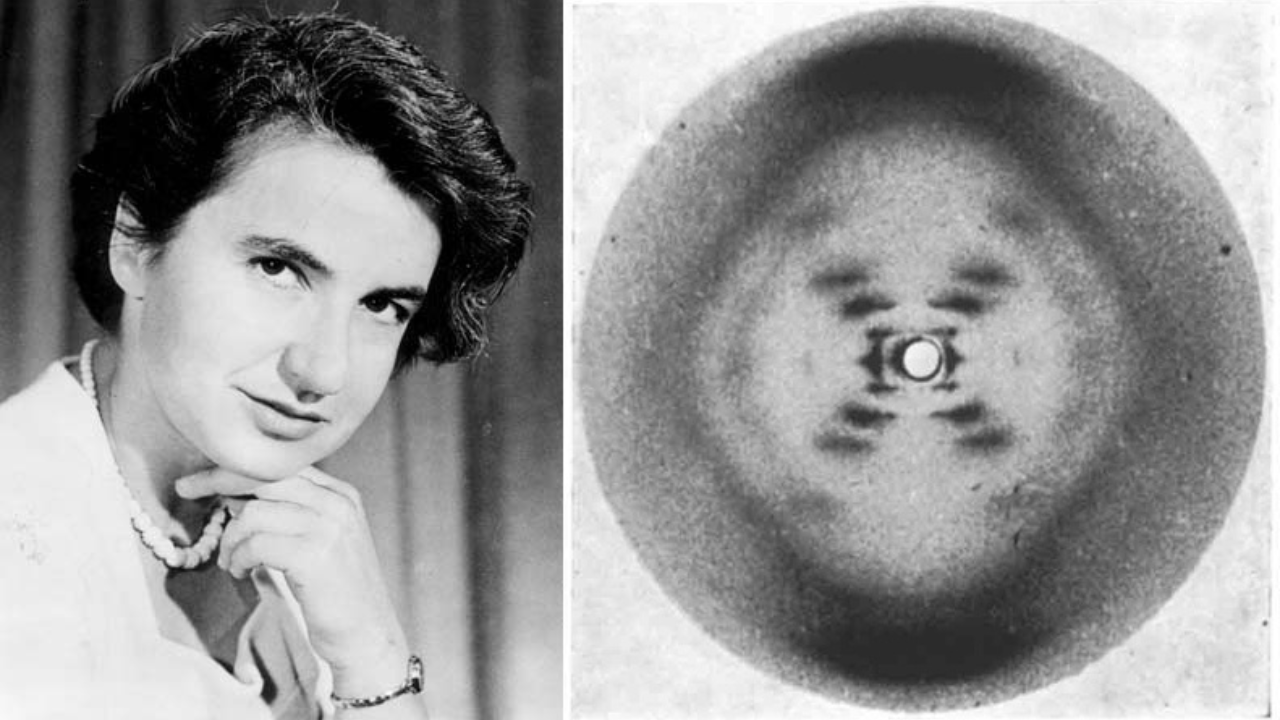
In 1953, James Watson and Francis Crick were internationally recognized for discovering the structure of DNA, the famous double helix. However, Rosalind Franklin, the scientist who captured the iconic Photo 51, never received the credit she deserved. Her meticulous research was essential to the DNA model, and her story reveals the invisibility of women in science.
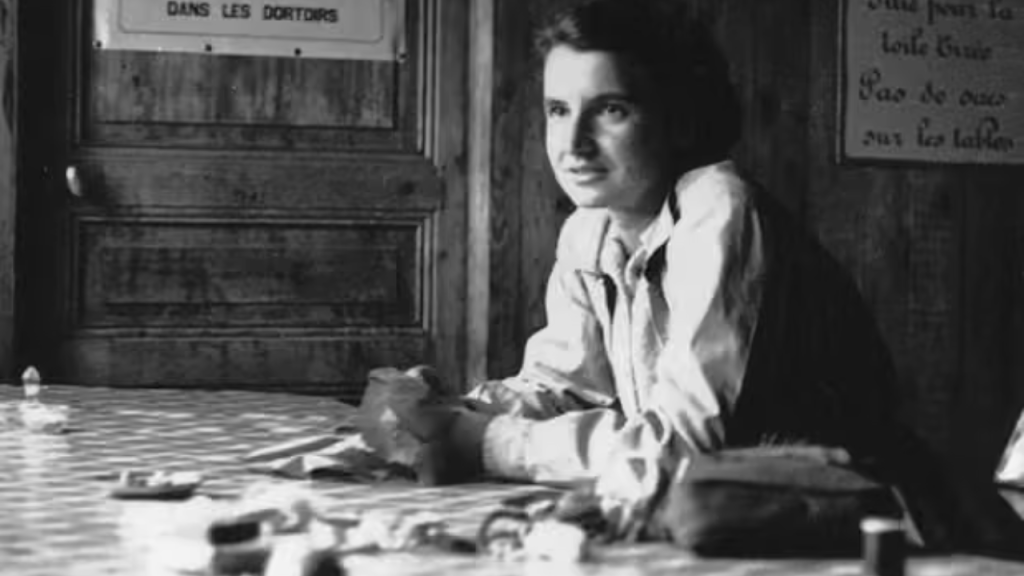
Rosalind Franklin’s Photo 51
Rosalind Franklin, together with her student Raymond Gosling, conducted X‑ray diffraction studies that documented the structure of DNA. Photo 51 revealed the molecule’s helical pattern and became the central evidence for Watson and Crick to build the double‑helix structure (Franklin & Gosling, 1953).
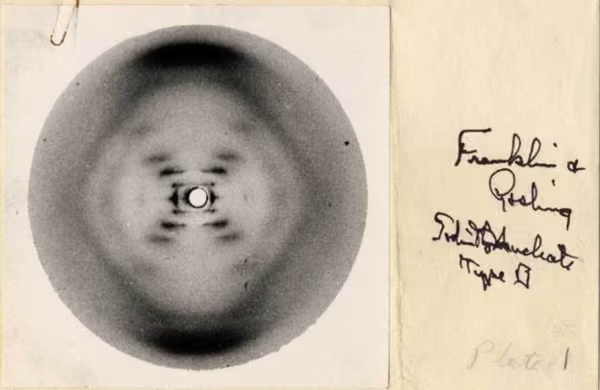
Brenda Maddox, in Rosalind Franklin: The Dark Lady of DNA (2002), documents that Franklin never gave permission for her data to be used, yet Watson and Crick incorporated it into their Nature article (1953). Franklin also published her findings, but attention focused on Watson and Crick. L.O. Elkin (2003) emphasizes that without Franklin, the DNA model would not have been possible; her work was indispensable for this historic discovery.
Gender and power in the history of DNA
Franklin’s story shows how gender and power influence science. Maddox (2002) notes that hierarchy and colleagues’ attitudes limited her visibility. Watson and Crick gained global recognition, while Franklin died in 1958 at age 37 without credit for her work.
Cobb (2015) highlights that this case demonstrates how scientific achievements do not always reflect true authorship. Franklin’s research was decisive, yet her contribution remained overshadowed for decades, revealing how social and power factors can determine who receives recognition in science.
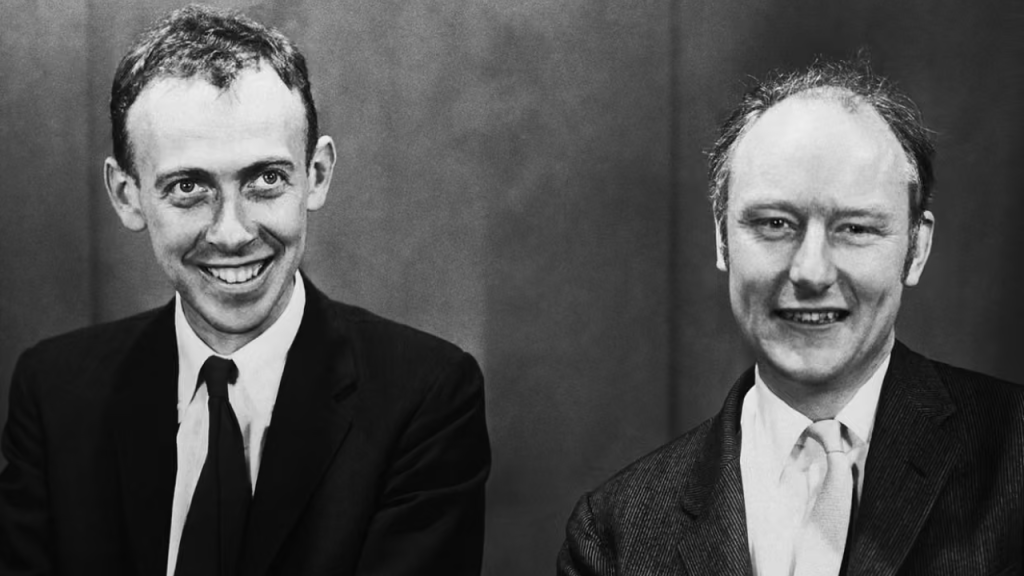
Legacy and recognition of Rosalind Franklin
Today, Rosalind Franklin is recognized as a central figure in molecular biology. Her data enabled the construction of the double‑helix model described by Watson and Crick (Watson & Crick, 1953), and her work has been vindicated, partially correcting the invisibility she suffered (Elkin, 2003).
Franklin’s story is also an ethical lesson: the most important discoveries do not depend solely on individual genius, but on respect for the work of all researchers. Her example inspires us to value scientific collaboration and ensure that future generations receive the credit they deserve.
Reference:
- Maddox, Brenda — Rosalind Franklin: The Dark Lady of DNA (HarperCollins, ed. 2002/2003). Link.
- What Rosalind Franklin truly contributed to the discovery of DNA’s structure. Link.
- Molecular Structure of Nucleic Acids: A Structure for Deoxyribose Nucleic Acid. Link.
- Molecular Configuration in Sodium Thymonucleate. Link.
COMPARTE ESTE ARTICULO EN TUS REDES FAVORITAS:

Esta entrada también está disponible en:
 Español
Discover more from Cerebro Digital
Subscribe to get the latest posts sent to your email.