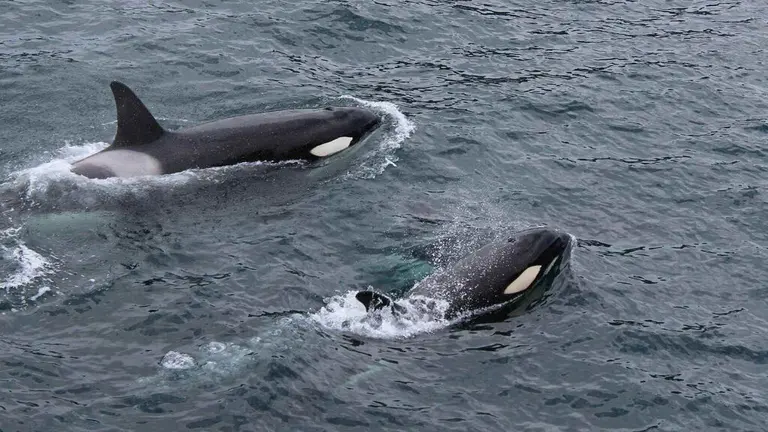
A new study has documented surprising behavior in the Gulf of California: some orcas are hunting and devouring juvenile great white sharks, selectively extracting their fat-rich livers. This finding reveals not only the intelligence and strategy of these predators but also how climate change might be altering their habits.
Intelligent Orcas: Great White Shark Hunters

For years, great white sharks have reigned as the ocean’s most feared predators. However, recent scientific observations show that they are not safe from orcas, marine mammals capable of planning coordinated attacks and learning new hunting techniques.
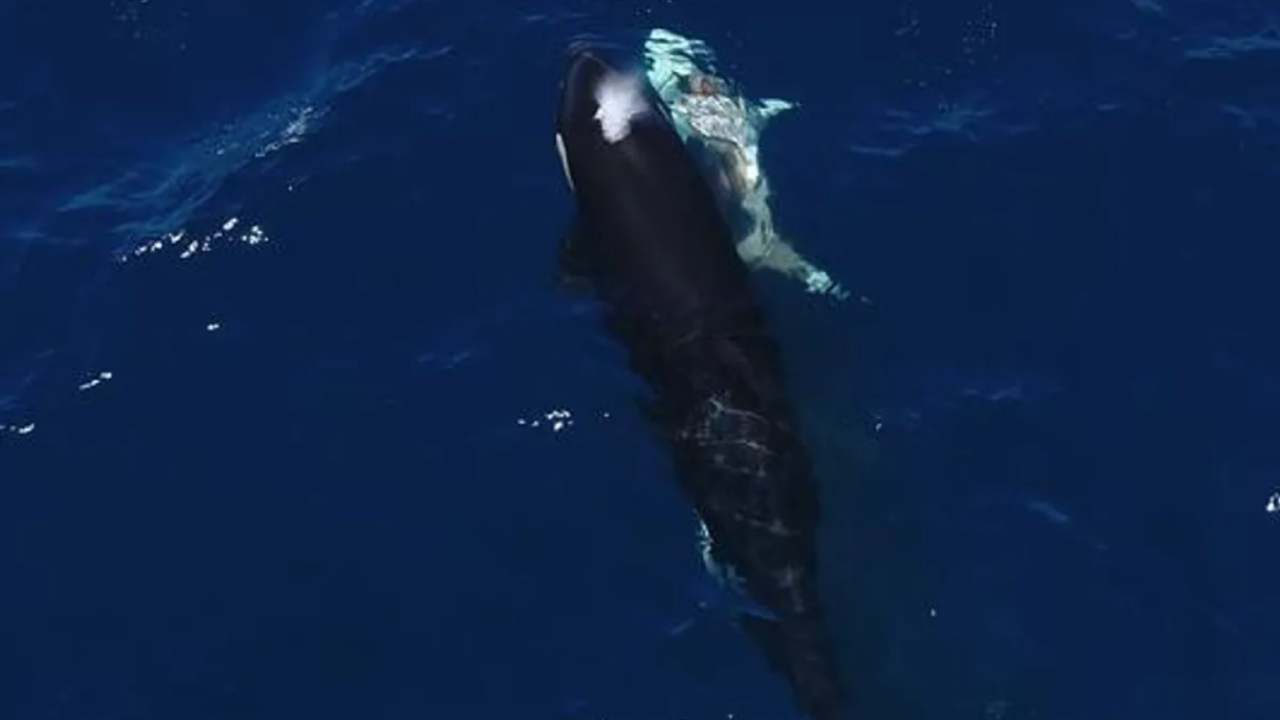
The study, published in Frontiers in Marine Science, describes how a pod led by a male named Moctezuma has developed a precise tactic to capture young and inexperienced sharks. The orcas flip them upside down, inducing tonic immobility, a temporary paralysis that leaves the shark completely defenseless. Taking advantage of that vulnerability, the orcas extract and devour the shark’s liver, an extremely rich source of oils and essential nutrients.
Marine biologist Erick Higuera Rivas, co-author of the study, explained that this behavior reflects a remarkable level of intelligence and cultural transmission. Orcas not only learn from each other but teach their young the most effective hunting techniques.
The researchers documented two attacks, in 2020 and 2022, both involving five orcas. In each case, they followed the same pattern: flipping, shark immobility, and organ extraction. This demonstrates it was not an isolated event but a learned and repeated technique by the same pod.
Moctezuma and the Hunter Orcas Pedigree

The so-called Moctezuma pod has gained a reputation among scientists for its ability to innovate in hunting. In 2020, underwater cameras captured five orcas attacking a young great white shark in the Gulf of California. Once the animal was paralyzed, the orcas fed only on its liver and left the rest of the body adrift.
In 2022, the scene repeated almost exactly the same, suggesting a consolidated strategy within the group. Researchers even observed how younger specimens were fed part of the organ, reinforcing the idea of teaching within the pod.
These findings are consistent with other reports in regions like South Africa, where the presence of orcas has caused adult sharks to flee for months, altering entire ecosystems. The study confirms that Mexican orcas have reached a new level of specialization, focusing on juvenile great white sharks, easier to capture and with more accessible livers.
The Role of Climate Change in This New Hunt
According to the study’s authors, the increase in ocean temperatures and phenomena like El Niño are modifying the habitats where great white sharks breed their young. These areas have shifted further north and into the Gulf of California, bringing them closer to the usual routes of hunting orcas.
This environmental change could be facilitating encounters between both species. However, researchers warn that current data come from only two confirmed observations, so it cannot yet be said that orcas regularly hunt great white sharks, but rather that they take advantage of opportunities when conditions are favorable.
Marine biologist Francesca Pancaldi, from the National Polytechnic Institute (CICIMAR), noted that understanding these extraordinary behaviors will help identify critical habitats and create marine protected areas that mitigate human impact. Orcas hunting sharks, although fascinating, is also an indicator of ecosystems transforming due to global warming.
The finding in the Gulf of California demonstrates that orcas are not only powerful predators but also adaptable strategists capable of modifying their behavior according to the environment. Their interest in great white shark livers reflects both their intelligence and the profound influence of climate change on modern marine life.
Referencia:
- Frontiers/Novel evidence of interaction between killer whales (Orcinus orca) and juvenile white sharks (Carcharodon carcharias) in the Gulf of California, Mexico. Link
COMPARTE ESTE ARTICULO EN TUS REDES FAVORITAS:

Esta entrada también está disponible en:
 Español
Discover more from Cerebro Digital
Subscribe to get the latest posts sent to your email.