
Years ago, a Turin surgeon announced what would be the first head transplant. It never happened, but less media-hungry researchers don’t rule it out in a very, very distant future.
The Supposed Head Transplant
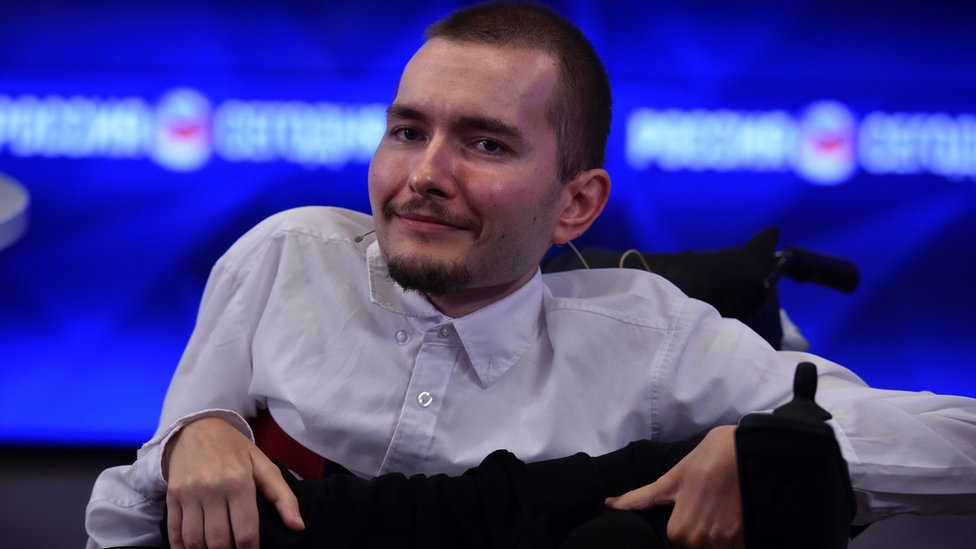
Mid-last decade, headlines exploded about Turin surgeon Sergio Canavero claiming the first head transplant. Talk even surfaced of a candidate attaching his head to a new body—really a body transplant, not vice versa. The candidate: 30-year-old Russian computer scientist Valery Spiridonov with spinal muscular atrophy, a congenital/progressive disease causing severe motor disabilities.
Late 2017 date set, though location/method unspecified—just needed 150-person team and $10M funding source unknown. Canavero claimed ~50 people sought evaluation.
No prior precedent existed; scientific community skeptical. Turin’s Ospedale Molinette—Canavero’s workplace—wanted no part. EU/U.S. saw unviable operation lacking backing. No one expected success.
Decision: perform in China, despite Vietnamese hospital offers. Move seemed offshoring—unverifiable research/process, lax regulations.
A Future Treatment?

Surprisingly, Canavero wasn’t alone. U.S.-trained/experienced surgeon Xiaoping Ren pursued serious, low-profile mouse research with peer-reviewed publications.
Funded by China’s Harbin University, Ren has vast complex hand transplant experience. He clarified head transplant not imminent but hopeful.
Potential indications abound—unimaginable today. Many degenerative body diseases (childhood/adulthood) leave normal minds trapped.
Technically, not “head transplant”: insurmountable conceptual barrier—central nervous system (life itself) can’t transplant. Theory seeks brain transplant (with/without skull), so body transplants to head/brain owner who continues living. Frankenstein creation.
The Answer: Polyethylene Glycol

Theory’s problem: no one knows reconnecting severed central nervous fragments—head portion to spinal cord, optic nerve/retina. Reason paraplegia/tetraplegia irreversible. Near-fictional scenario.
Surgeons propose polyethylene glycol (laxative/pomade ingredient)—never proven useful. Beyond donor matching (intact organs), custom-connecting head via neck structures (arteries, veins, airways, bones, etc.)—nervous system paramount—and functionality restoration.
If unknown in same person, less so donor/receiver.
Canavero: none of 50 candidates formalized. Post-media frenzy yielding little/nothing, surgery never happened.
Russian patient changed mind, married, moved U.S., had son, built thriving AI company—no transplant talk.
2018: Canavero claimed Chinese patient. No further news. Confirmed: Canavero actively collaborates with Ren at Harbin University.
No head transplants or real Frankensteins… yet.
Reference:
- MejorconSalud/Trasplante de cabeza: un hombre ruso se ofrece voluntario para ser el primero en la historia. Link.
- New York Post/Disabled man changes mind about head transplant. Link
COMPARTE ESTE ARTICULO EN TUS REDES FAVORITAS:

Esta entrada también está disponible en:
 Español
Discover more from Cerebro Digital
Subscribe to get the latest posts sent to your email.