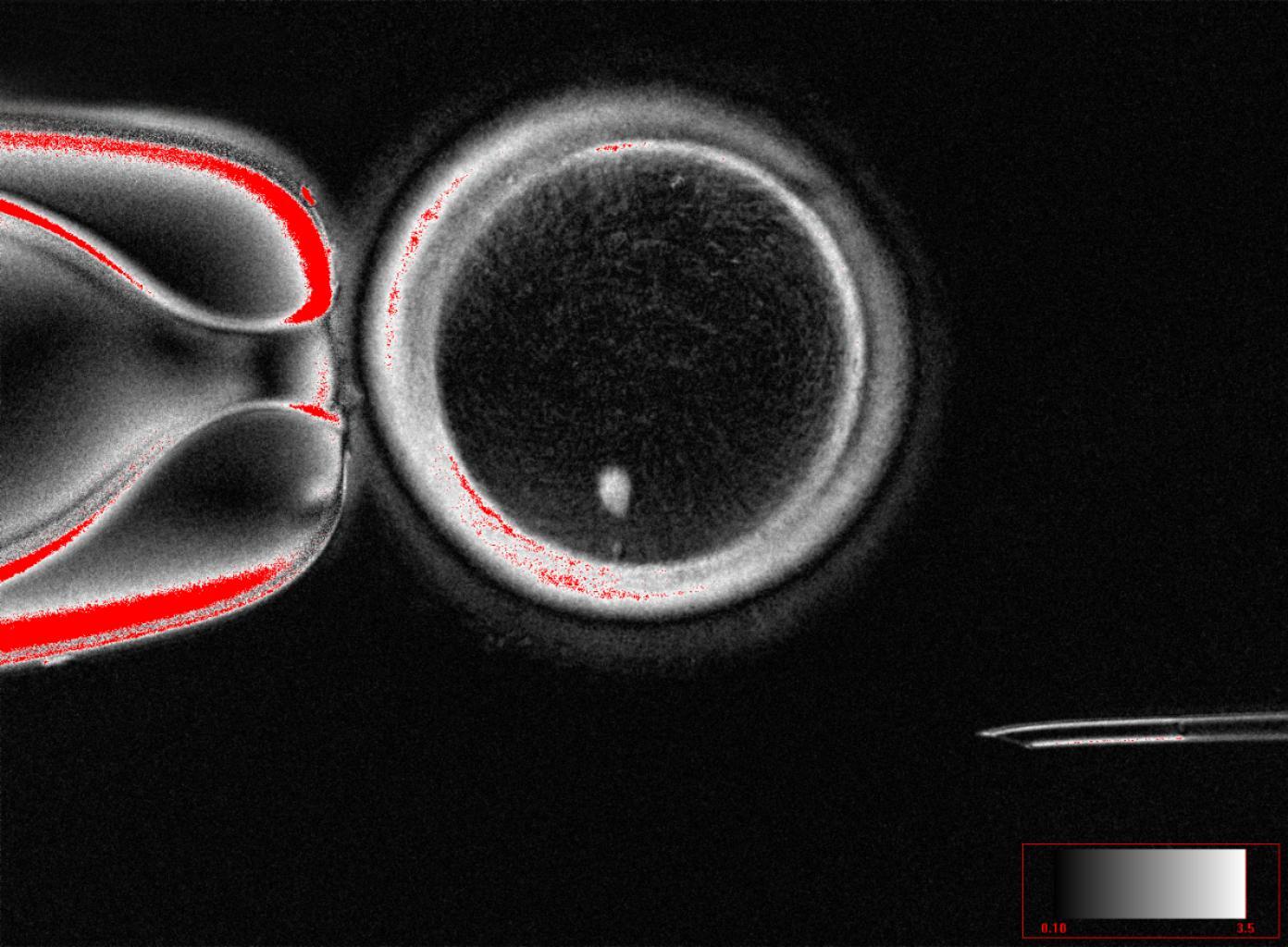
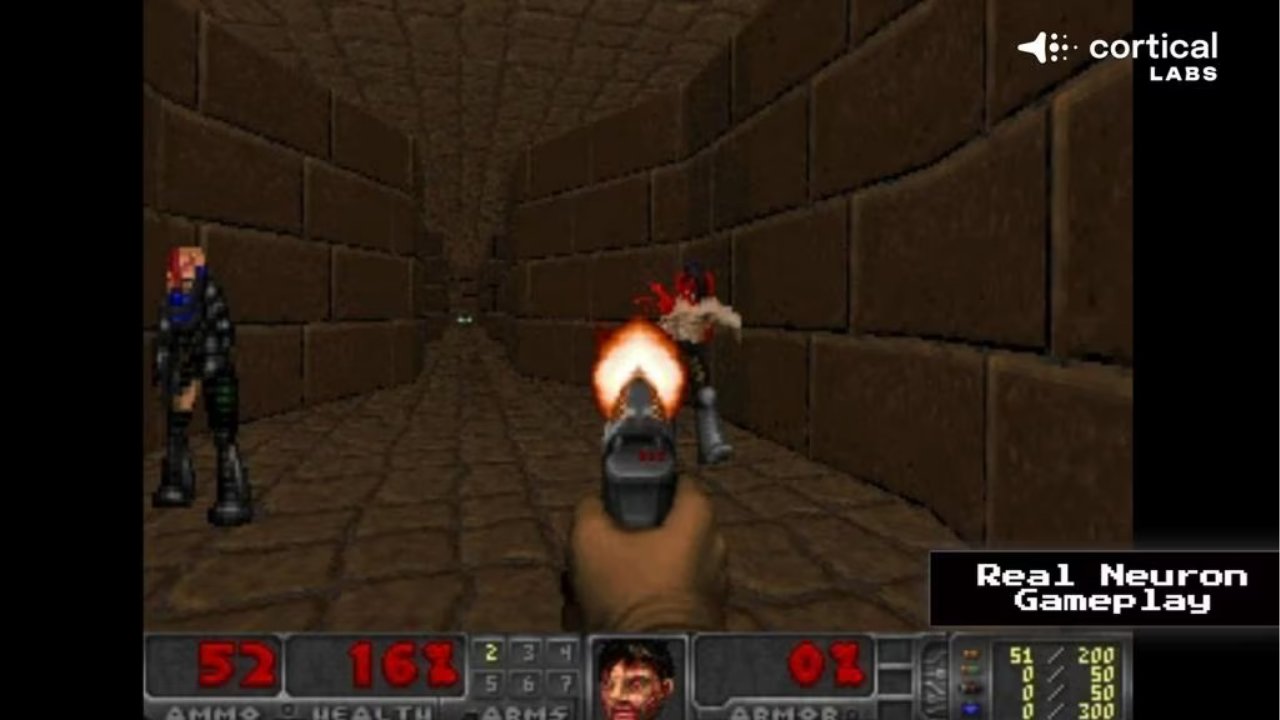
Cortical Labs introduced the CL1, a biological computer that integrates around 200,000 living human neurons on a chip. The company demonstrated how this neural network interacts with the video game Doom, processing stimuli and generating actions in real time. It is a public demo, not yet a formally peer-reviewed study.
What Is the CL1 and How Is It Built?
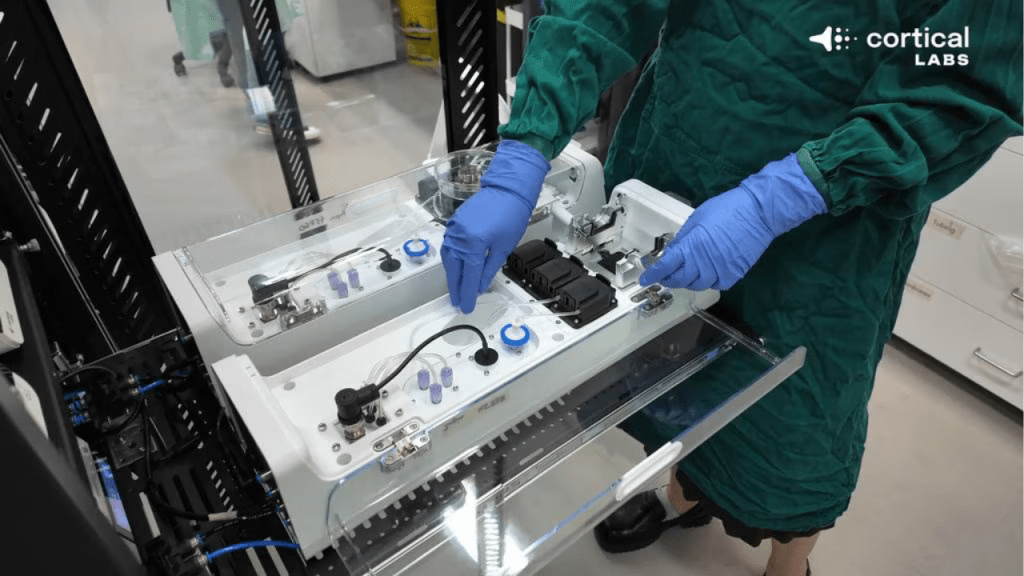
The CL1 is Cortical Labs’ latest commercial platform: a compact unit that maintains a human neuronal culture on a microelectrode array (MEA). The configuration integrates approximately 200,000 neurons along with a system that regulates temperature, nutrients, and physiological conditions to preserve stable cellular activity over time.
The architecture of the CL1 operates through a bidirectional interface. External digital signals — for example, information coming from a video game — are encoded into electrical stimulation patterns and delivered to the chip’s electrodes. The neurons respond by generating activity in the form of electrical spikes, which are recorded by the MEA. A decoding system then translates those patterns into instructions interpretable by software. In this way, the CL1 establishes a closed loop between biology and electronics.
Cortical Labs describes the CL1 as a “deployable” platform because it can be integrated with environments such as Python to design stimulation protocols and analyze responses. It is important to clarify that the code does not directly “program” the neurons; instead, it manages the interface connecting the biological system to the digital environment.
The development of the CL1 evolved from the 2022 DishBrain experiment, in which cultured neurons learned to play Pong. Unlike that earlier prototype, the CL1 aims for greater stability, scalability, and potential applications in biomedical research, pharmaceutical testing, and the study of neuronal dynamics.
The Doom Experiment: Method and Results

In the demonstration involving Doom, the CL1 was connected to a system that converted visual game information into electrical stimuli. These stimuli were sent to the neural network within the CL1, while the electrical activity generated by the neurons was recorded and translated into in-game actions such as movement or shooting.
This process does not mean that the CL1 “runs” the game internally. The video game operates on a conventional computer system; the CL1 functions as a decision-making component within the control loop. The key factor is real-time feedback, which allows stimulation patterns to adjust based on outcomes observed on the screen.
After training sessions, the CL1 exhibited basic adaptive responses. The neurons began producing electrical patterns that generated functional behaviors within the game environment. Performance remained limited and rudimentary, but sufficient to demonstrate that the system could be integrated into a dynamic and complex task.
So far, this CL1 experiment has been presented as a public technological demonstration. No peer-reviewed study has been published detailing comprehensive experimental metrics regarding its performance in Doom.
Implications, Limitations and Ethics

The development of the CL1 opens the door to a new category of hybrid computing, where biological and electronic systems operate in integration. In theory, platforms like the CL1 could be used to model neurological diseases, test pharmaceutical compounds, or explore processes of neuronal plasticity in controlled environments.
However, significant limitations remain. The scale of the CL1 — approximately 200,000 neurons — is extremely small compared to the complexity of the human brain. Furthermore, interpreting electrical activity as “learning” requires rigorous protocols and independent validation.
Ethical considerations are also central. Although there is no evidence of consciousness in networks like those used in the CL1, the use of human neural tissue raises questions regarding regulation, transparency, and scientific oversight. The research community emphasizes the need for clear regulatory frameworks as the CL1 and similar systems continue to evolve.
At present, the CL1 primarily represents an advanced engineering demonstration. Its practical impact will depend on future scientific publications, independent replication, and ongoing ethical evaluation.
The CL1 demonstrates that living human neurons can be integrated with digital systems for interactive tasks such as Doom. Although it represents a striking advance in biological computing, it still requires rigorous scientific validation and ethical debate before becoming a transformative large-scale technology.
Reference:
- News.com.au/Researchers teach ‘biological computer’ made from human brain cells to play Doom. Link
COMPARTE ESTE ARTICULO EN TUS REDES FAVORITAS:

Esta entrada también está disponible en:
 Español
Discover more from Cerebro Digital
Subscribe to get the latest posts sent to your email.