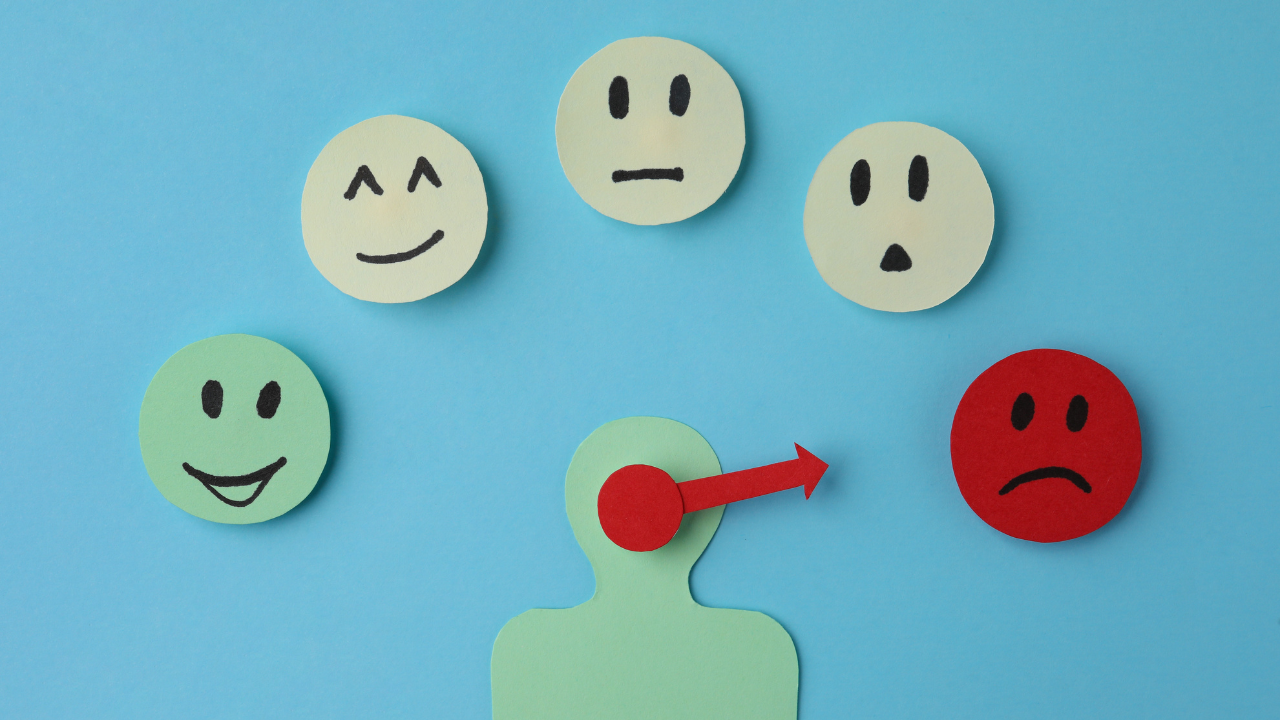
Since the 1960s decade of the last century, it has been repeated that depression originates from a “chemical imbalance” in the brain, especially due to low levels of serotonin. But a recent scientific review carried out by Professor Joanna Moncrieff and Doctor Mark Horowitz (both from the Psychiatry Department of University College London) dismantles this theory: there is no solid evidence to support it. This revelation questions the very foundation of the most prescribed treatments today for mental health.

The Chemical Imbalance Theory: A Convenient Narrative
Since the 1990s, the idea that depression is due to a serotonin deficit became popular thanks to pharmaceutical campaigns, institutional endorsements, and the massive arrival of SSRIs (selective serotonin reuptake inhibitors).
Through official institutions like the American Psychiatric Association, media, and manuals, millions of people received the message that their emotional symptoms had a biochemical cause that could be corrected with medication. This narrative was as convincing as it was reassuring: if the problem is in the chemistry, there is a clear solution.
However, it was not backed by conclusive scientific evidence. Although SSRIs increase serotonin transiently, that does not prove that its deficit is the root of the problem. In fact, what began as a hypothesis has ended up becoming a dogma that many patients assumed as absolute truth.
Now, a rigorous review invites us to look more cautiously at that medical promise. It is not about denying the utility of drugs, but questioning why they work and whether the story that has been told was the correct one.

What Science Says: The Major Review on Serotonin
A team led by researchers from University College London conducted one of the most comprehensive reviews to date on the link between serotonin and depression. They analyzed decades of clinical, genetic, and biochemical studies, and the results are clear: there are no significant differences in serotonin levels or its activity between people with and without depression.
Two systematic reviews from 2006 and 2007, along with a sample of the ten most recent studies, revealed that decreasing serotonin does not induce depression in hundreds of healthy volunteers. One of the reviews, based on just 75 patients, showed very weak evidence of a slight effect in a small subgroup of people with a family history of depression. But it was insufficient.
And what about genetics? Data based on thousands of patients also found no differences in the frequency of varieties of the gene containing the instructions to manufacture the serotonin transporter between people with depression and healthy controls. Only one famous 2003 study found a relationship between that gene and stressful life events, which later studies disproved.
And although some SSRIs relieve symptoms, their effect might be due to emotional numbing or the placebo effect. The most consistent finding was another: stressful life events significantly increase the risk of suffering from depression. The implication is clear: the chemical imbalance theory has had more of a narrative basis than a scientific one.
When the Wrong Message Becomes Stigma
Assuming that depression is a chemical imbalance not only simplifies a complex reality: it can also do harm. Various studies show that those who believe their depression has purely biological causes tend to feel less capable of recovering.
Rather than reducing stigma, the chemical narrative transforms it into fatalism. If the problem is in my biology and I can’t change it, how am I going to improve without drugs? This mindset can hinder the search for other ways to heal, such as psychotherapy, environmental changes, support networks, or treatment of past traumas.
Additionally, it is concerning that so many patients have made medication decisions without having received all the available information. SSRIs are not free of side effects, and their real efficacy against placebo remains under debate. Instead of perpetuating the discourse that there is something “broken” in the brain that a pill can fix, perhaps it is time to humanize the conversation and make room for other perspectives on what it means to be depressed.

The chemical imbalance theory offered us a simple explanation for a painfully complex phenomenon. But current science does not support it. It is not about discrediting antidepressants, but promoting transparency, rigor, and humanity when addressing mental health. Understanding depression requires looking beyond chemistry: toward personal history, environment, unexpressed suffering. Only then can we offer more honest, effective, and compassionate answers.
- Analysis: Depression is probably not caused by a chemical imbalance in the brain – new study. Link
- Neuroimaging and electrophysiological studies of the effects of acute tryptophan depletion: a systematic review of the literature. Link.
- Mood is indirectly related to serotonin, norepinephrine and dopamine levels in humans: a meta-analysis of monoamine depletion studies. Link.
- Influence of life stress on depression: moderation by a polymorphism in the 5-HTT gene. Link.
COMPARTE ESTE ARTICULO EN TUS REDES FAVORITAS:

Esta entrada también está disponible en:
 Español
Discover more from Cerebro Digital
Subscribe to get the latest posts sent to your email.