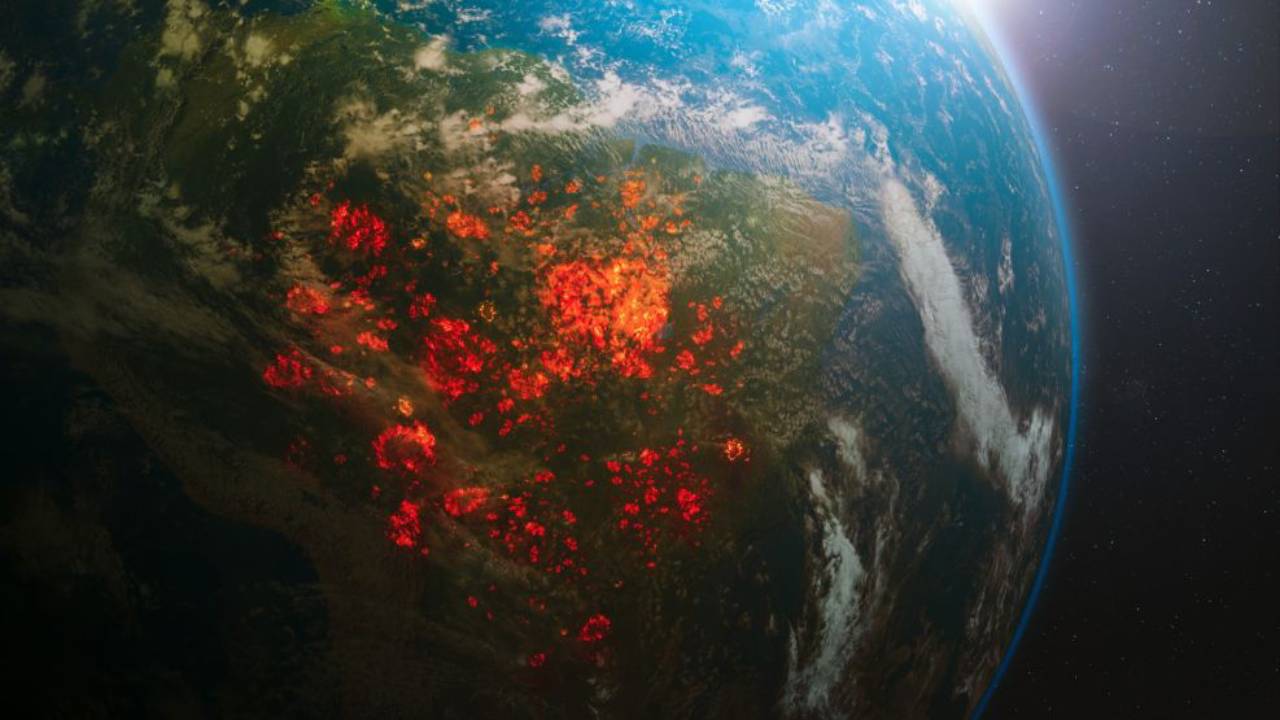
Earth ~4.5 billion years old—stable seeming, evolution unfinished. Recent study: in ~250 million years, extreme hot/hostile for mammals.
Extreme Supercontinent: Pangea Ultima
Supercomputers simulated 250M-year climate. Tectonics fuse continents into massive Pangea Ultima (Pangea nod).
Tropically positioned bulk spikes global temps. Sun brighter (~2.5% more radiation). CO₂ naturally rises >600 ppm (current far below). “Triple climate punch.”
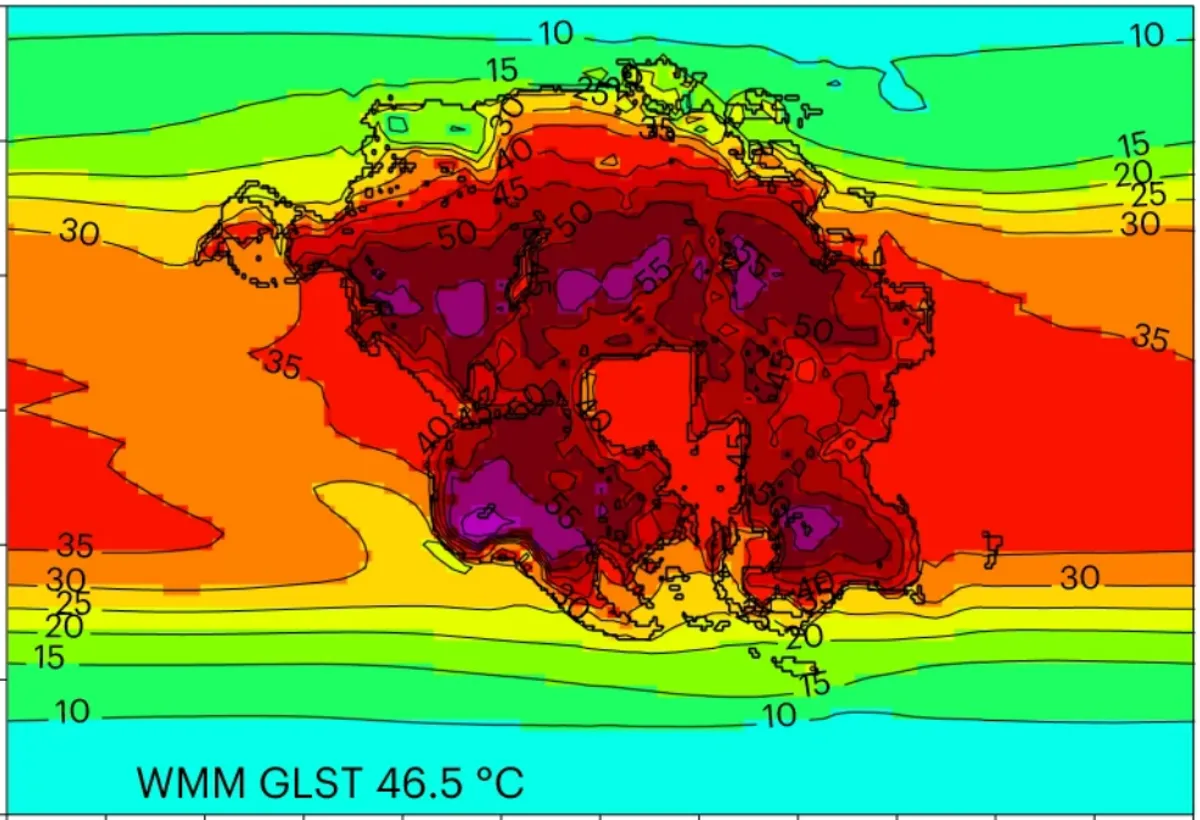
Tropically positioned bulk spikes global temps. Sun brighter (~2.5% more radiation). CO₂ naturally rises >600 ppm (current far below). “Triple climate punch.”
Averages 40-70°C vast zones—hostile most land species.
Earth Too Hot for Mammals

Continental effect: inland extremes/low humidity amplify heatwaves, water scarcity.
Pangea Ultima mostly coast-far: scorching summers, tropical nights, high humidity. Mammals (humans included) face huge physiological hurdle.
Not just heat: high temp/humidity hampers sweat cooling. Minimal activity risks deadly overheating.
Ecosystems collapse sans water/food—mammal-inhospitable regions.
Researchers note: distant future. Humanity faces nearer emissions-driven crisis.
Study reminds climate fragility. Current dangers urgent: emissions cuts/carbon neutrality priority.
Referencia:
- Nature Geoscience/Climate extremes likely to drive land mammal extinction during next supercontinent assembly. Link
COMPARTE ESTE ARTICULO EN TUS REDES FAVORITAS:

Esta entrada también está disponible en:
 Español
Discover more from Cerebro Digital
Subscribe to get the latest posts sent to your email.