

Among the least advisable places to put one’s head, a particle accelerator undoubtedly ranks near the top. Yet on July 13, 1978, Anatoli Bugorski, a 36‑year‑old Russian scientist, did exactly that.
At the Institute for High Energy Physics in Protvino, near Serpukhov, Russia, Bugorski was working on the Synchrotron U‑70 when he encountered a technical problem. In an attempt to identify the issue, he leaned into the accelerator, unaware that it was still active and that the warning lights had been switched off during a previous experiment. At that moment, his head intercepted a proton beam.
Particle accelerators, such as the U‑70, are extremely powerful devices used in physics to accelerate subatomic particles, like protons, to very high speeds, nearly reaching the speed of light. These particles are then collided with others or directed at targets to study the fundamental laws of nature and the structure of matter.
This beam, moving at nearly the speed of light, passed through his skull. Bugorski felt no pain but saw a flash “brighter than a thousand suns,” a clear sign that something extraordinary and potentially catastrophic had occurred. As if nothing had happened, he finished his work.
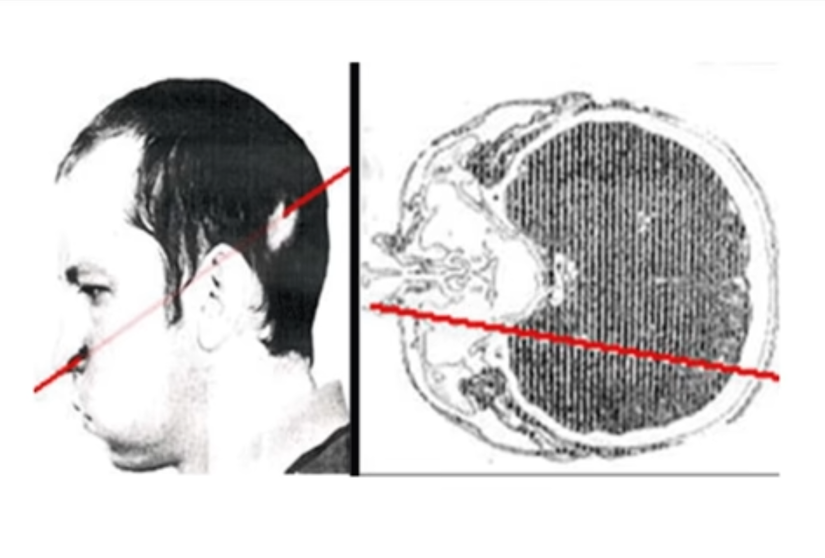
That night, the left side of his face began to swell alarmingly. After a sleepless and uncomfortable night, Bugorski decided to seek medical help. He was rushed to Moscow and admitted to a clinic specializing in radiation poisoning.
The dose of radiation Bugorski had absorbed was phenomenal, estimated between 200,000 and 300,000 rads. To put this into perspective, a dose of 400 to 1,000 rads would generally be fatal. However, through some combination of scientific factors and perhaps sheer luck, Bugorski survived. Unlike victims of nuclear disasters such as Chernobyl, who received high‑energy gamma radiation throughout their bodies, Bugorski was struck in a concentrated, small area. Although the beam burned a hole through his brain, tissues, and nerves—leaving one side of his face paralyzed and causing hearing loss in his left ear—his vital organs, such as bone marrow and the gastrointestinal tract, were spared.
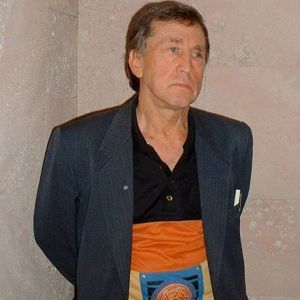
Despite suffering frequent seizures, Bugorski retained his intellectual sharpness. He returned to work 18 months later, continued his scientific career, completed his doctorate, and maintained his position at the U‑70, where the incident had occurred.
Despite the severe physical aftereffects, such as partial facial paralysis and hearing loss, Bugorski preserved his intellectual acuity. A remarkable side effect was the uneven aging of his face: while one side showed the typical wrinkles of age, the other, affected by the proton beam, remained unaged.
Bugorski’s accident remained secret for more than a decade due to the Soviet Union’s policy of keeping nuclear‑related matters classified. Only after the Chernobyl disaster did his story come to light.
Anatoli Bugorski not only survived this unprecedented event; he outlived the very accelerator that had injured him. With the collapse of the Soviet Union and the country’s economic changes, government funding for the project ceased, and the project was eventually abandoned.

As of today, Bugorski is still alive, a living testament to human resilience and a fascinating chapter in the history of particle physics.
COMPARTE ESTE ARTICULO EN TUS REDES FAVORITAS:

Esta entrada también está disponible en:
 Español
Discover more from Cerebro Digital
Subscribe to get the latest posts sent to your email.