
The classic “midlife crisis” may be ending. However, a new study reveals this apparent good news hides a troubling backdrop: young people’s mental health, especially Gen Z, deteriorates far earlier than maturity.
Midlife Crisis: A U-Shaped Pattern

For decades, science described midlife crisis as nearly universal. Over 600 studies documented life satisfaction following a U-shape: high youth wellbeing, sharp 40s-50s drop, elderly recovery.
This stress-filled period of insecurity/impulsive choices (career changes, affairs) became social psychology commonplace. Alongside emerged the “unhappiness hump”—peaking midlife distress, depression, anxiety.
New surveys suggest this pattern fading. Dartmouth College, University College London, and Institute for Fiscal Studies researchers found older adults show no more distress; change hits another age group: youth.
Early Youth Mental Health Decline

The study analyzed massive U.S./UK survey data: 10M+ adults 1993-2024, 40K+ UK households 2009-2023. Results: wellbeing no longer dips midlife but starts low from youth.
Researchers confirm today’s mental distress exceeds under-40s vs. older adults—a radical historical reversal.
Findings corroborated by nearly 2M people across 44 countries (Global Minds study, 2020-2025). U-curve/unhappiness hump vanished, replaced by downward line: younger = worse emotional state.
This global phenomenon alarms: a generation enters adulthood with precarious psychological wellbeing.
Possible Causes and Expert Warning
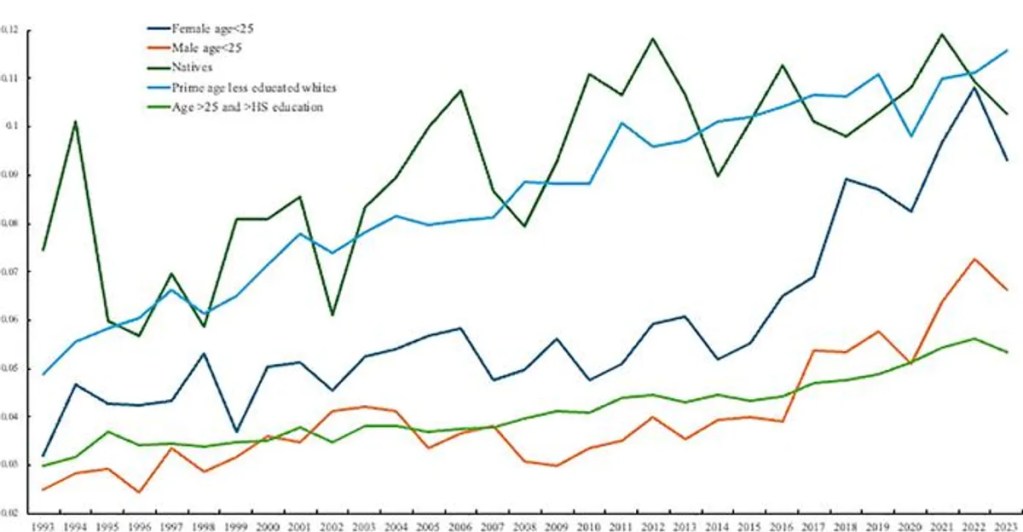
No consensus on causes, but researchers cite: lingering Great Recession youth job impacts, mental health underinvestment, COVID-19 aftermath, especially social media eroding self-esteem/relationships. Each progressively undermined youth stability, spiking anxiety/depression/stress.
PLOS One authors stress: not midlife crisis victory, but generational crisis alert.
“Today mental distress peaks young, declines with age,” they conclude.
Main worry: unreversed, consequences devastate decades ahead—from human capital erosion to public health burdens.
Midlife crisis end signals no human wellbeing advance—alarming symptom Gen Z/youth bear emotional weight once later-life exclusive. Real crisis arrives early, unannounced.
Reference:
- Plos One/The declining mental health of the young and the global disappearance of the unhappiness hump shape in age. Link
COMPARTE ESTE ARTICULO EN TUS REDES FAVORITAS:

Esta entrada también está disponible en:
 Español
Discover more from Cerebro Digital
Subscribe to get the latest posts sent to your email.