
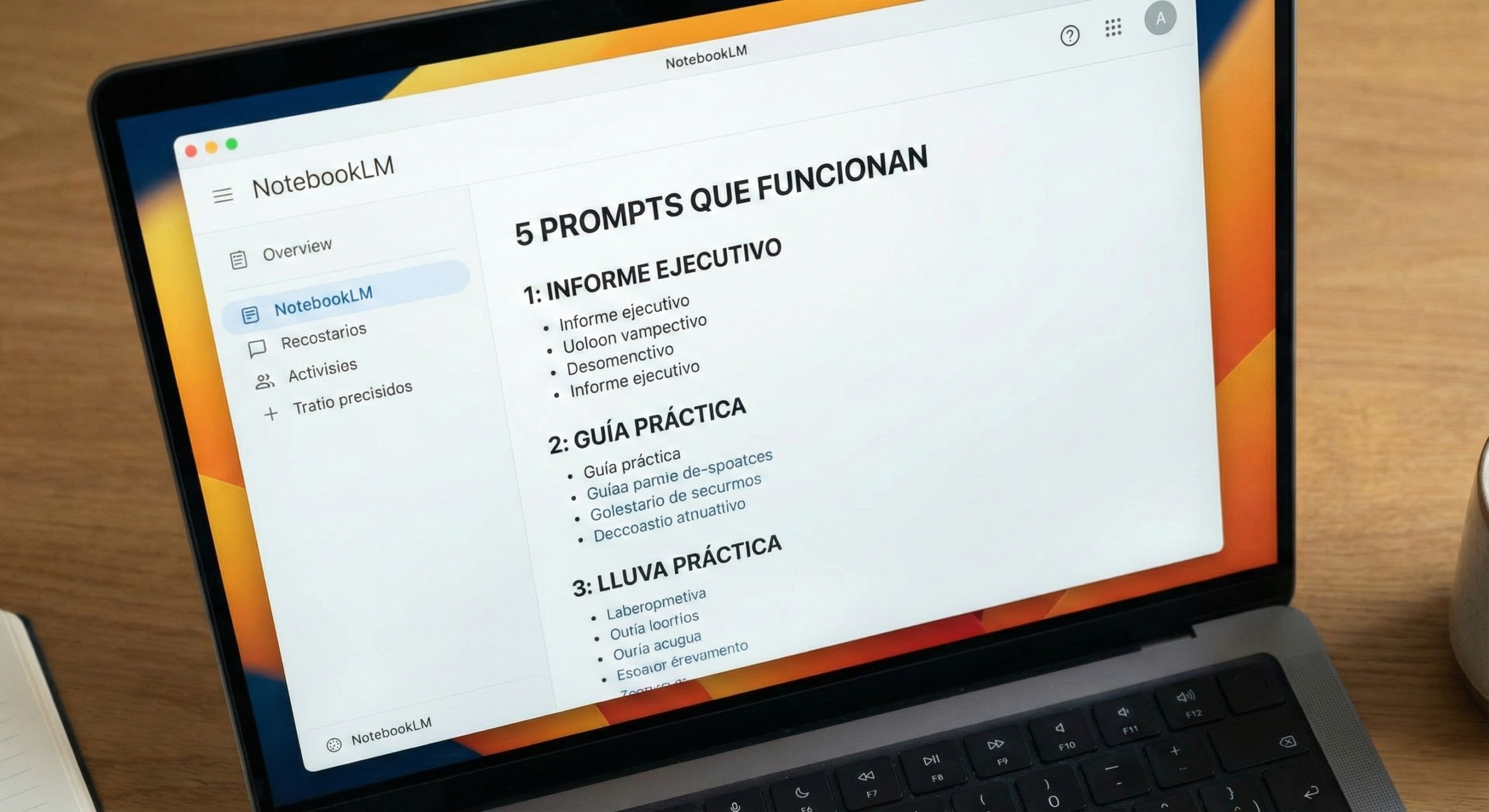
A graduate student from MIT demonstrated that it is possible to master a completely new subject in just 48 hours using Google’s NotebookLM. It wasn’t magic or a cheap trick: it was a precise questioning strategy that anyone can replicate. The viral tweet from Ihtesham Ali garnered over 14,000 likes, 27,000 bookmarks, and 3 million views.

The method: no summaries, but mental models
The first thing the student did was not ask for a summary. Instead, he uploaded to NotebookLM 6 textbooks, 15 research papers, and all the class transcripts he found on the topic. A volume of material that would normally take weeks just to read.
His first question was devastatingly precise:
“What are the 5 fundamental mental models shared by every expert in this field?”
He didn’t ask for definitions or basic explanations. He asked for the thinking frameworks that take professors years to develop — the kind of deep understanding that separates someone who truly grasps a field from someone who just memorized facts.
The complete field map in 20 minutes
The second question was equally strategic:
“Show me the 3 points where experts in this field fundamentally disagree, and what is the best argument from each side.”
In 20 minutes, he had a complete map of the intellectual landscape of the field: the active debates, the established consensuses, and the open questions. Most students spend an entire semester just trying to understand what those debates are.
The technique that changed everything: questions that expose
But the brightest part came next. The student asked:
“Generate 10 questions that would expose whether someone truly understands this topic in depth, versus someone who just memorized facts.”
He spent the next 6 hours answering those questions using the source material. Each incorrect answer triggered an immediate follow-up:
“Explain why this is wrong and what I’m missing.”
This feedback loop — difficult question → attempt → correction → understanding — is exactly what cognitive science calls active recall, one of the most effective study techniques out there.
The result: 48 hours vs. a semester
By hour 48, the student could hold a conversation with his thesis advisor without being torn apart. He passed a qualifying exam on a topic he had never studied before.
The key was not the tool — it was the quality of the questions:
“Most people treat NotebookLM like a glorified highlighter. These students use it like a private tutor who has read everything that has been written on the topic.”
The 3 questions of the method
The framework can be summarized in three key questions, applicable to any field:
- Mental models: “What are the N fundamental mental models shared by every expert in this field?”
- Points of disagreement: “Where do experts fundamentally disagree, and what is the best argument from each side?”
- Depth questions: “Generate questions that distinguish someone who truly understands from someone who just memorized.”
Why it works according to cognitive science
This method is not a coincidence. It aligns with three research-backed principles:
- Active recall: Trying to answer difficult questions consolidates memory much better than rereading or summarizing.
- Desirable difficulty: Questions that expose knowledge gaps lead to deeper and more lasting learning.
- Conceptual frameworks first: Learning the structure of the field before the details allows for more efficient organization of new information.
The difference is not the content, it’s the questions
The most powerful lesson from this case is not about NotebookLM — it’s about how we think about learning. The difference between a semester and 48 hours is not the amount of content. It’s knowing what questions to ask.
NotebookLM is just the tool. The real change is moving from passively consuming information to actively interrogating it. And that works with any AI tool — or even without it.
Source: @ihtesham2005
COMPARTE ESTE ARTICULO EN TUS REDES FAVORITAS:

Esta entrada también está disponible en:
 Español
Discover more from Cerebro Digital
Subscribe to get the latest posts sent to your email.