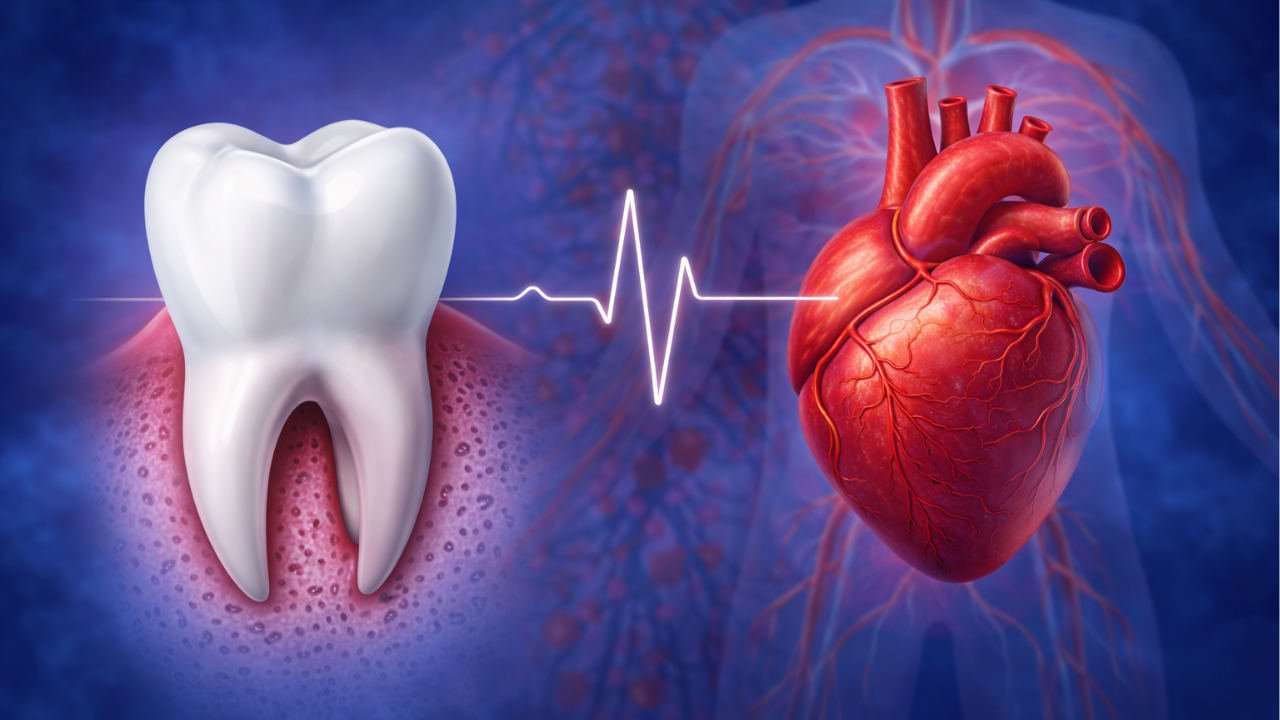
Oral health influences much more than a smile. A recent study published in Journal of Translational Medicine found that treating endodontic infections could improve metabolic parameters such as glucose and lipids. These findings reinforce the relationship between oral inflammation and overall systemic health.
Scientific Evidence: Results of the Longitudinal Study on Endodontic Treatment and Metabolism
The study conducted by Zhang, Le Guennec, Pussinen, Proctor, and Niazi in 2025 followed patients diagnosed with apical periodontitis, a chronic infection located at the tooth root caused by bacteria invading the pulp tissue, over a two-year period. Although it is often treated as an isolated dental problem, this condition can generate a persistent inflammatory response that affects the entire body.
After performing successful endodontic treatment, researchers applied advanced metabolomics techniques, a tool that allows analysis of small molecules present in the blood and helps identify metabolic changes. The results showed significant reductions in glucose, pyruvate, and certain metabolites associated with inflammatory processes. Improvements were also observed in the profile of lipids and fatty acids, suggesting a positive effect on metabolic regulation.
A key finding was the association between the resolution of the dental infection and the progressive decrease of markers linked to metabolic syndrome. This indicates that eliminating a chronic infectious focus may reduce systemic inflammatory burden.
However, the authors do not claim that endodontics directly prevents diseases such as diabetes or heart attack. Rather, they conclude that successful treatment is associated with metabolic improvements that could influence cardiometabolic risk factors, opening new directions for clinical research.
How Oral Inflammation Can Affect Glucose and the Cardiovascular System
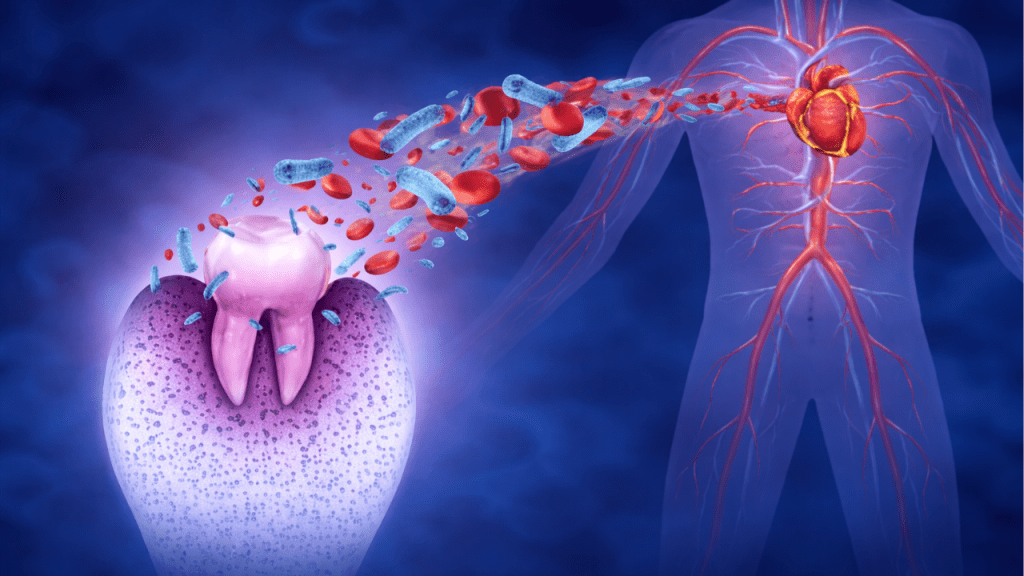
The biological explanation behind these findings is related to low-grade systemic inflammation. When an endodontic infection remains active, bacteria and toxins can intermittently enter the bloodstream. This stimulates the continuous production of inflammatory mediators that disrupt metabolic balance.
Chronic inflammation plays a central role in insulin resistance and in the development of cardiovascular disease. For this reason, even a localized infection in a tooth can act as a constant stimulus influencing blood glucose regulation and lipid metabolism.
By eliminating the infection through appropriate treatment, such as endodontics, this source of immune activation is reduced. The study observed that, over time, metabolic profiles improved, suggesting a gradual recovery of physiological balance.
This perspective does not imply that endodontics is a metabolic therapy, but it reinforces the idea that oral health is part of the body’s overall system and can influence processes that may seem unrelated.
Toward an Integrated Approach Between Dentistry and Preventive Medicine

The study’s findings support the need for a more integrated vision of healthcare. Traditionally, dentistry and general medicine have operated as separate fields, yet scientific evidence shows they share important biological connections.
If chronic oral infections, including those of endodontic origin, contribute to the body’s total inflammatory burden, their treatment could become part of broader prevention strategies. For individuals with risk factors such as prediabetes, obesity, or cardiovascular history, maintaining proper oral health may offer additional benefits.
The use of metabolomic analysis in this study demonstrates that the changes are not only clinical but measurable at the biochemical level. This opens the possibility of using specific blood markers to monitor systemic recovery after endodontic treatment.
Although larger studies with control groups are still needed, this research provides a solid foundation for reconsidering the role of endodontics in comprehensive health care.
Endodontics and successful endodontic treatment may be associated with improvements in glucose, lipids, and systemic inflammation, according to recent evidence. While it does not directly prove prevention of chronic diseases, it reinforces that oral health is an essential component of metabolic balance and overall well-being.
Reference:
Journal of Translational Medicine / Successful endodontic treatment improves glucose and lipid metabolism: a longitudinal metabolomic study. Link
COMPARTE ESTE ARTICULO EN TUS REDES FAVORITAS:

Esta entrada también está disponible en:
 Español
Discover more from Cerebro Digital
Subscribe to get the latest posts sent to your email.