
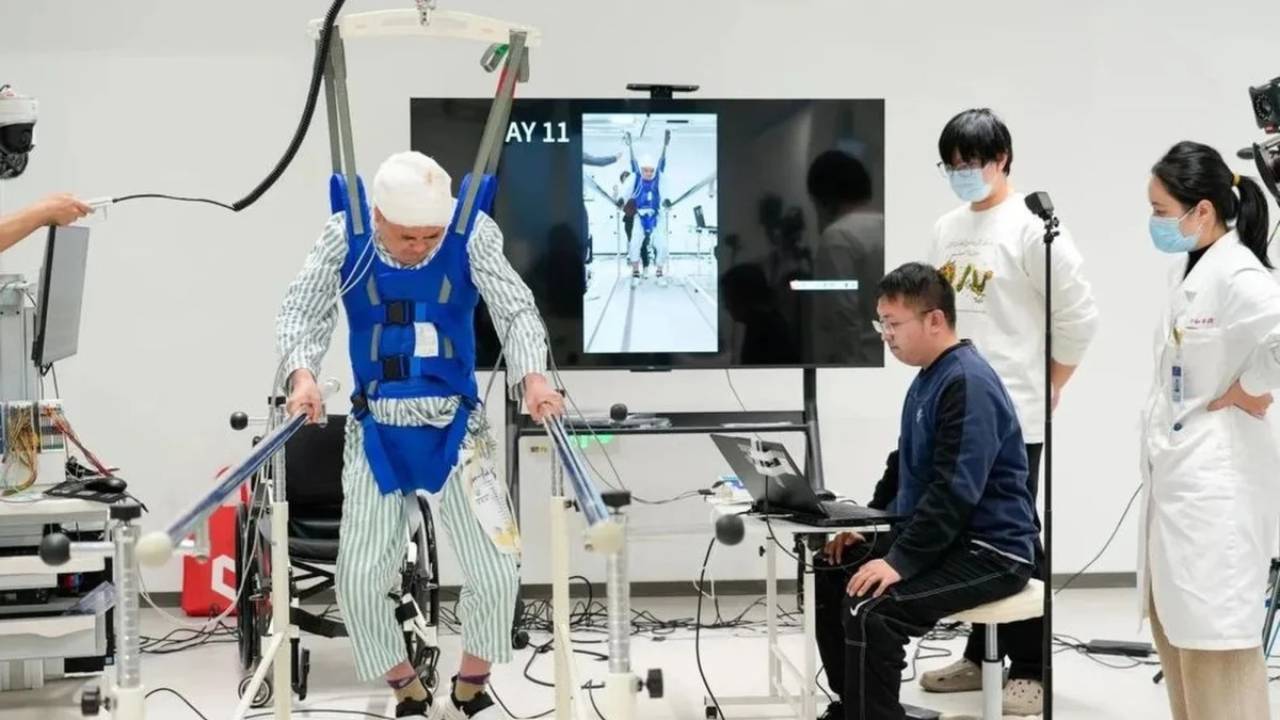
A clinical trial conducted in Shanghai has pushed the boundaries of neurological medicine with brain implants. Four patients paralyzed due to spinal cord injuries regained leg movement following an innovative surgery that reconfigures the nervous system without relying on robotic prosthetics.
Chinese Brain Implants Outperform Neuralink’s
For decades, spinal cord injuries were considered an irreversible sentence. Technological breakthroughs, such as those by Elon Musk’s Neuralink, offered alternative paths: brain-computer interfaces (BCI) that connected the brain to external devices to restore lost functions. However, these solutions didn’t restore nerve function—they substituted it with external tech.
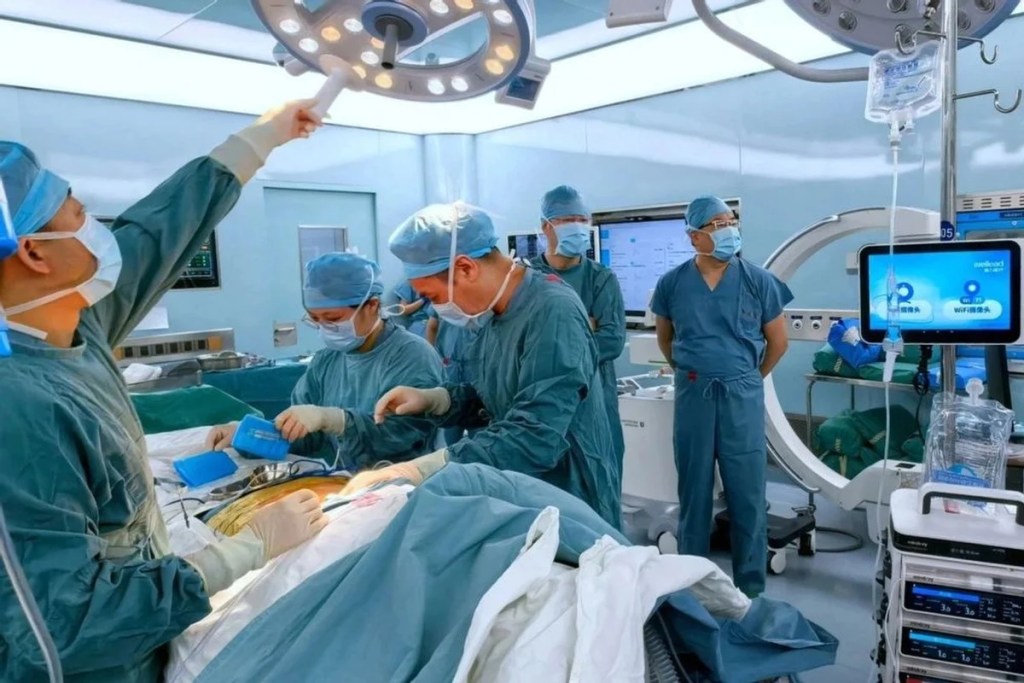
The recent trial led by Fudan University in Shanghai marks a radical shift in that paradigm. Instead of linking the brain to machines, Chinese researchers implanted electrode chips directly into the patients’ brain and spinal cord. This brain–spinal interface created a “neural bypass” capable of restoring communication between damaged neurons.
Remarkably, within 24 hours patients began voluntarily moving limbs that had been immobile for years. Within weeks, they regained the ability to walk independently, without robotic assistance. Even more notable: they experienced nervous system reactivation, a process researchers call “neuronal remodelling,” meaning a rewiring of the central nervous system.
This technique suggests the nerves were not dead but “dormant” or disconnected, and that proper stimulation can reconnect them. Unlike Musk’s brain implants, which use external tech to substitute lost functions, the Chinese approach enables the body to relearn how to move itself.
This breakthrough opens a new field of possibilities in clinical neuroscience. If confirmed in future studies, it could eliminate the need for external devices and restore true autonomy to people with paralysis.
From Sci‑Fi to Reality: The Transformative Potential of Neural Bypass
China’s brain implants not only restore movement but also stimulate functional regeneration of neuronal connections. This mechanism, still under study, may explain why some patients regain not only movement but also sensitivity and voluntary control over lost bodily functions.
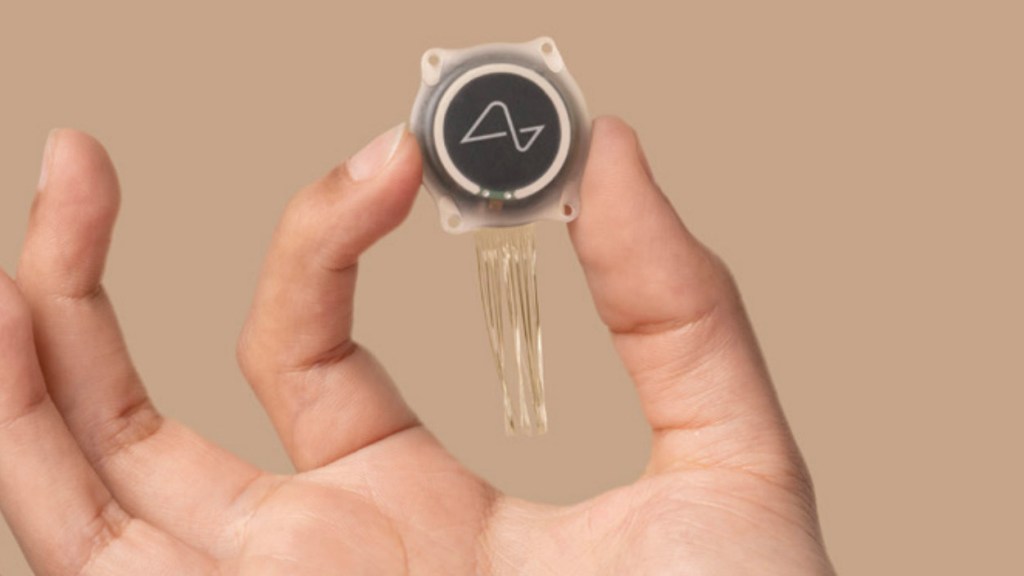
The device uses synchronized intracranial and spinal chips to act as a biotechnological bridge between the brain and spinal cord—a kind of internal network that bypasses the damaged area and enables motor commands to reach their destination. The concept was tested in animal models, but this is one of the first documented cases of sustained success in humans with chronic paralysis.
Although much remains to be done in clinical validation, this trial suggests a previously unthinkable possibility: that paralysis may not be permanent. While Musk and others invest in external technology to compensate for bodily loss, China appears to be betting on internal restoration.
The trial’s researchers have expressed intent to continue studies with a larger patient cohort, and to refine the devices to be less invasive and more affordable. The ultimate goal is clear: to restore mobility without relying on machines, by reactivating the body itself.
The Chinese trial not only offers hope to millions living with paralysis but also rethinks the global approach to neurotechnology. Rather than substituting lost functions with technology, it suggests the possibility of restoring them naturally. This difference in approach could mark the beginning of a new era in regenerative medicine.
Reference:
- SCMP/China’s neurotechnology breakthrough challenges Elon Musk’s verdict on paralysed patients. Link
COMPARTE ESTE ARTICULO EN TUS REDES FAVORITAS:

Esta entrada también está disponible en:
 Español
Discover more from Cerebro Digital
Subscribe to get the latest posts sent to your email.