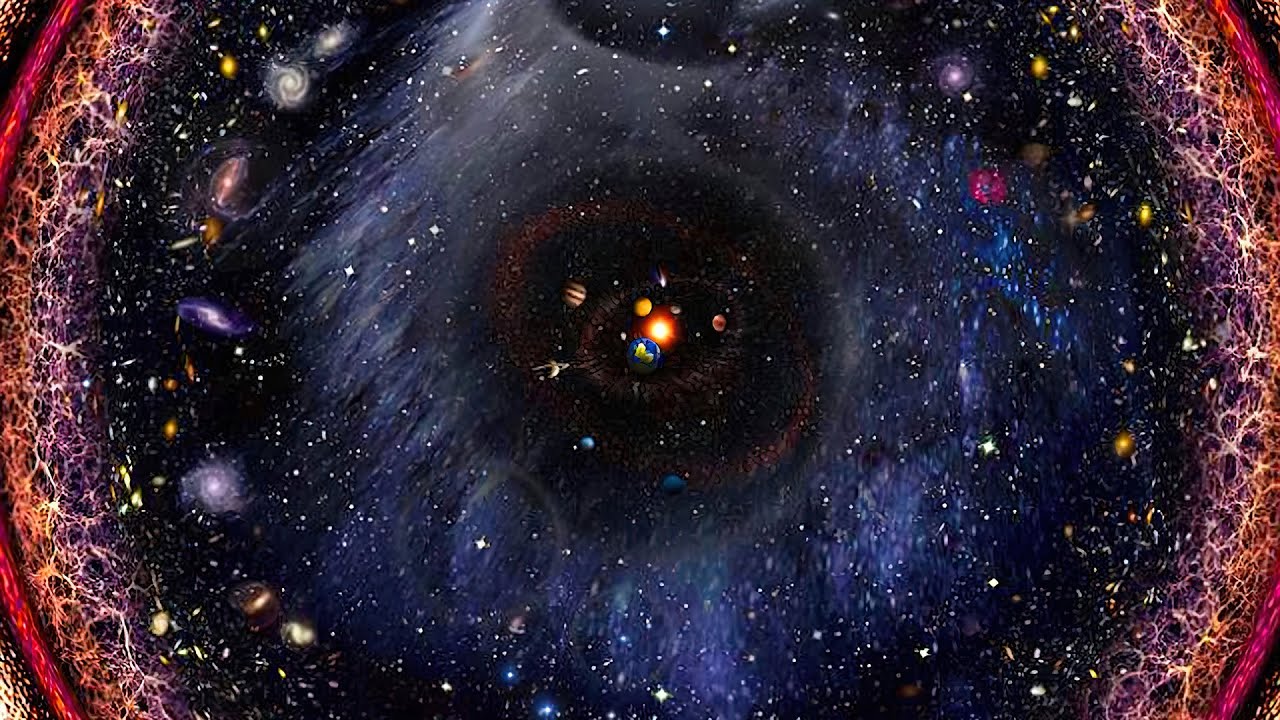

New research suggests that the Earth, the Milky Way, and the local universe might be inside a low-density cosmic void about 2 billion light years wide. This finding, supported by the «sound of the Big Bang,» could resolve one of the biggest enigmas of modern cosmology.
The Cosmic Void and the Hubble Tension
For decades, cosmologists have faced a dilemma known as the Hubble tension, the discrepancy between the two main ways to measure the expansion of the universe. On one hand, observations of the cosmic microwave background (CMB)—the first light of the universe—indicate a slower expansion rate. On the other hand, measurements of supernovae and nearby galaxies suggest that the local universe is expanding faster.
Researcher Indranil Banik, from the University of Portsmouth, proposes a surprising solution: that we live inside a «Hubble bubble,» a region of lower density than the rest of the cosmos. According to Banik, this difference would cause matter to move away more quickly, giving the illusion of accelerated expansion.
In his model, this cosmic void would have a diameter of 2 billion light years and a density 20% lower than the universal average. This would be enough to explain why local measurements give a higher value for the Hubble constant.
Observational data partially support this idea. Counting galaxies in the local universe reveals a lower density than in more distant regions. If the Earth is really at the center of this void, we could finally reconcile the cosmological discrepancies without altering fundamental physical principles.
The Sound of the Big Bang Backs the Void Hypothesis

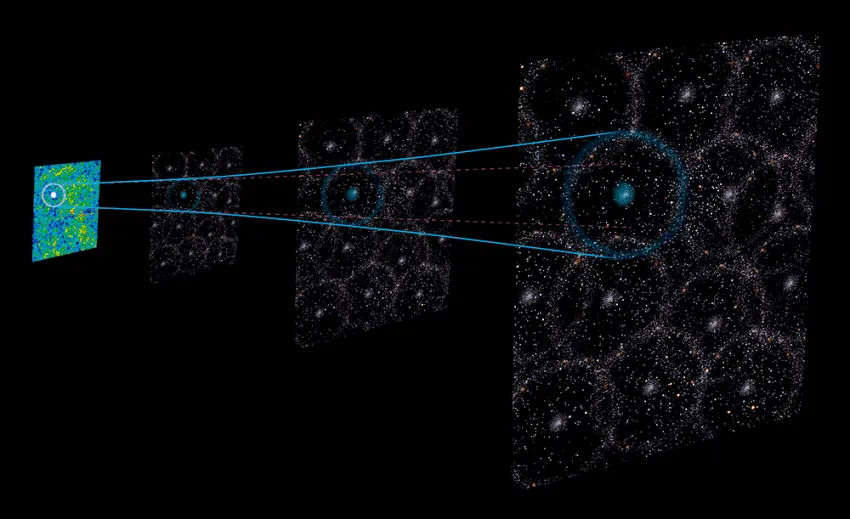
Banik’s work is based on baryon acoustic oscillations (BAO), sound waves generated shortly after the Big Bang. These waves froze into the fabric of the universe when neutral atoms began to form, and today they serve as a «cosmic ruler» to measure its expansion.
By analyzing two decades of BAO data, Banik discovered that the pattern of these waves is slightly distorted in the presence of a local void. The velocities induced by the low density and gravitational effects increase the redshift, generating an apparent acceleration in the expansion.
«We demonstrated that a model with a void is 100 million times more likely than one without a void,» stated Banik. This finding challenges the standard cosmological model ΛCDM (Lambda cold dark matter), which assumes that the universe is homogeneous and isotropic.
In other words, the echo of the Big Bang—its primordial sound—could be revealing a distortion in the local structure of the universe, a giant bubble that alters our measurements and understanding of the cosmos.
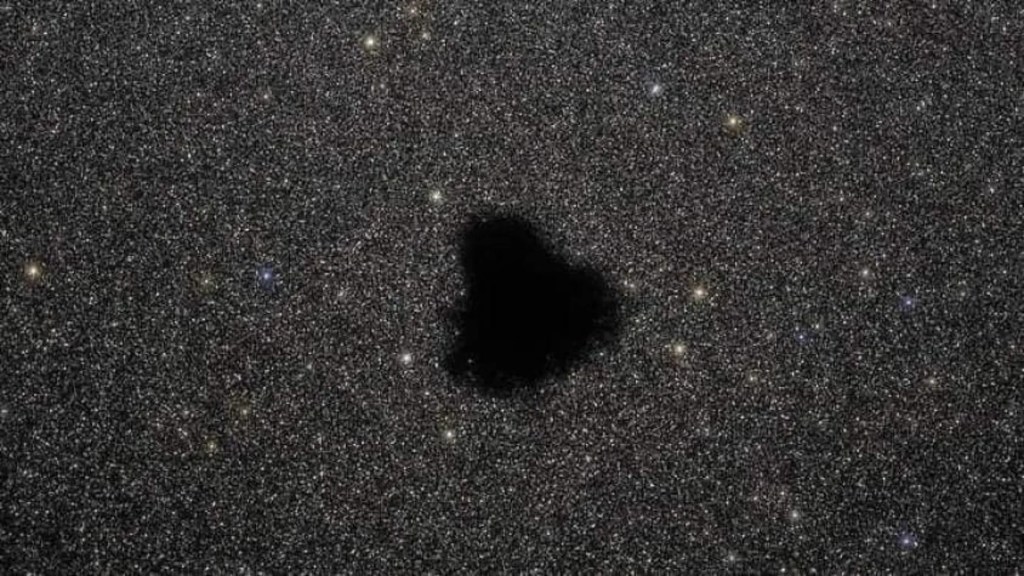
Big Bang echo reveals local structure distortion—giant bubble skewing cosmos view.
The next step for Banik’s team will be to compare their model with other possible scenarios using «cosmic chronometers», such as aged galaxies whose light reveals the history of universal expansion. By analyzing their stellar populations and redshift, they will be able to reconstruct how the expansion speed has changed over time.
If observations confirm this hypothesis, the universe might not be as uniform as we thought. Instead of a perfectly homogeneous network, large bubbles of cosmic void and regions of high density could coexist, affecting the way we measure dark energy and cosmic expansion.
Banik’s model also raises a profound philosophical question: what if our position in the cosmos is more special than we think? Being near the center of a colossal cosmic void would alter not only our measurements but also our perception of humanity’s place in the universe.
Banik’s finding suggests that the sound of the Big Bang still resonates in our region of the universe, revealing a possible cosmic void that could resolve the Hubble tension. If confirmed, we would be living in a low-density bubble, a mystery that redefines our understanding of the cosmos.
Reference:
- Science Daily/The Universe may have already started slowing down. Link
COMPARTE ESTE ARTICULO EN TUS REDES FAVORITAS:

Descubre más desde Cerebro Digital
Suscríbete y recibe las últimas entradas en tu correo electrónico.