



A recent wave of news has brought the Shroud of Turin back into the spotlight. A 2022 Italian study has regained attention by claiming that this controversial relic dates back 2,000 years, to the time of Jesus. However, there are still reasons to be cautious.
What Is the Shroud of Turin and Why Is It So Controversial?


The Shroud of Turin is a linen cloth that displays the faint image of a man who appears to have been crucified. For centuries, it has been venerated by many believers as the burial shroud that wrapped Jesus after his death. However, science and faith have long been at odds over its authenticity.
The first historical record of the Shroud of Turin dates back to 1354, when it appeared in a church in Lirey, France, with no clear explanation of how it got there. In 1389, the Bishop of Troyes openly declared it a fraud, claiming that an artist had confessed to painting it. Still, for centuries, clergy, pilgrims, and even popes have defended its authenticity.
In 1988, three separate laboratories conducted radiocarbon dating tests. The results were clear: the fabric was made between 1260 and 1390—more than a thousand years after the crucifixion. This was a major blow to those who believed the cloth to be a genuine biblical artifact.
The New Italian Study and Its Unexpected Media Impact


The renewed interest in the Shroud of Turin was triggered by a study conducted in 2019 and published in 2022 by Liberato De Caro and his team at the Institute of Crystallography in Bari. Using an advanced technique called wide-angle X-ray scattering, the team concluded that the linen fibers could be around 2,000 years old.
The key argument is that the cellulose in the fabric may have aged slowly due to the Shroud being kept in low-temperature, moderately humid environments for over a millennium before its first historical record. According to the researchers, this could explain why the 1988 carbon-14 test underestimated its age.
However, this hypothesis relies on a critical condition: that the Shroud of Turin was stored in stable conditions—22 °C and 55% humidity—for over 1,300 years. That’s a difficult assumption to verify and one that raises many questions.
Past Controversies and the Need for Scientific Rigor

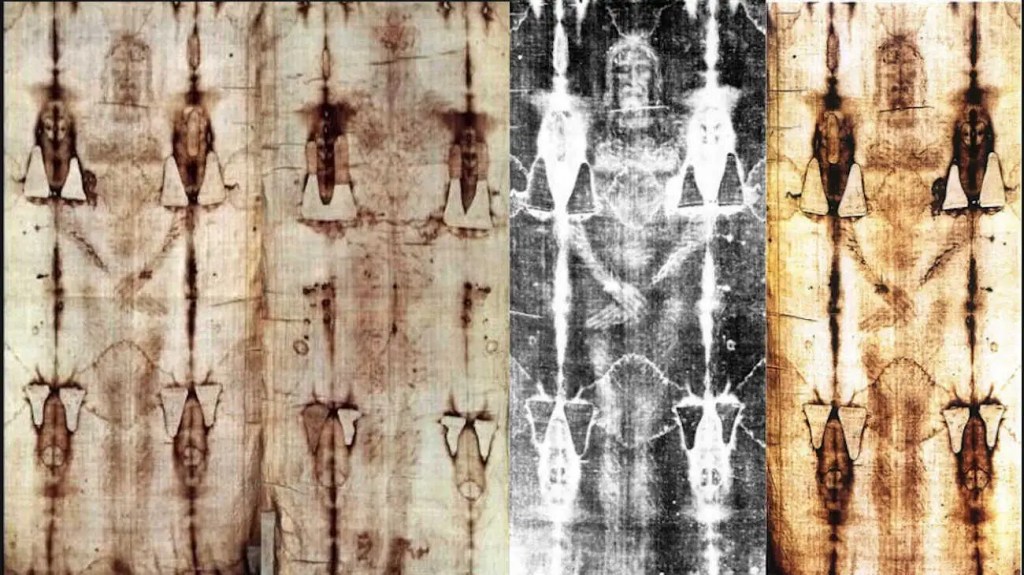
While the new study has been welcomed by some, De Caro’s background urges caution. In 2018, he and other colleagues published a paper in PLOS One that was later retracted due to lack of scientific controls and undeclared conflicts of interest.
That study claimed to have found biological traces consistent with a person subjected to torture and crucifixion. However, it failed in its methodology, and the origin of the fibers analyzed came from an organization with a vested interest in validating the Shroud’s authenticity: the Shroud of Turin Education and Research Association. The conflict of interest was clear.
None of this automatically discredits the new 2022 study, but it does highlight the need for independent and reproducible analysis. To confidently claim that the Holy Shroud dates to the 1st century, more is required than an innovative technique—scientific consensus, transparency, and replication are essential.
The Holy Shroud of Turin continues to fascinate the world. It remains one of the most studied, venerated, and debated religious objects in history. While new techniques may shed light on its origin, the evidence is still far from conclusive.
Reference:
- MDPI/X-ray Dating of a Turin Shroud’s Linen Sample. Link
- Nature/Radiocarbon dating of the Shroud of Turin. Link
COMPARTE ESTE ARTICULO EN TUS REDES FAVORITAS:

Esta entrada también está disponible en:


Discover more from Cerebro Digital
Subscribe to get the latest posts sent to your email.


