A team from the University of Ottawa, collaborating with researchers from Sapienza Università di Roma, developed a technique capable of reconstructing and visualizing in real time the wave function of two entangled photons. This breakthrough promises to decisively accelerate the development of quantum technologies.
What is Quantum Entanglement and Why It Matters
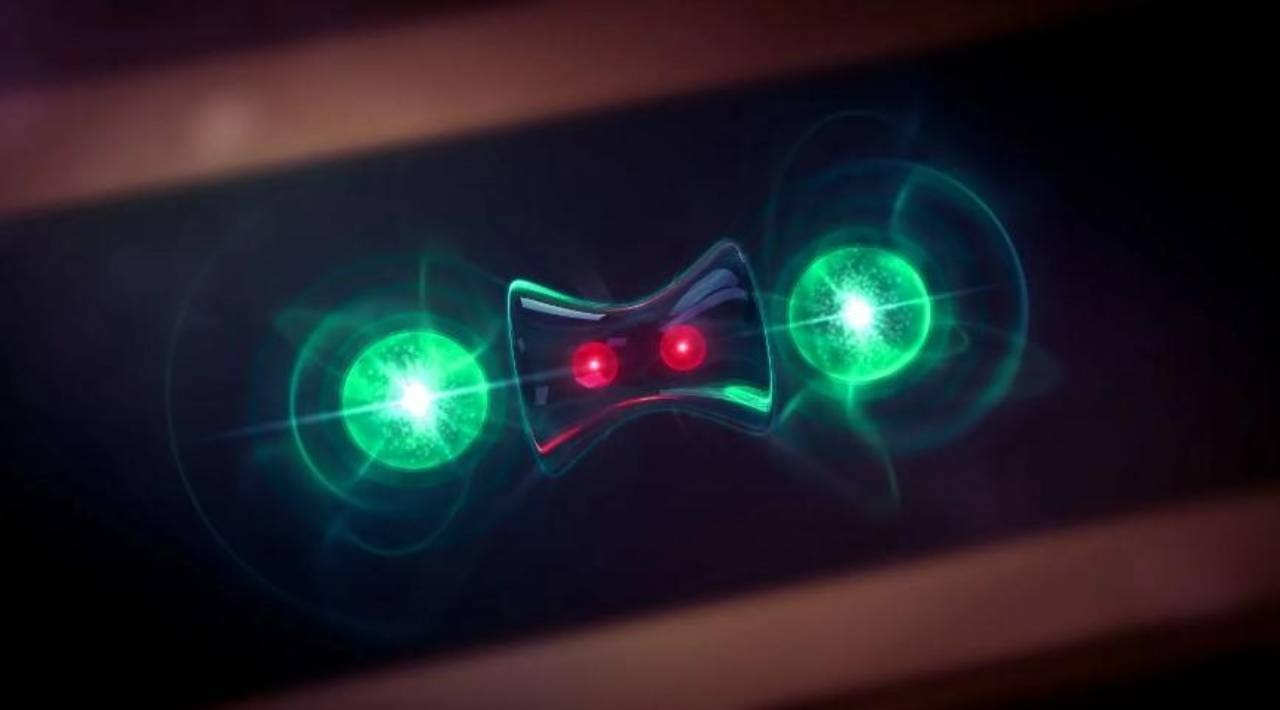
Quantum entanglement is one of the most baffling phenomena in modern physics. Two particles can become linked such that the state of one instantly determines the other’s, regardless of the distance separating them. A simple analogy is a pair of shoes: identify one as left, and you instantly know the other is right, even if it’s across the universe. The difference is that, in the quantum world, the exact state remains in superposition until measured.
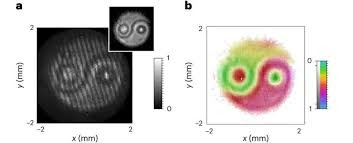
The key to describing this behavior is the wave function, a central concept in quantum mechanics containing all possible information about a particle’s state. It predicts probabilities for measurements like position or momentum. In quantum computing, precisely knowing the generated quantum state is essential for validating and optimizing devices.
Limits of Traditional Tomography for Entangled Photons
Until now, quantum tomography relied on projective measurements, akin to reconstructing a 3D object from shadows at various angles. The more dimensions in the system, the more “shadows” needed, requiring an exponentially growing number of measurements.
In prior experiments, characterizing the quantum state of two entangled photons could take hours or even days. Results were highly sensitive to experimental noise and setup complexity, posing a major scalability barrier for quantum technologies as systems grow more intricate—like in quantum computers.
Quantum Holography and Ultrafast Cameras
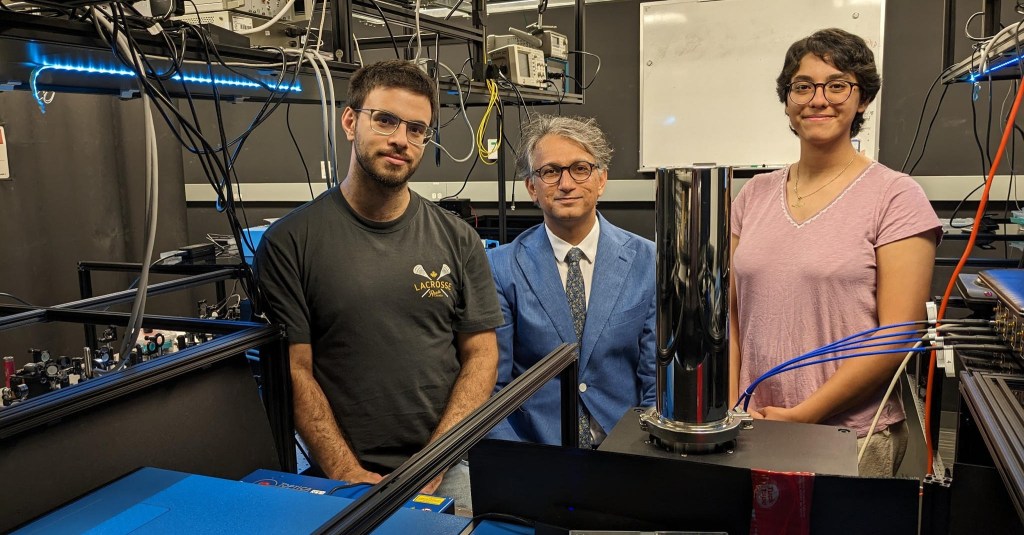
Led by Ebrahim Karimi, the team adapted a concept from classical optics: digital holography. Instead of countless independent measurements, it reconstructs 3D information from a single interference pattern.
For two photons, researchers overlaid the unknown quantum state with a well-characterized reference state. They then analyzed the spatial distribution of coincidence points where both photons hit the detector simultaneously, creating a coincidence image.
Per quantum mechanics, it’s impossible to distinguish photons from the reference or unknown source. This indistinguishability produces an interference pattern encoding the full wave function. The experiment succeeded thanks to an advanced camera registering events with nanosecond resolution per pixel, slashing processes from days to minutes or seconds—independent of system complexity.
This advance not only overcomes a key tomography challenge but unlocks possibilities in quantum computing, secure communications, and advanced quantum imaging. Visualizing entanglement’s “dance” in real time could become a cornerstone tool for next-generation quantum tech.
Reference:
- Nature Photonics/Interferometric imaging of amplitude and phase of spatial biphoton states. Link
COMPARTE ESTE ARTICULO EN TUS REDES FAVORITAS:

Esta entrada también está disponible en:
 Español
Discover more from Cerebro Digital
Subscribe to get the latest posts sent to your email.