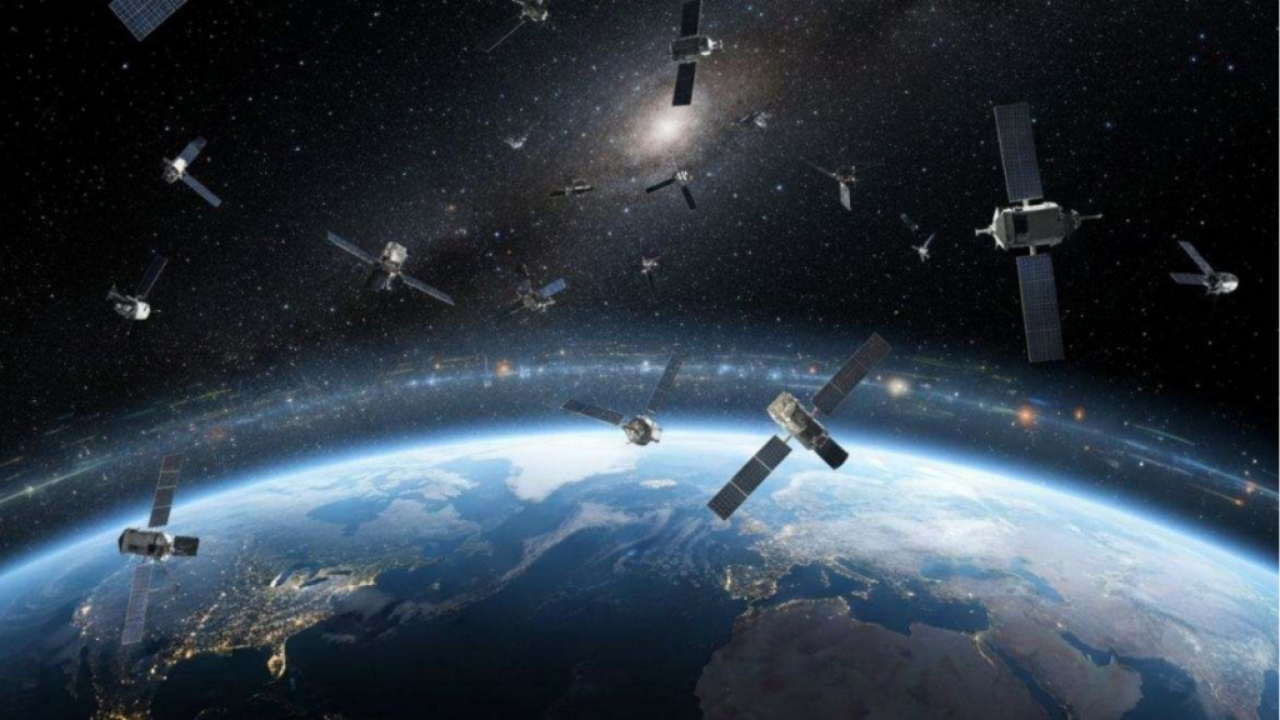
For years, radio telescopes have been humanity’s most sensitive windows to the Universe. But today, those windows are fogging up. New LOFAR radio telescope observations reveal second-generation Starlink satellites emit unprecedented radio interference, potentially darkening the scientific sky and hindering Earth-based cosmic exploration.
Noise from Space
Rapid growth of low-Earth orbit (LEO) satellites brings invisible noise: unintended electromagnetic radiation. A Netherlands Institute for Radio Astronomy (ASTRON) study detected SpaceX’s Starlink “V2-mini” satellites emitting radio signals up to 32 times stronger than previous models. Conducted with the LOFAR radio telescope in July 2024, it uncovered alarming expansion in affected frequency bands.
These emissions interfere with detecting cosmos’ faintest signals, vital for studying distant galaxies or Universe origins. Scientists note the brightness gap between these signals and interference mirrors that between the faintest naked-eye star and full Moon light. With dozens of new satellites launched weekly, radioelectric contamination risks spiral uncontrollably.
When Tech Progress Clashes with Science
The issue stems not from deliberate emissions but unwanted electromagnetic leaks. Still, it threatens radio astronomy’s integrity—one of our most precise tools for understanding the Universe.
For astronomers like Federico Di Vruno of the SKA Observatory, humanity nears a tipping point: act to preserve the sky as shared heritage before interference veils it.
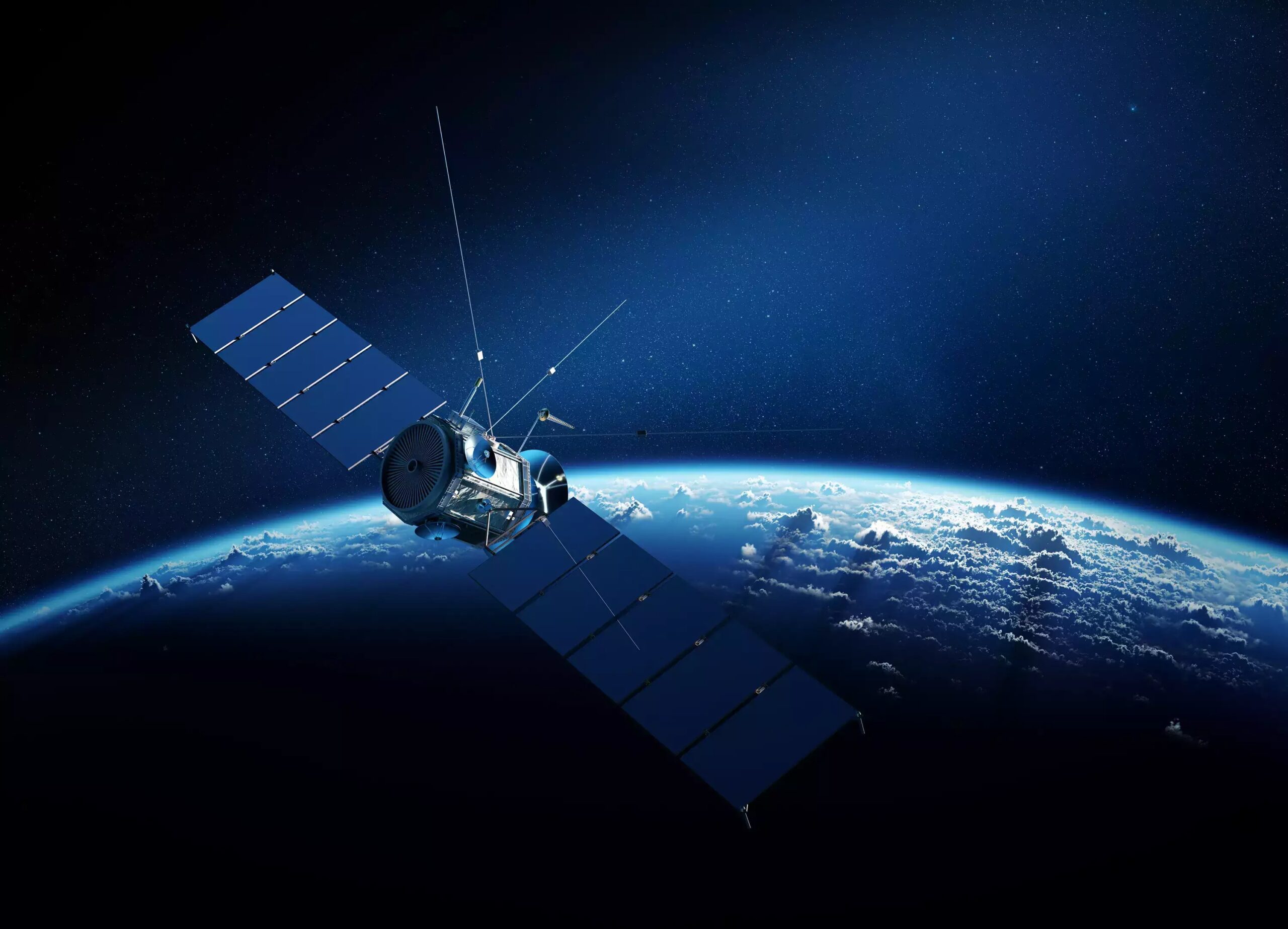
Space companies could lead by incorporating unintended radiation reduction into space sustainability policies. Dutch ASTRON examples show science-industry-authority collaboration yields effective solutions. Yet current launch pace turns urgency into a race against time: without firm regulations, the sky risks becoming an artificial signal swarm.
Technological advances and global connectivity mustn’t sacrifice scientific knowledge. Unwanted Starlink satellite emissions remind us space isn’t just a commercial highway but a shared good. Without mitigation/regulations, soon only human-made constellations will shine.
Reference:
- Bright unintended electromagnetic radiation from second-generation Starlink satellites. Link.
COMPARTE ESTE ARTICULO EN TUS REDES FAVORITAS:

Esta entrada también está disponible en:
 Español
Discover more from Cerebro Digital
Subscribe to get the latest posts sent to your email.