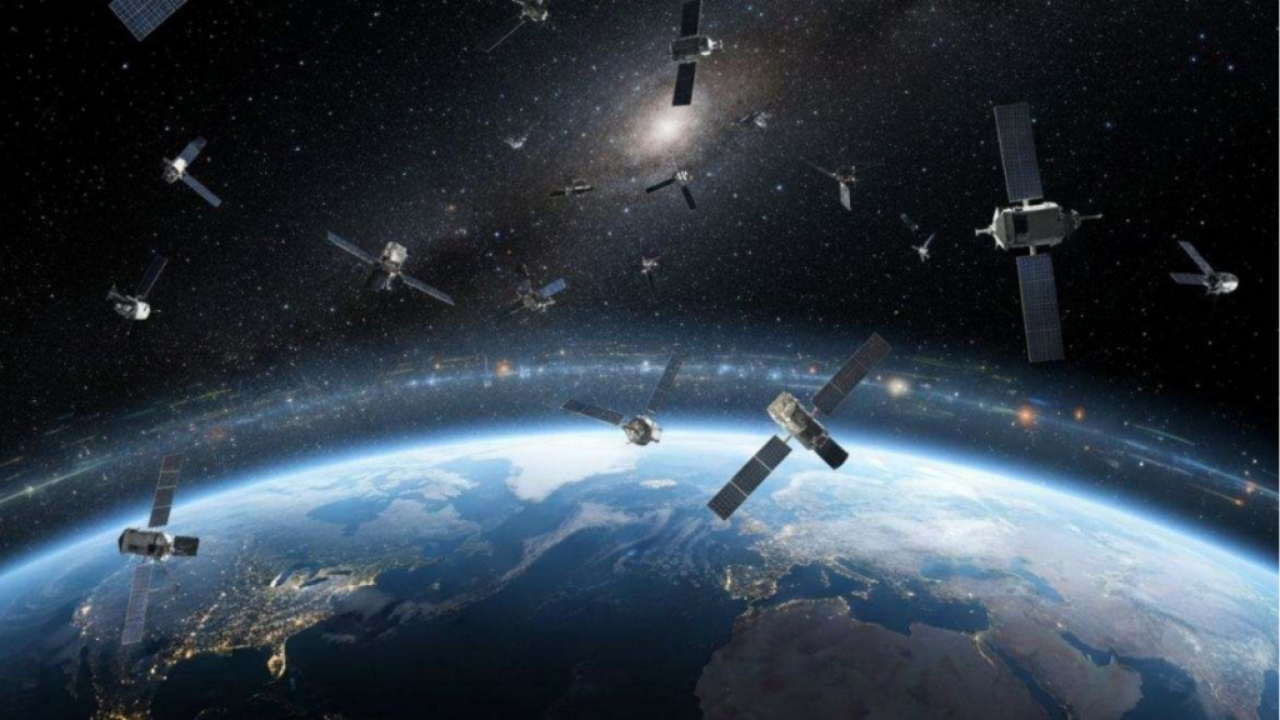
Since 1957, humanity has launched more than 19,000 satellites into space. Today, low Earth orbit is more congested than ever, with thousands of active satellites and a growing cloud of debris. Experts warn that without regulation and urgent measures, the space environment could become unsustainable.
Uncontrolled Growth and the Threat of Space Debris

The region surrounding Earth has shifted from being an almost empty frontier to becoming an intensely trafficked orbital highway. Currently, more than 10,000 satellites are operational, but the total number of objects in orbit is far greater when inactive satellites, rocket stages, and fragments from collisions and explosions are included. In fact, “dead” objects vastly outnumber functioning satellites.
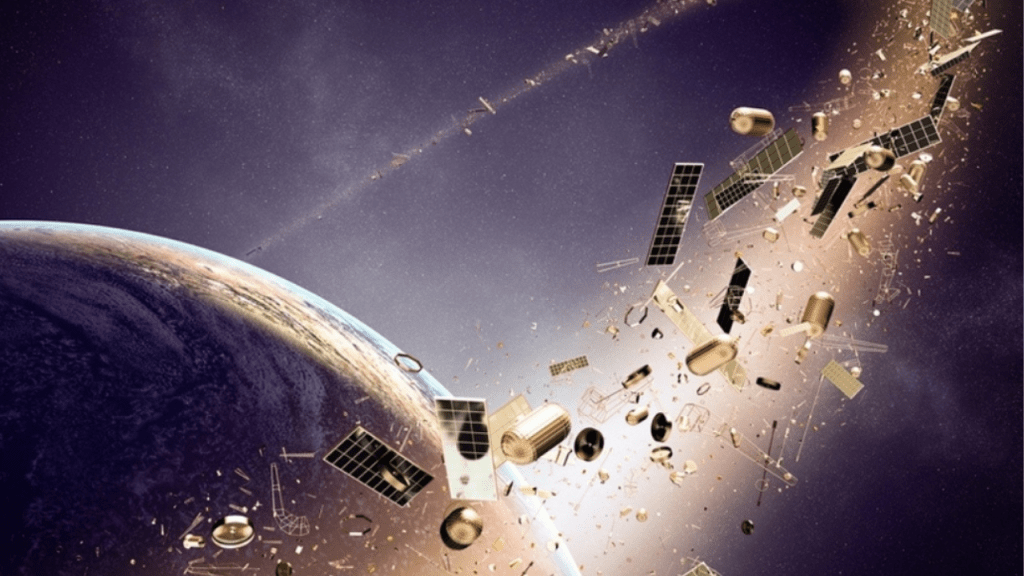
Tracking systems monitor around 40,000 large objects, but estimates indicate that more than 100 million tiny fragments are orbiting at speeds close to 28,000 kilometers per hour. At that velocity, even a millimeter-sized piece can puncture an active satellite or severely damage critical infrastructure such as the International Space Station or global internet constellations.
The risk is not merely theoretical. Each collision creates new fragments, increasing debris density and raising the likelihood of future impacts. This scenario fuels concerns about the Kessler Syndrome, a potential chain reaction in which collisions multiply until an entire orbit region becomes unusable. Although that critical threshold has not yet been reached, the current trend points toward an accelerated accumulation of space debris that threatens the safety and sustainability of operations in orbit.
Megaconstellations and Unprecedented Expansion

The problem is not limited to remnants of the past. In recent years, the deployment of commercial megaconstellations has multiplied the number of satellites in low Earth orbit. Private companies are planning and launching thousands of devices intended to provide global internet access, Earth observation, and advanced communication services.
This exponential growth worries the scientific community. Although many modern satellites are designed to reenter and disintegrate at the end of their operational life, technical failures or collisions can turn them into permanent debris in orbit. Moreover, the massive increase in launches reduces maneuvering margins and increases the complexity of space traffic management.
Beyond the physical risk of impact, environmental and cultural concerns are also emerging. The proliferation of satellites affects astronomical observation, alters the visibility of the night sky, and raises questions about who regulates and controls an environment considered a shared heritage of humanity. Orbital sustainability has thus become both a technical and political challenge within Earth’s orbit.
Regulation, Mitigation, and the Possibility of Preventing Catastrophe
Despite the concerning outlook, experts agree that an irreversible crisis can still be avoided. Technical and regulatory measures exist that can significantly reduce risk in orbit. These include designing satellites with automatic deorbit systems, relocating geostationary equipment to graveyard orbits at the end of their operational life, and improving international coordination to prevent collisions.
Technologies for active debris removal are also being studied, which would allow large fragments to be captured and removed before generating more waste in orbit. However, these solutions require investment, global cooperation, and stricter regulatory frameworks.
The main challenge lies in balancing innovation with responsibility. Space has become critical infrastructure for the global economy, but its uncontrolled use may compromise its future viability. The key is not to halt progress, but to manage it through prevention strategies and long-term sustainability within Earth’s orbit.
Earth’s orbit is facing unprecedented pressure. Between inactive satellites, megaconstellations, and invisible fragments, the risk grows each year. However, catastrophe is not inevitable. With regulation, technology, and international cooperation, we can still preserve orbit as a safe and sustainable environment for future generations.
Reference:
- Scientific Reports/Satellite mega-constellations create risks in Low Earth Orbit, the atmosphere and on Earth. Link
COMPARTE ESTE ARTICULO EN TUS REDES FAVORITAS:

Esta entrada también está disponible en:
 Español
Discover more from Cerebro Digital
Subscribe to get the latest posts sent to your email.