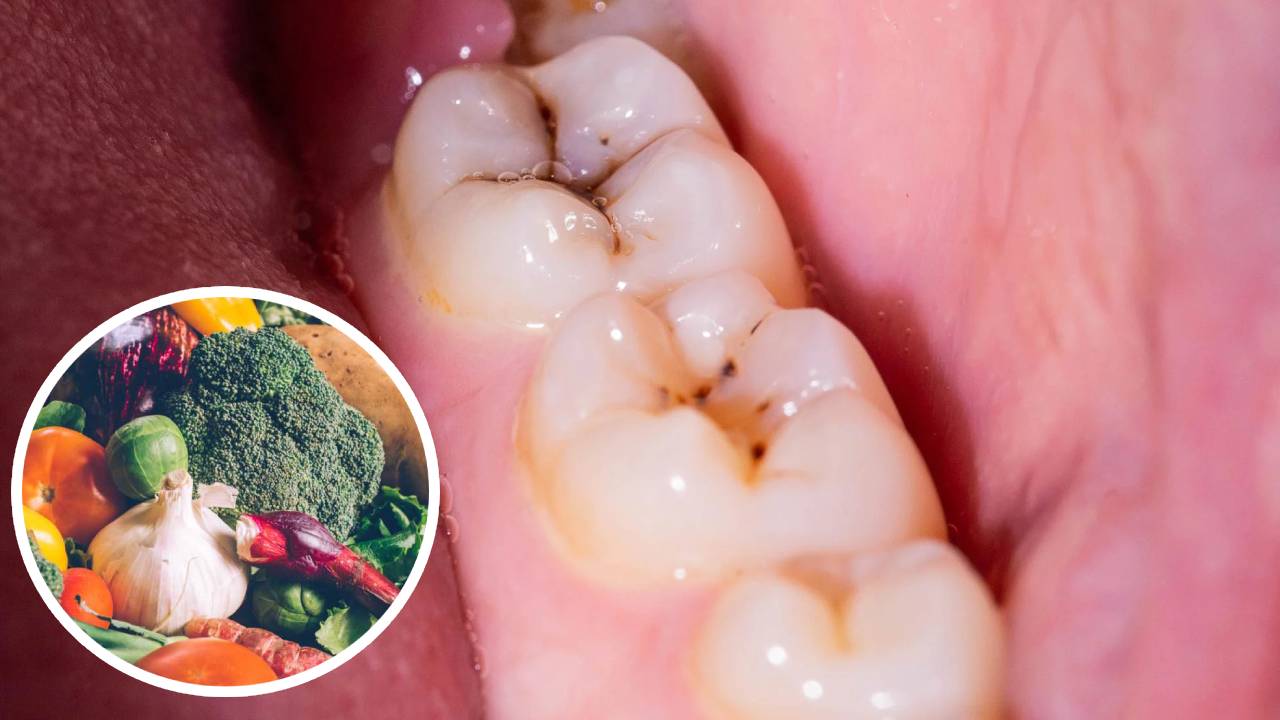
An international team of scientists has identified a natural molecule with the potential to revolutionize dental hygiene: 3,3′‑diindolylmethane (DIM). This compound, present in certain vegetables, was shown to eliminate up to 90% of the biofilm responsible for plaque and cavities. Its future application in toothpastes and mouthwashes could radically change oral prevention.
The molecule in vegetables that could improve our dental health

The fight against plaque and cavities is universal. Despite brushing, flossing, and regular dental visits, millions of people develop dental problems due to the constant formation of bacterial biofilms. These biofilms, mainly composed of Streptococcus mutans, form after meals—especially in sugar‑rich environments—and erode tooth enamel over time.
Researchers from Ben‑Gurion University of the Negev, in collaboration with Sichuan University and the National University of Singapore, published in Antibiotics that DIM, or bisindole, can disrupt these biofilms by 90%. Under laboratory conditions, the compound showed remarkable effectiveness in preventing bacterial proliferation and breaking down the sticky structure that protects microorganisms.
This breakthrough is significant not only for its efficacy but also for its natural origin and low toxicity, making it an ideal candidate for everyday products. DIM was already known for its anticancer properties, but its potential in dentistry opens a new path for research and development.
How DIM works against plaque

The human mouth is a complex ecosystem where beneficial and harmful bacteria coexist. When S. mutans encounters sugar residues, it produces acids that attack tooth enamel and cause cavities. These microorganisms form a protective biofilm that makes them difficult to remove with simple brushing.
DIM interferes with this biofilm, weakening its structure and drastically reducing the bacteria’s ability to adhere to tooth surfaces. In laboratory tests, the reduction reached 90%, suggesting enormous potential for preventing oral diseases.
Professor Ariel Kushmaro, from the Department of Biotechnology Engineering at Ben‑Gurion University, explained that the molecule could one day be incorporated into toothpastes and mouthwashes to enhance current hygiene methods. The research, supported internationally with innovation grants from Singapore and China, aims to lay the groundwork for turning a laboratory discovery into a practical public health tool.
A promising but still experimental future

Despite encouraging results, it is important to emphasize that the use of DIM in dental hygiene is still experimental. Trials so far have been exclusively in vitro, meaning in the lab and not in humans. This means its safety and effectiveness in real oral conditions—a much more complex and dynamic environment—still need to be proven.
Currently, DIM is not approved as an active ingredient in over‑the‑counter dental products. However, the scientific community sees it as a step toward innovation in preventive dentistry. With growing bacterial resistance and the need for natural alternatives, compounds like this could become key allies in reducing the global prevalence of cavities, one of the world’s most common diseases.
Interest in this molecule also extends beyond dentistry. Its anticancer properties were already being studied in other contexts, reinforcing its versatility and biomedical potential. The next challenge will be moving from laboratory evidence to clinical trials—a process that will require time, investment, and regulatory validation.
The discovery of DIM as a dental plaque inhibitor is a hopeful advance in the fight against cavities. Although not yet applied in daily practice, its laboratory effectiveness anticipates a future where oral hygiene could be strengthened with a natural, safe, and highly effective molecule.
Referencia:
- Antibiotics/3,3′-Diindolylmethane (DIM): A Potential Therapeutic Agent against Cariogenic Streptococcus mutans Biofilm. Link
COMPARTE ESTE ARTICULO EN TUS REDES FAVORITAS:

Esta entrada también está disponible en:
 Español
Discover more from Cerebro Digital
Subscribe to get the latest posts sent to your email.