


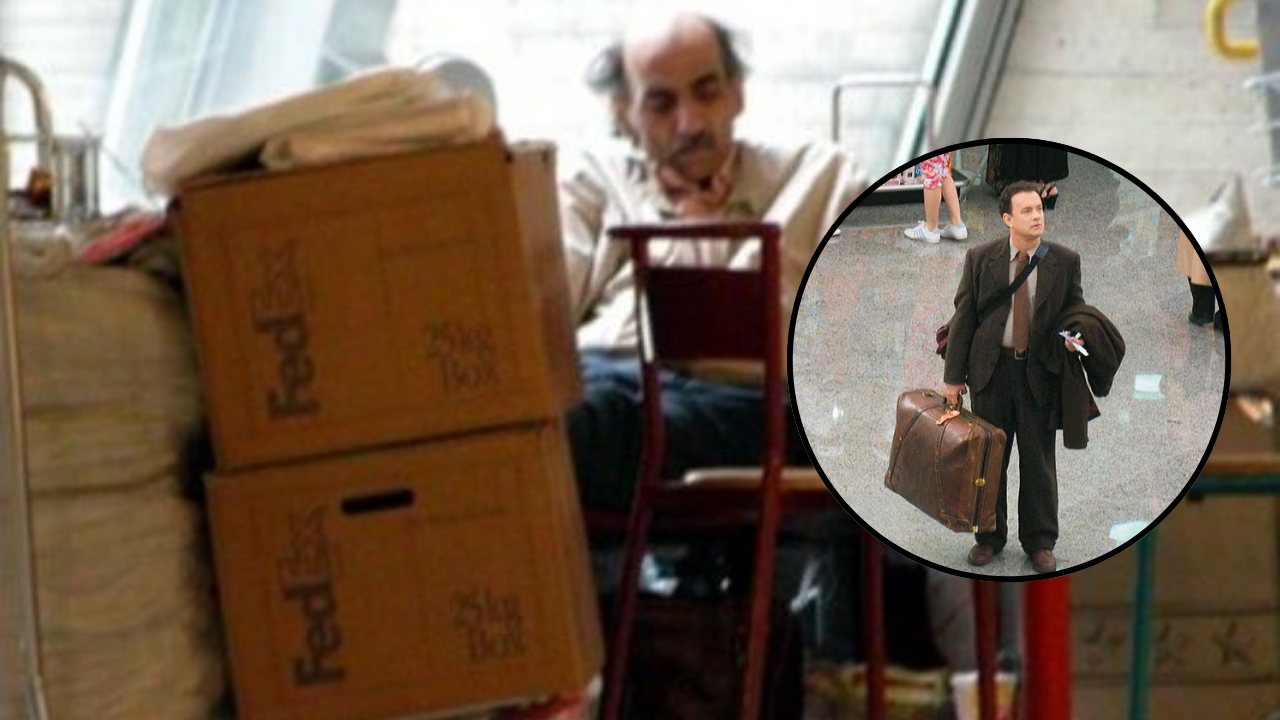
For nearly two decades, a bench in an airport terminal was home to a man with no passport and no country. Mehran Karimi Nasseri, an Iranian refugee, lived among hallways, flights, and strangers in transit. His story—both unbelievable and moving—crossed borders and ended where it began: at Charles de Gaulle Airport.

When a Lost Document Changes Your Fate
Mehran Karimi Nasseri was born in Iran in 1945. At age 23, after the death of his father, he discovered that his real mother was a Scottish nurse. Fueled by this revelation, he set out for the United Kingdom in search of answers. But his journey took a permanent detour: his documents vanished in transit, and without them, he was denied entry not just by the UK but by other European countries as well.
Although Belgium granted him refugee status in 1981, the paperwork required to travel legally didn’t always match his identity records. In 1988, without authorization to enter or leave, he became stranded in the international zone of Charles de Gaulle Airport.
A French court acknowledged that he could not be expelled, and thus began his new life—not in a city or a country, but in a terminal. What started as a bureaucratic error became an exile with no map.
A Routine Among Departure Screens and People Who Don’t Stay


Nasseri’s life in the airport was as real as it was surreal. He slept on a bench, surrounded by suitcases, read magazines, wrote in his journal, and calmly smoked his pipe. He bathed in staff facilities and ate what he could buy or was given. Over time, airport staff began to treat him with kindness and respect, calling him “Sir Alfred,” a name he adopted with pride.
He refused charity or gifts, except for occasional meal vouchers from employees. Though his situation was unusual, he seemed to find a sense of structure in the airport’s daily routine.
In 2003, when a journalist asked if he felt angry about the years lost in that place, he replied without hesitation: “Not angry. I just want to know who my parents are.” His exile was not only physical. There was something deeper—a search for identity that the world, with its stamps and borders, never returned to him.
A Fictional Character Pulled From Reality
Nasseri’s story quickly inspired art. In 1993, a French film based on his life was released. Then came Flight, an opera by composer Jonathan Dove. But it was The Terminal, the 2004 film directed by Steven Spielberg and starring Tom Hanks, that brought his story to the world. Although the film doesn’t mention him by name, it’s known that DreamWorks bought the rights to his story. That same year, he published his autobiography, The Terminal Man, co-written with Andrew Donkin.
The final irony came in 2022. After living in a shelter and spending years away from the airport, he voluntarily returned to Charles de Gaulle. There, in Terminal 2F, he died of a heart attack on November 12. He was 77. He died in the very place where he had lived for so long. For some, it was a coincidence; for others, it was simply fitting.
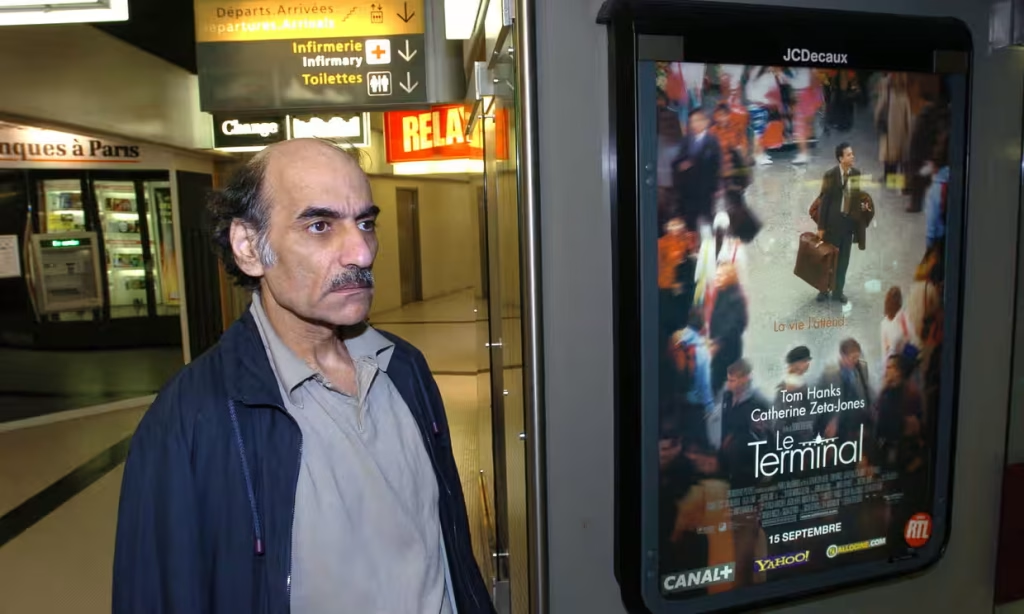
Mehran Karimi Nasseri was more than “the man in the airport.” His story is not just movie material—it’s a living reflection on exile, identity, and human dignity. He had no passport, but he had a story. He had no country, but he had something to say. And he did, even without taking off.
Reference:
- Man who lived in Charles de Gaulle airport for 18 years dies there. Link.
COMPARTE ESTE ARTICULO EN TUS REDES FAVORITAS:

Esta entrada también está disponible en:


Discover more from Cerebro Digital
Subscribe to get the latest posts sent to your email.


