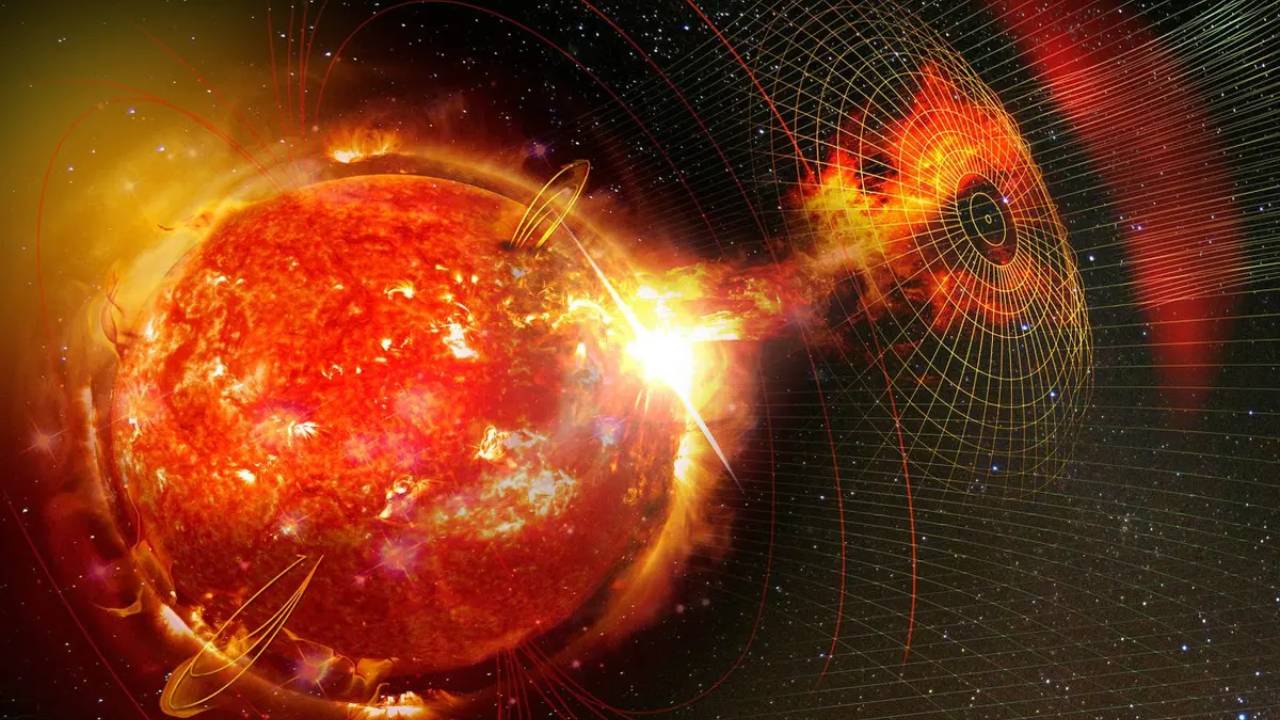
Recently, astronomers identified what appears to be an interstellar tunnel connecting our solar system to distant stellar regions. This finding, based on eRosita X-ray observations, unveils fascinating details about the galactic environment we inhabit.
Context: The Local Hot Bubble
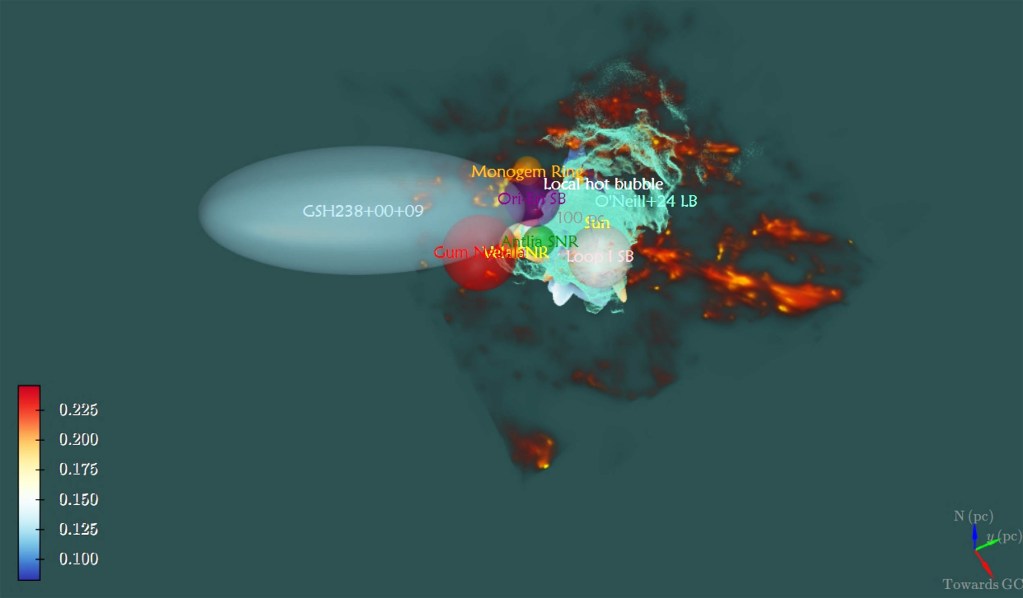
Our solar system sits within the Local Hot Bubble (LHB), a ~300 light-year diameter region. This low-density, high-temperature space results from powerful stellar explosions called supernovas millions of years ago, heating surrounding gas and leaving hot plasma cavities and interstellar voids.
Using eRosita X-ray observatory data combined with prior ROSAT observations, Dr. LL Sala’s Max Planck Institute team precisely mapped this bubble. Results reveal previously overlooked temperature and density gradients.
An Interstellar Tunnel
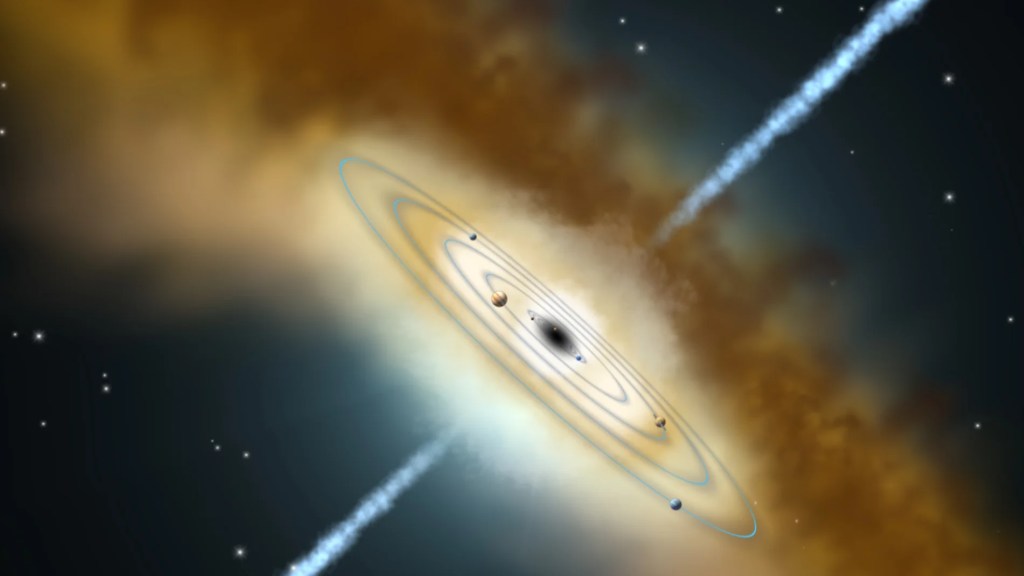
An Interstellar Tunnel
Most intriguing: an interstellar tunnel seemingly linking our cosmic neighborhood to distant stellar systems. Detected toward the Centaurus constellation, this tunnel consists of low-density hot plasma crossing the Local Hot Bubble. Another similar tunnel points to Canis Major, suggesting an extensive interstellar pathway network.
Scientists believe these structures were shaped by young star winds and supernova explosions, creating routes linking star-forming regions to hot plasma areas. These cosmic “highways” may channel materials and energy across the galaxy.
Discovery Implications
This interstellar tunnel revives prior theories of connected cosmic medium cavities, now with conclusive evidence. eRosita’s 3D Local Hot Bubble panorama confirms these pathways exist.
Scientifically, it offers new clues on how catastrophic events like supernovas sculpt interstellar space, raising questions about impacts on:
- Cosmic ray flow: Cavities/channels may influence energetic particle propagation galaxy-wide.
- Interstellar dust dynamics: Routes could direct dust/plasma movements across vast regions.
- Star formation: Channels might link star-forming areas, transporting essential birth materials.
Space is More Complex Than It Seems
The interstellar tunnel discovery shows even apparent stellar voids teem with activity. Dust, plasma, radiation, and magnetic field interactions create dynamic environments defying simple vacuum notions.
As technologies advance, new X-ray missions and models promise deeper cosmic neighborhood insights. This breakthrough expands Local Hot Bubble understanding and redefines interstellar space as interconnected, complex, and alive.
Finding this interstellar tunnel reminds us much cosmic exploration remains. These hidden routes and hot plasma patterns reveal dynamic, connected environments challenging prior stellar space assumptions.
As scientists probe these structures, each datum brings comprehensive understanding of our galactic position and shaping processes closer. What more surprises await? This launches a new cosmic discovery era.
Reference:
- Astronomy&Astrophisics/The SRG/eROSITA diffuse soft X-ray background. Link.
COMPARTE ESTE ARTICULO EN TUS REDES FAVORITAS:

Esta entrada también está disponible en:
 Español
Discover more from Cerebro Digital
Subscribe to get the latest posts sent to your email.