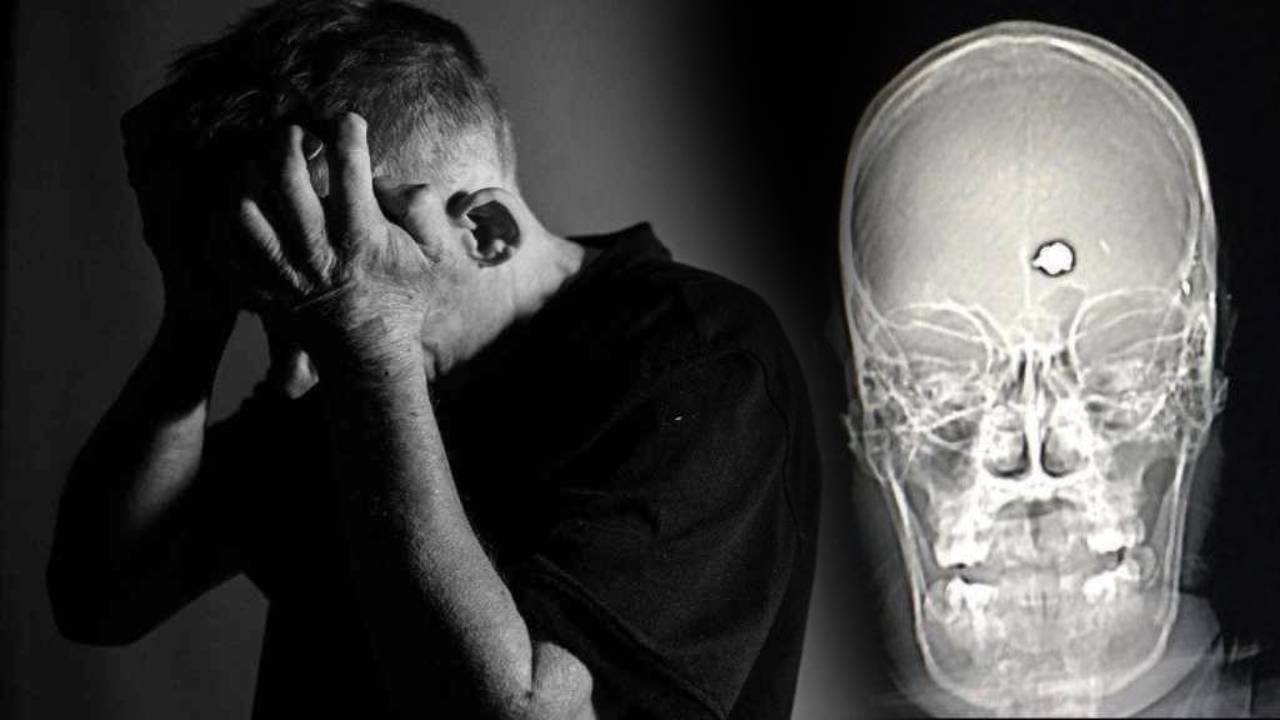
In 1988, a 19-year-old young man attempted to end his life by shooting himself in the head with a .22 caliber pistol, and by chance he destroyed the region of his brain responsible for obsessive‑compulsive disorder (OCD). The bullet removed his compulsions without affecting his intelligence. This unique case redefines the boundaries of psychiatric knowledge.
An unexpected recovery after a shot

In Vancouver, a psychiatrist reported that the patient—known only as “George” to protect his privacy—suffered from debilitating OCD, washing his hands hundreds of times a day. Unable to attend school or keep a job, he lived in isolation. After his suicide attempt with a .22 caliber gun, the bullet lodged in his left frontal lobe, an area linked to his obsessive rituals. After removing part of the projectile, his compulsions almost completely disappeared.
The medical team compared his IQ and cognitive tests before and after the incident. The results showed no decline in mental ability. George even finished high school and began college. His depression was treated with antidepressants after the event, and his OCD remained under control without conscious surgical intervention.
Five years later, the patient still exhibited minor rituals—like closing a window twice or washing dishes with extreme care. However, these traits no longer interfered with his daily life. George lived alone with limited but functional family relations. The case was described as an unexpected and successful brain surgery in the British Journal of Psychiatry, considered a surprising testament to the role of the frontal lobe in obsessive disorders.
This type of accidental injury provides an unintended analogy to neurological procedures used as a last resort in cases of treatment-resistant OCD. Although frontal lobotomy is no longer practiced, less invasive techniques—such as deep brain stimulation or focal resection of the orbitofrontal cortex—are performed in very few cases, with variable outcomes and under strict supervision.
Evolution of knowledge about OCD and neurosurgical treatment

Since that shot which accidentally cured George, psychiatry has progressed significantly in understanding OCD and its neurological treatments. Today, it’s estimated that 1% to 3% of the population may experience OCD at some level. The combination of cognitive‑behavioral therapy plus selective serotonin reuptake inhibitors (SSRIs) is the first-line treatment, effective in over 90% of moderate cases.
For treatment-resistant cases, functional neurosurgery has evolved. Techniques like deep brain stimulation (DBS) or selective resection of the orbitofrontal cortex are performed in a very small number of specialized centers. These procedures aim to modulate brain circuits involved in OCD without the devastating effects of old-fashioned lobotomies.
Although outcomes vary, many patients see significant improvement. The scientific community considers these interventions as a last resort. Unlike George’s case, these therapies are carefully planned using advanced brain imaging, functional neuroimaging, and multidisciplinary teams.
As for the original patient whose OCD was cured by the gunshot, no public records confirm whether he is still alive today, 35 years later. But his story endures as an extraordinary example of the brain’s ability to reorganize and heal under extreme circumstances. Clinical observations of his stable condition over the years strengthened theories about the neural basis of OCD and spurred research on targeted frontal-lobe therapies.
This singular case from 1988 went down in history as an unexpected example of OCD cure after frontal-lobe damage from a gunshot. Since then, psychiatry has advanced, developing more precise and safer treatments. The story of “George” opened the door to better psychiatry.
Reference:
- New York Times/Brain Wound Eliminates Man’s Mental Illness. Link
COMPARTE ESTE ARTICULO EN TUS REDES FAVORITAS:

Esta entrada también está disponible en:
 Español
Discover more from Cerebro Digital
Subscribe to get the latest posts sent to your email.