
Researchers from Copenhagen have mapped the platypus genome, uncovering the origins of its bizarre characteristics.
The platypus is one of the world’s most unusual and fascinating creatures. This semi-aquatic mammal, along with the echidna, is one of the only two surviving lineages of monotremes today.

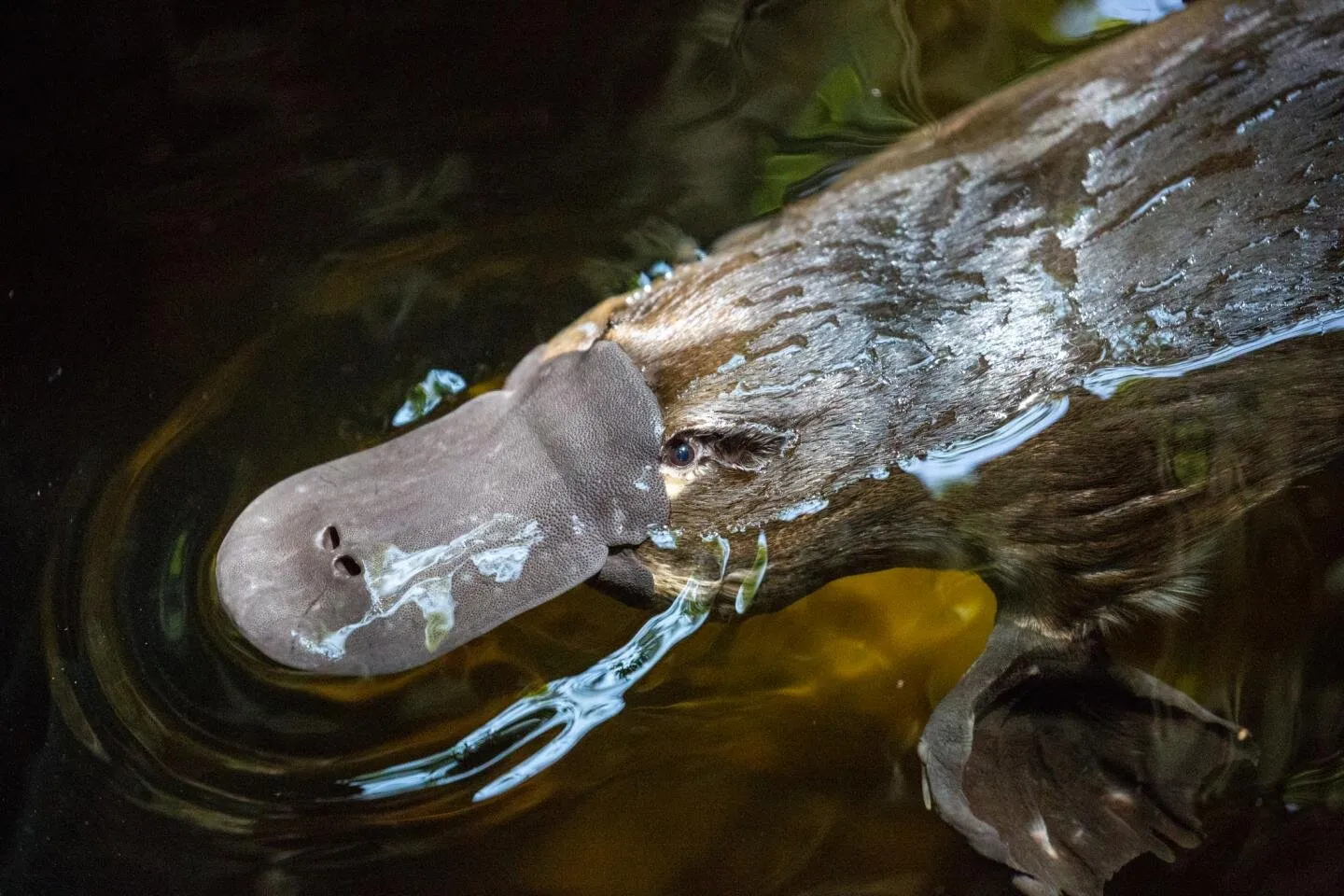
The platypus was discovered in Australia in the late 1700s, and since then, it has puzzled scientists.
This creature, with a beak resembling a duck and a body similar to a beaver, possesses many extra features such as:
- Laying eggs instead of giving birth
- Sweating milk
- Having venomous spurs
- And it was recently discovered to have 10 sex chromosomes.
Decoding the genome will help scientists understand how other mammals, including humans, evolved, particularly the shift from laying eggs to giving birth to live young.
The platypus’ original traits are likely what help it adapt to its environment.
There are three genes known as vitellogenin that are necessary for egg yolk production, but the platypus carries only one, having lost the other two genes about 130 million years ago.
With the remaining gene, the platypus continues to lay eggs, revealing that it doesn’t rely on the other genes for protein production in the yolks, as seen in other reptiles and birds, because it produces milk to nourish its young.
El ornitorrinco también cuenta con genes de caseína encargados de la producción de proteína casera en este caso leche.
The platypus also has casein genes responsible for milk production, which is a trait inherited from a mammalian ancestor that lived over 170 million years ago during the Jurassic period.
Adding to its strange characteristics, the platypus, being a mammal, does not have teeth. The study revealed that they were replaced around 120 million years ago, as four of the eight genes responsible for tooth development disappeared.
If these features weren’t enough, the study also explored how the platypus determines its sex.
Mammals have two sex chromosomes: X and Y. XX is female, and XY is male.
Platypuses, however, have 10 sex chromosomes: five X chromosomes and five Y chromosomes. Researchers suggest that these 10 chromosomes come from ancestors where a ring structure was formed and later divided into smaller X and Y chromosomes.
This makes their sex chromosomes more similar to those of birds, linking the evolutionary relationship between mammals and birds.
It has been found that the sexual chromosome complex in monotremes originated from an ancestral chromosomal ring configuration. The formation of such a unique chromosomal complex may have been facilitated by exceptionally extensive interactions between multi-X and multi-Y chromosomes, which are shared by autosomal homologs in humans.
COMPARTE ESTE ARTICULO EN TUS REDES FAVORITAS:

Esta entrada también está disponible en:


Discover more from Cerebro Digital
Subscribe to get the latest posts sent to your email.