

A surprising medical case has come to light after the death of a 78-year-old man who, without knowing it, lived his entire life with an extremely rare congenital anomaly: three penises. This phenomenon, known as triphalia, is so rare that it has only been documented once before. The discovery was made during an autopsy carried out by researchers at the University of Birmingham in the UK, and it has generated great interest in the scientific community.
The man in question donated his body to science, having never experienced serious symptoms related to his condition during his lifetime. It was only after his death that scientists realized the existence of two additional penises, hidden beneath the skin, in the scrotal area. This extraordinary case raises questions about how the human body can develop such anomalies and, more importantly, how they can go unnoticed throughout an entire lifetime.
A Man With Three Penises
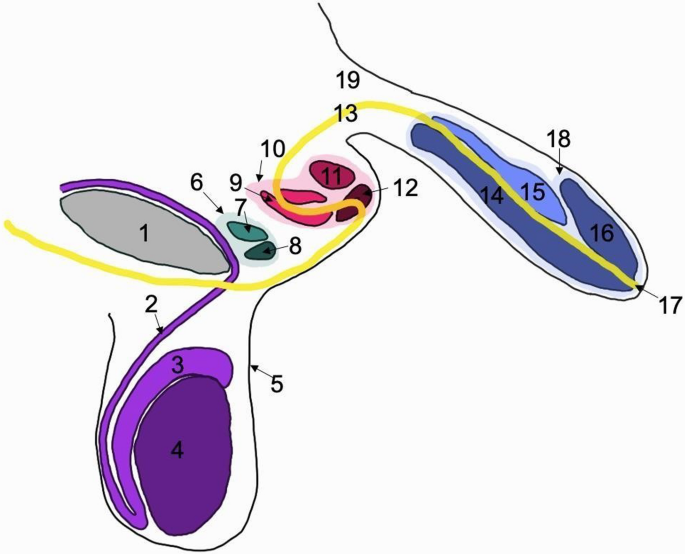
Triphalia is an extremely rare form of polyphallia, a congenital condition in which a person is born with more than one penis. Most documented cases involve diphallia, or two penises, which has been reported 112 times in medical history. However, only one prior case of triphalia is known, detected in a three-month-old infant in Iraq in 2020.
This particular case was even more unusual because the additional penises were not externally visible. They were completely hidden inside the body, beneath the skin of the scrotum and the base of the main member. This may explain why the man lived 78 years without knowing he had such an extraordinary condition.
The discovery of this triphalia happened completely by accident. The researchers performing the autopsy expected a normal anatomical analysis, but were astonished to find two additional penises hidden under the skin.
This unexpected finding generated great interest, since documented cases of polyphallia are usually evident from birth. In most cases, the additional appendages are visible, and doctors often choose to surgically remove them if they cause health problems. However, in this case, the triphalia was not detected during the man’s life, suggesting that there may be more hidden cases that go unnoticed due to the absence of visible symptoms.
How Can It Go Unnoticed?

Scientists explain that polyphallia can remain hidden when the additional organs do not interfere with the body’s main functions. In this case, the extra penises were not connected to the man’s urethra, which meant they did not affect his ability to urinate or have sexual intercourse. Moreover, being concealed, they were not visible, which allowed the man to live his life without noticing anything unusual.
Despite this, researchers suspect the man may have experienced some mild symptoms without realizing they were related to his condition. For example, he may have had difficult or painful erections if the internal penises also filled with blood. However, without severe symptoms or the need for medical treatment, the triphalia went unnoticed until after his death.
How Common Is Triphalia?

Polyphallia is extremely rare. It is estimated to occur in about one out of every five to six million live births. Most of these cases are diphallia, where a person has two penises. Cases of triphalia, such as the one discovered in this 78-year-old man, are even rarer.
In the previously documented case of triphalia in 2020, a three-month-old boy presented an additional penis under the perineum and another near the scrotum. Both appendages were surgically removed without major complications. The main difference between that case and the recent finding in Birmingham is that in the older man’s case, the extra penises caused no apparent health problems.
Although triphalia caused no obvious symptoms in this man, researchers warn that such anatomical anomalies can complicate certain medical procedures. For instance, if the man had ever required catheterization, it might have been difficult due to the unusual structure of his urethra. Scientists discovered that the primary urethra followed an unusually winding path, passing through one of the secondary penises.
The anatomical complexity of this case could have posed medical challenges if detected during his lifetime. However, due to the absence of severe symptoms, doctors would likely have opted against surgical intervention, since the extra penises were benign and did not significantly affect the man’s health.

This case of triphalia raises more questions than answers about how such anomalies develop and why they can remain unnoticed for so long. According to scientists, penile triplication may be related to an error in embryonic development, when testosterone drives the formation of male genitals. In this case, it seems the developmental process deviated, resulting in three penises instead of one.
Although this phenomenon is extremely rare, researchers believe there may be more hidden cases of triphalia and diphallia yet to be detected. The only way to uncover such anomalies is through post-mortem studies or in cases where the additional organs cause medical problems.
In conclusion, triphalia remains one of the rarest and most fascinating medical phenomena documented by science. While most people will never experience anything similar, this case highlights the incredible diversity of human anatomy and the mysteries that still remain to be discovered about the human body.
Reference:
- Journal of Medical Case Reports/Triphallia: the first cadaveric description of internal penile triplication: a case report. Link.
COMPARTE ESTE ARTICULO EN TUS REDES FAVORITAS:

Esta entrada también está disponible en:
 Español
Discover more from Cerebro Digital
Subscribe to get the latest posts sent to your email.