
At midnight on June 30, 1944, the USS Indianapolis of the United States Navy was attacked by a submarine from the Imperial Japanese Navy, sinking in just twelve minutes in the Philippine Sea. Of the 1,196 people on board, around 300 didn’t make it out of the ship, and the remaining 900 fell into the sea without lifeboats or life vests, food, or drinking water. This event resulted in the worst shark attack in human history.
The Attack on the USS Indianapolis
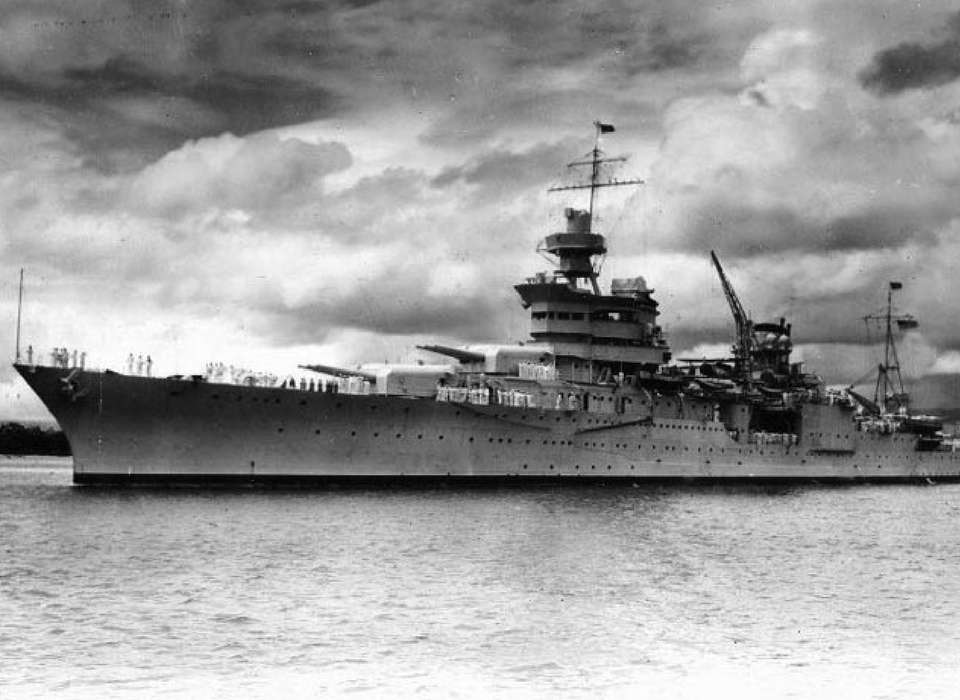
The attack was never reported to the Pacific Command, nor would it be, due to the mission the USS Indianapolis had just completed.
The ship had just delivered a critical cargo to Guam that would change the course of the war: enriched uranium. This was the essential component needed to create the atomic bombs that would soon be dropped on Hiroshima and Nagasaki.
At dawn on the first day after the sinking, the survivors saw the first shark. At first, only a few tiger sharks circled the castaways, who huddled in groups, hoping that staying together would keep the predators away.
Soon, however, the number of sharks rose to the hundreds. Every time a shark began circling a sailor — a ritual-like movement before an attack — the men would kick and scream, hoping to scare it off. Sometimes it worked, sometimes it didn’t. By the third day, things got even worse.
In addition to the growing number of tiger sharks, some survivors began drinking saltwater. This led to vivid hallucinations, causing dozens of sailors to swim away from the groups, where they drowned or were devoured by sharks.
At 11 a.m. on the fourth day, a young pilot, Lieutenant Wilbur Gwinn, commanding a PV-1 Ventura bomber, accidentally spotted the castaways during a routine patrol. He immediately reported the incident to his base in Peleliu.
The Worst Shark Attack in History
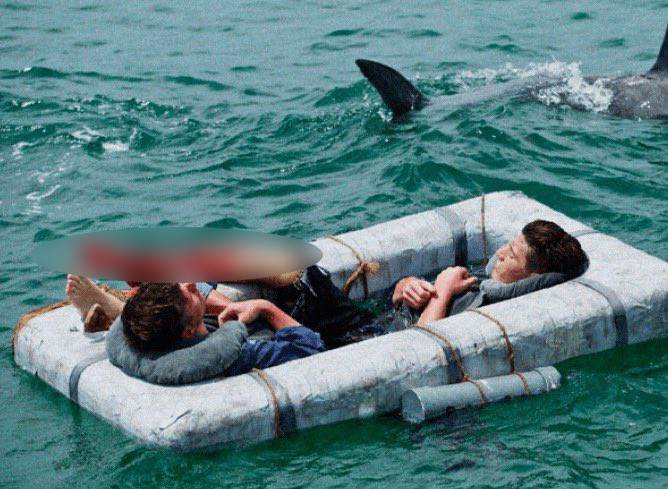
The base dispatched a PBY seaplane under the command of Lieutenant Adrian Marks to investigate. While in flight, Marks requested assistance from the destroyer USS Doyle. The captain of the Doyle responded without waiting for authorization due to the desperation in Marks’s voice. What Marks had seen was a horrific scene: castaways being attacked by one or several sharks, devoured every minute.
The plane’s crew began dropping lifeboats, supplies, and food. Defying orders not to land, Marks brought the plane down on the water and began rescuing the most isolated survivors, who were at the greatest risk of attack. It was then that he realized it was the USS Indianapolis crew and called for immediate backup. The USS Doyle responded, confirming it was already en route.
As night fell, Marks continued his rescue mission. Once the plane had reached capacity, he began tying survivors to the aircraft’s wings with parachute cord, waiting for help to arrive. Fifty-six men were saved that night. In complete darkness, the USS Doyle arrived, stopping its engines to avoid injuring the survivors and began transferring those rescued by Marks from the aircraft to the destroyer.
Risking its own safety, the captain of the USS Doyle ordered the floodlights turned on, guiding survivors toward the ship while trying to coordinate with other rescue vessels. The next morning, the operation was completed.
Of the 900 men who fell into the water, only 316 were rescued. August 3, 1945, would go down in history as the date of the worst shark attack ever recorded, with the victims being the crew of the USS Indianapolis.
COMPARTE ESTE ARTICULO EN TUS REDES FAVORITAS:

Esta entrada también está disponible en:
 Español
Discover more from Cerebro Digital
Subscribe to get the latest posts sent to your email.