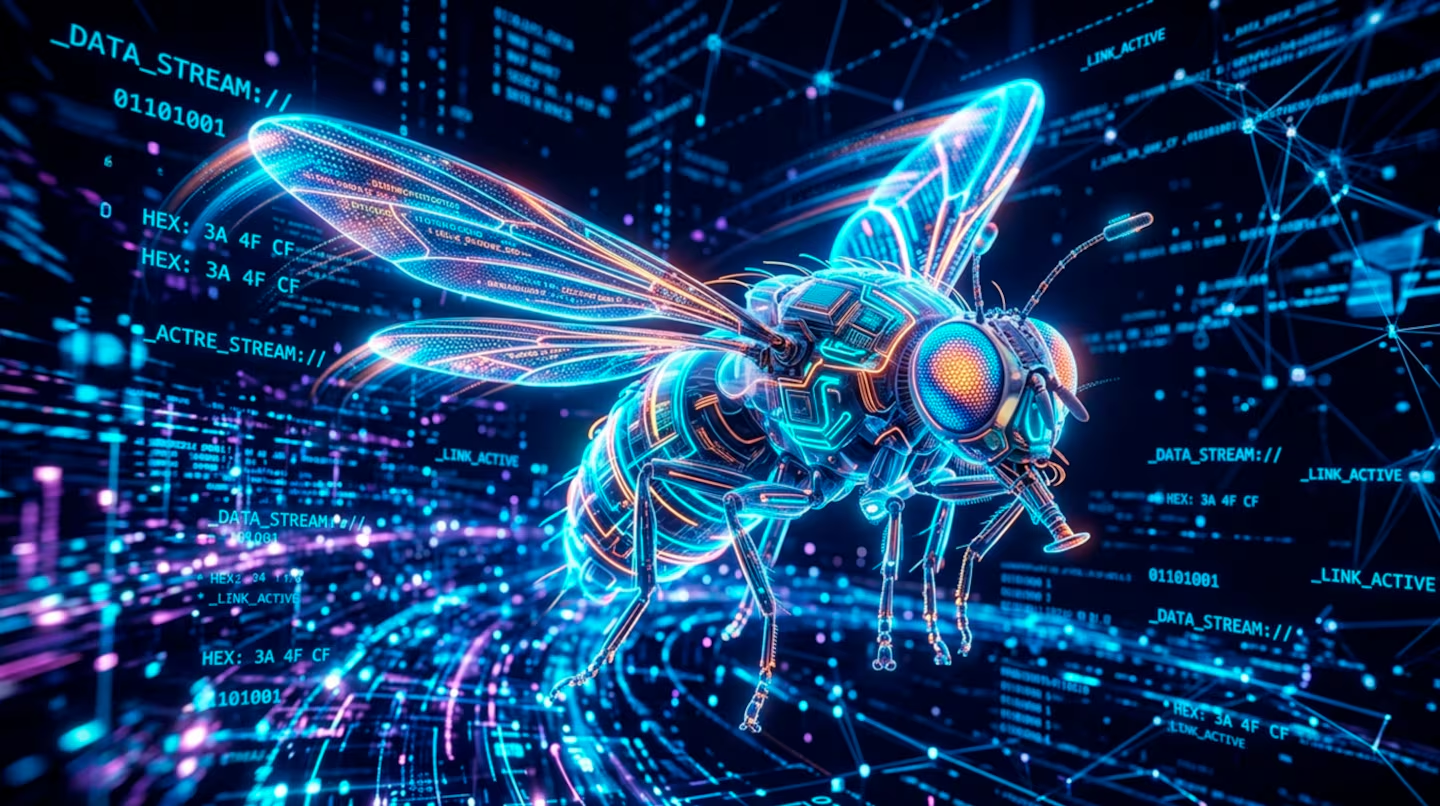

A Chinese laboratory has developed a technology that seems straight out of science fiction: an autonomous laser beam capable of detecting and eliminating mosquitoes mid-flight with surgical precision and without using chemicals. However, the breakthrough is not without ecological concerns.
A Ray of Hope Against Mosquito-Borne Diseases

In southern China, the startup Vector Photon Solutions (VPS) has developed a biotech tool that could revolutionize the fight against diseases like dengue, malaria, and Zika. Their creation, called the Photon Matrix, combines LiDAR sensors with artificial intelligence to identify, track, and eliminate mosquitoes in flight using a laser beam, hitting up to 30 insects per second.
The laser doesn’t visibly burn the insect but disrupts its flight by causing controlled thermal damage, leading to a swift death. This approach avoids pesticide use and promises to leave no toxic residues or cause genetic resistance in insects—one of the major concerns with traditional vector control.
During the Photon Matrix’s technological “surgery,” the AI analyzes the insect’s silhouette and wingbeat frequency, allowing it to distinguish mosquitoes from other species. According to VPS, its accuracy rate exceeds 99.7% and it’s designed to be safe for humans and pets. Prototypes are already being tested in greenhouses, hospitals, and rural areas of the country.
A consumer-ready version of the laser is expected by 2026, pending regulatory approval. The promise is ambitious: an autonomous, constant, chemical-free system capable of integrating into smart networks to create “invisible walls” against the planet’s deadliest vectors.
Ecological Risks of a High-Tech Solution

Despite the excitement surrounding the Photon Matrix, biologists and ecologists warn of a crucial concern: the potential negative impact on biodiversity. Although the laser is calibrated to target only mosquitoes, no algorithm is flawless. A 0.3% error rate may seem negligible, but when applied to millions of insects, it could mean thousands of butterflies, bees, or other beneficial organisms being killed.
This scenario is especially alarming in tropical and biodiverse regions, where insects play essential roles in pollination, food webs, and overall ecosystem health. The global phenomenon known as “insectageddon” has already alarmed the scientific community about the collapse of key insect populations. A mass eradication system—no matter how precise—could worsen the crisis.
Moreover, many experts point out that mosquitoes, despite their reputation as pests, also serve ecological functions. Some species pollinate plants, others are a food source for bats, fish, and birds, and many help decompose organic matter. Their indiscriminate elimination could trigger unpredictable side effects—even for humans.

So far, VPS has not released peer-reviewed studies to validate its claims about the laser’s precision. The scientific community is demanding transparency, public scrutiny, and ecological impact assessments before allowing the widespread deployment of the Photon Matrix. According to researchers, the best solutions might combine this technology with environmental sensors, adaptive AI, and ecosystem-specific regulations.
The Photon Matrix represents a remarkable advance in vector-borne disease control. Its technology is innovative, precise, and potentially transformative. Yet the urgency of protecting public health should not overshadow the need to preserve biodiversity. The delicate balance between these two priorities will determine the future of autonomous technologies in biological control.
Reference:
- World Health Organization (WHO)/Vector-borne diseases. Link
- Intellectual Ventures/Photonic Fence Project. Link
COMPARTE ESTE ARTICULO EN TUS REDES FAVORITAS:

Esta entrada también está disponible en:
 Español
Discover more from Cerebro Digital
Subscribe to get the latest posts sent to your email.