
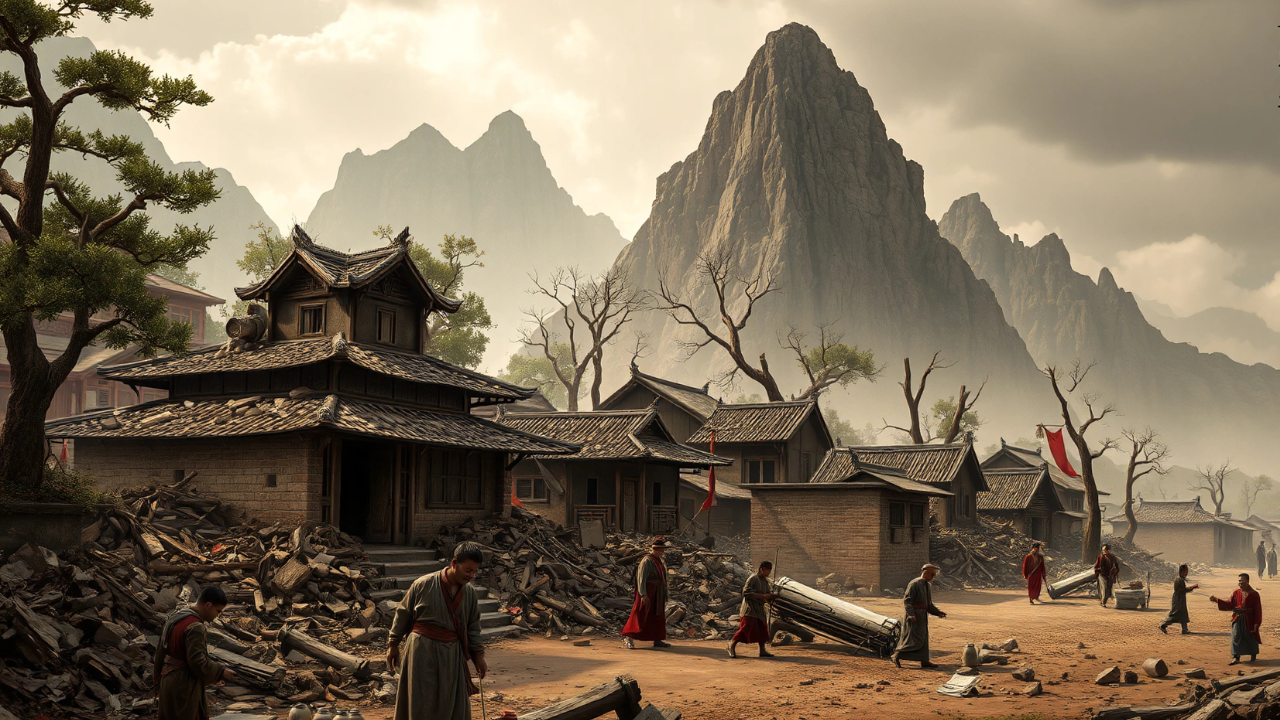
An earthquake in ancient China claimed more human lives than any other natural or military event, making it the deadliest day in history.. On January 23, 1556, in China’s Shaanxi province, a devastating tremor killed around 830,000 people. It remains a nearly forgotten tragedy outside Chinese historical records, yet its impact is difficult to fully comprehend.

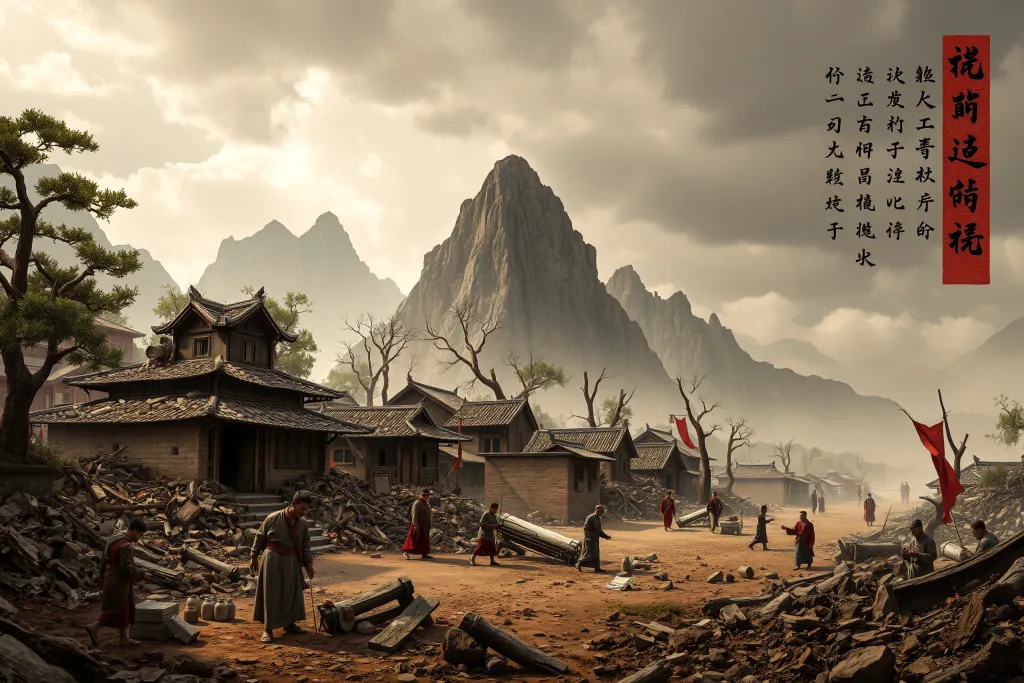
An unprecedented natural catastrophe in a single day.
That Thursday in January, the earth shook violently across northwest China. The epicenter was near the city of Huaxian, and the event was triggered by the simultaneous rupture of the Weinan and Huashan faults. With an estimated magnitude between 8.0 and 8.3, it wasn’t the strongest earthquake ever recorded—but it was the deadliest by far.
Roughly one-third of the victims died instantly, crushed by collapsing structures and cave dwellings, which were widespread throughout the region. In the weeks that followed, disease, hunger, and mass displacement worsened the disaster. The most widely accepted estimates place the death toll at around 830,000 people.
At a time when the global population was under 500 million, the scale of this catastrophe represents one of the greatest proportional losses of human life in history. Even when compared to extensively documented modern tragedies, its magnitude remains unmatched.
Comparing the Earthquake to Other Human Tragedies
To grasp the scale of the Shaanxi earthquake, it’s helpful to compare it to other historical disasters. The deadliest bombing raid—Operation Meetinghouse over Tokyo in 1945—killed around 100,000 people in one night. The atomic bombs dropped on Hiroshima and Nagasaki caused 66,000 and 39,000 deaths respectively.


The second deadliest earthquake on record—the 1976 Tangshan quake, also in China—claimed about 655,000 lives. Meanwhile, the Yangtze-Huai river floods of 1931 may have killed over 2 million people, though that toll accumulated over several months.
What sets the Shaanxi disaster apart is its immediacy: an immense number of deaths occurred within mere hours. The region was transformed forever in a single moment, without the benefit of modern warning systems, emergency response, or communication tools.
A Lesson Almost Forgotten
Nearly 500 years later, the world has yet to witness a similarly concentrated loss of human life from a single natural event. It’s striking how little this catastrophe is remembered in the global collective memory, especially when compared to more recent or Western-focused tragedies.
Perhaps it’s the passage of time, the lack of precise records, or cultural bias. But the truth is that history is filled with disasters that have reshaped humanity without making headlines. This case reminds us how vulnerable our species is to natural forces—and how many of our harshest lessons remain buried in obscurity.
Even though roughly 170,000 people die each day worldwide, no single natural episode has ever taken so many lives in such a short time as that horrific day in 1556, deep in the heart of China.
Reference:
- Shaanxi province earthquake of 1556. Link.
COMPARTE ESTE ARTICULO EN TUS REDES FAVORITAS:

Esta entrada también está disponible en:


Discover more from Cerebro Digital
Subscribe to get the latest posts sent to your email.