
The Indian Ocean hides an invisible phenomenon that impacts Earth’s gravity: the Indian Ocean Geoid Low (IOGL), a “gravity hole” revealing how mass movements in Earth’s mantle shape the planet from within. This discovery links geophysics, slab subduction, and hot plumes with modern satellite measurements.
What is the Indian Ocean Geoid Low?
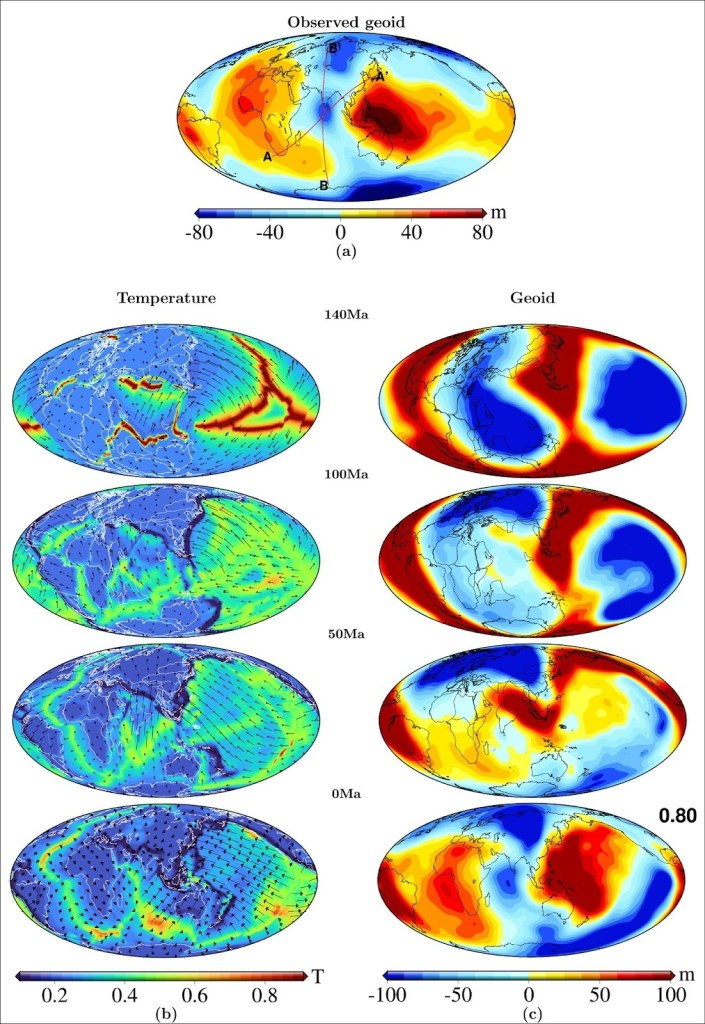
The Indian Ocean Geoid Low (IOGL) is a gravitational anomaly about 100 meters below the global average sea level. Although the seafloor appears normal, gravity is weaker due to less dense mass beneath it. Detected in 1948 by geophysicist Felix Andries Vening Meinesz, its origin remained unknown until modern research led by Debanjan Pal, a student at the Indian Institute of Science, used mantle evolution simulations.
These simulations recreated 140 million years of plate movements, oceanic slab subduction, and hot plume upwelling, reproducing the current shape and magnitude of the IOGL and proving it is a deep, ancient phenomenon.
How the “gravity hole” formed
The IOGL originated from the interaction of cold descending oceanic slabs and ascending hot plumes under Africa. The crust of the ancient Tethys Ocean sank in subduction zones, compressing a deep region called the “low shear-wave velocity province.”
The combination of these slabs and plumes reorganized the planet’s mass distribution, reducing gravity in the Indian Ocean. Plumes rose to the mid-mantle, leaving a signature detectable by gravity satellites today. This process began about 20 million years ago, well before India’s collision with Asia.
Scientific importance of the Geoid Low
Studying the IOGL helps understand how mantle mass movements affect surface gravity and the ocean. It reveals that areas with normal seafloor can sit over the planet’s deepest gravitational depression.
It also aids in comprehending ancient geological processes like slab subduction and hot plume rise, providing a full view of interactions between Earth’s interior and ocean surface.
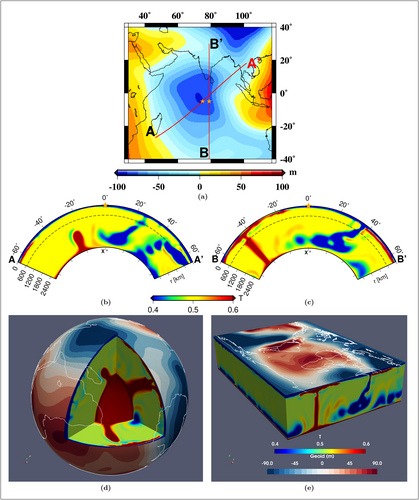
The Indian Ocean Geoid Low is a unique window into the planet’s deep interior. This “gravity hole” shows how ancient mantle processes still influence current gravity. Combining geodynamic simulations and satellite observations connects Earth’s internal dynamics with what we see in the ocean today.
Reference:
- How the Indian Ocean Geoid Low Was Formed. Link.
COMPARTE ESTE ARTICULO EN TUS REDES FAVORITAS:

Esta entrada también está disponible en:
 Español
Discover more from Cerebro Digital
Subscribe to get the latest posts sent to your email.