

The idea that smelling rose essential oil can alter the brain has sparked great interest. A recent study analyzed whether continuous olfactory stimulation produces measurable structural changes. Are we facing a revolutionary finding or an overhyped interpretation? Here’s the breakdown.
What Did the Study Find on Rose Oil and Gray Matter?

In 2024, a longitudinal study published in Scientific Reports (or Brain Research Bulletin, PMID: 38331299) evaluated rose essential oil olfactory stimulation’s effect on the human brain using MRI. The goal was to see if constant aroma exposure could cause measurable structural changes in gray matter.
Participants were continuously exposed to the scent for about 30 days. Pre- and post-intervention brain scans compared volume variations in brain regions. This design objectively observed structural changes using established neuroimaging tools.
Results showed significant increases in specific brain areas. The posterior cingulate cortex (PCC)—linked to memory, emotional integration, and self-referential processes—saw the biggest change. This drew attention as the PCC is part of networks for complex cognitive functions.
Importantly, the study didn’t report global brain expansion. Changes were localized under specific conditions. Authors suggest constant olfactory stimulation keeps certain neural networks active, promoting neuroplasticity in the brain.
Since gray matter holds most neuronal cell bodies, volume variations pique scientific interest. However, results must be contextualized, not as generalized brain transformation.
Why Can Smell Influence the Brain?

Olfaction holds a special place in the nervous system and brain function. Unlike other senses, olfactory signals reach deep brain emotion/memory regions almost directly, bypassing many intermediate cortical filters.
Inhaled aromas activate nasal receptors sending signals to the olfactory bulb. From there, info projects to brain structures like the amygdala and hippocampus, part of the limbic system. This explains why smells trigger vivid memories or immediate emotional responses in the brain.
Repeated stimulation strengthens specific neural circuits. In learning new skills or meditation, sustained repetition yields measurable gray matter volume changes. The rose oil study posits constant aroma exposure produces similar effects in select brain regions.
The exact mechanism in the brain remains unclear. More research is needed on how a seemingly simple sensory stimulus translates to detectable neuroimage adaptations.
Does This Mean Better Memory or Mental Health for the Brain?
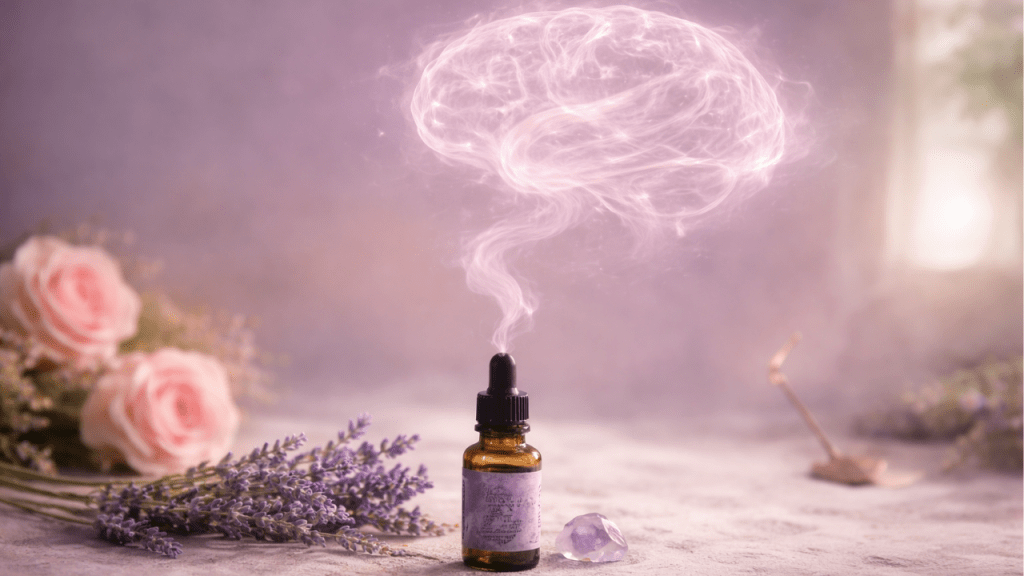
Caution is key here. The study detected structural brain changes in specific regions but didn’t conclusively prove direct improvements in memory, learning, or intellectual performance.
Increased gray matter volume may signal adaptive processes, but doesn’t automatically mean clinical benefits for overall brain function. Clear cognitive gains require specific neuropsychological tests and replicated studies across populations.
Sample size and follow-up duration mark this as preliminary evidence. Science advances via consistent results from independent investigations on the brain—still pending here.
Prior support exists for aromas influencing mood and brain stress processing. These subjective effects matter, distinct from claiming global brain “growth” or optimization.
Balanced interpretation is crucial. It’s an intriguing neuroplasticity finding for the brain, not a miracle cognitive boost.
Continuous rose oil olfactory stimulation showed localized gray matter changes after one month. A promising neuroplasticity insight, but preliminary. No global brain expansion—just a research avenue needing more evidence.
Referencia:
Brain Research Bulletin/Continuous inhalation of essential oil increases gray matter volume. Link
COMPARTE ESTE ARTICULO EN TUS REDES FAVORITAS:

Esta entrada también está disponible en:
 Español
Discover more from Cerebro Digital
Subscribe to get the latest posts sent to your email.