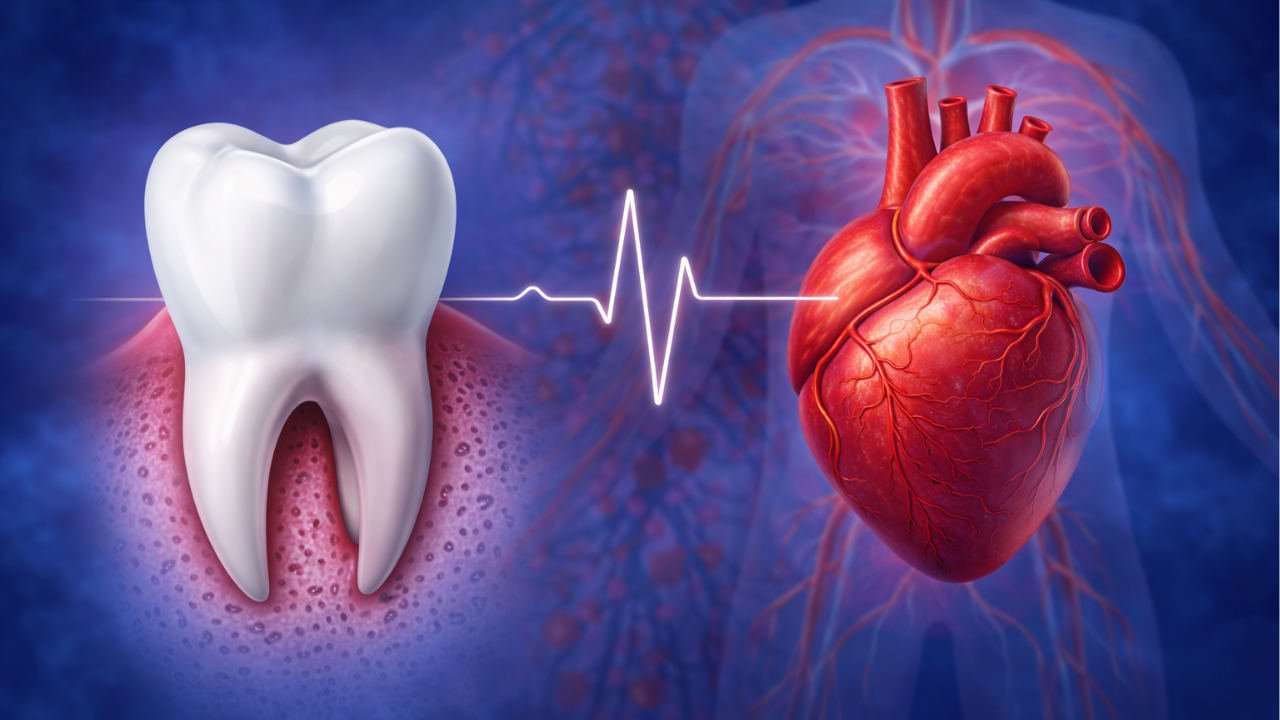

For decades, the heart was considered an organ subordinate to the brain. However, contemporary research has demonstrated the existence of constant bidirectional communication between the two. This interaction influences physiological, emotional, and cognitive regulation through well-documented neurological and autonomic mechanisms.
Physiological structure of the heart–brain axis

Communication between the heart and the brain is established primarily through the autonomic nervous system, composed of the sympathetic and parasympathetic branches. These pathways regulate essential cardiovascular functions such as heart rate, blood pressure, and stress response.
A fundamental part of this exchange occurs through cardiac afferent signals, which transmit information from the heart to the brain. These signals travel mainly via the vagus nerve and spinal fibers, providing the central nervous system with continuous data about internal cardiovascular status.
Neurophysiological studies have shown that this information influences brain regions involved in emotional regulation, bodily perception, and behavioral adaptation. This does not represent direct cognitive control, but rather a physiological modulation that adjusts brain function to the organism’s internal conditions.
This architecture demonstrates that the heart is not a passive organ, but an active component within an integrated regulatory system, where bodily stability depends on the dynamic balance between cardiac and cerebral signals.
Role of the autonomic nervous system in health and disease

Under normal conditions, the heart–brain axis maintains efficient homeostasis, enabling rapid and adaptive responses to internal and external stimuli. This balance is reflected, for example, in heart rate variability, a marker widely used to assess autonomic regulation.
When this communication becomes disrupted, clinically relevant consequences may arise. Cardiovascular disorders, neurodegenerative diseases, and psychiatric conditions have been associated with dysfunction of the heart–brain axis, highlighting its systemic importance.
The scientific article available on ScienceDirect describes how inflammatory states, chronic stress, and autonomic imbalances simultaneously affect the heart and brain. These alterations do not operate in isolation, but rather as part of an interdependent physiological network.
Understanding these mechanisms helps explain why many diseases present both physical and emotional symptoms, without the need to resort to energetic or speculative interpretations.
Scientific evidence without pseudoscientific interpretations
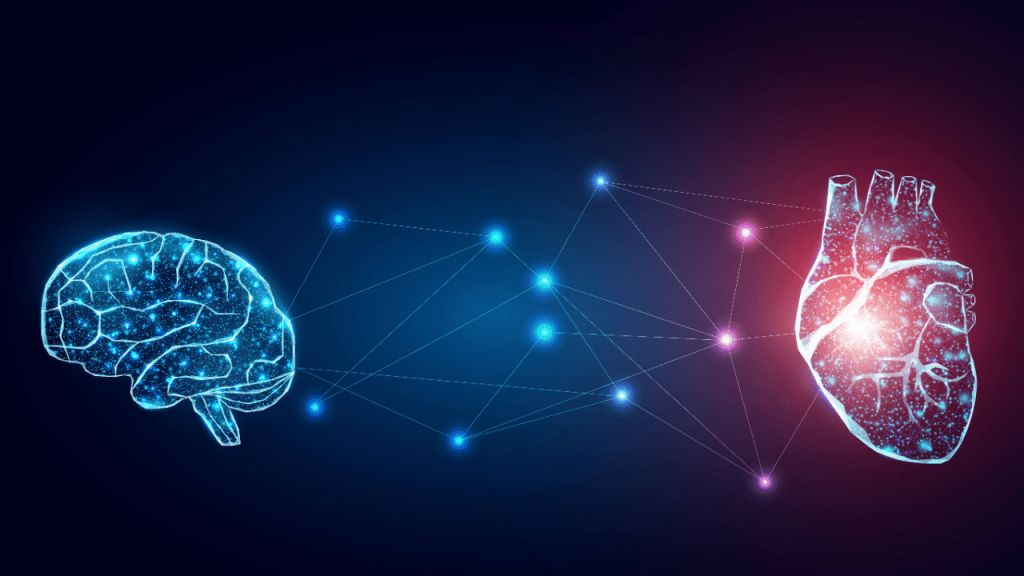
Peer-reviewed research is clear on a fundamental point: heart–brain communication occurs through neurological, hormonal, and biochemical pathways, not through electromagnetic fields with direct cognitive effects.
Although the heart generates measurable electrical activity, scientific evidence does not support the claim that this activity has an independent functional role in decision-making or conscious thought. The observed influences are indirect and physiological, mediated by autonomic regulation and interoceptive signaling.
Academic publications avoid ambiguous terminology and focus on verifiable mechanisms, such as the integration of peripheral signals in the brainstem and insular cortex. This approach enables rigorous, replicable, and clinically useful analysis.
Thus, the heart–brain axis is understood as a complex biological system, without mystical attributions or unverified extrapolations.
Communication between the heart and the brain is a real, bidirectional, and scientifically documented phenomenon. Studying it through physiology and neuroscience allows for a deeper understanding of integrative health, without resorting to exaggerated claims or unsupported assertions.
Reference:
- ScienceDirect/Brain–heart communication in health and diseases. Link
COMPARTE ESTE ARTICULO EN TUS REDES FAVORITAS:

Esta entrada también está disponible en:
 English
Descubre más desde Cerebro Digital
Suscríbete y recibe las últimas entradas en tu correo electrónico.